
Automation Articles
Browse 949 articles about Automation.

Tokens vs Harnesses: Why the Work Layer Matters More Than the Model for AI Strategy
Raw intelligence is becoming a commodity. The real value in AI is the harness—the context, evals, routing, and workflow layer that turns tokens into work.

How to Build an AI Video Production Workflow with Claude Code and HeyGen MCP
Use Claude Code with HeyGen's MCP to automate script writing, voice cloning, avatar rendering, and video editing in a single agentic workflow.

How to Build an AI Workflow That Survives Model Access Disruptions
When Claude Fable 5 went offline overnight, many workflows broke. Here's how to build portable, resilient AI agent stacks that survive sudden model bans.

How to Use Claude Fable 5 for Security Audits: Real-World Results
Claude Fable 5 found critical authorization vulnerabilities that Opus 4.8 missed. Here's how to run a security audit on your AI agent or app with Fable.

How to Build a One-Prompt AI Video Workflow: Script, Voice, Avatar, and Edit
Claude Fable 5 can generate a complete YouTube video from a single prompt using ElevenLabs, HeyGen, and FFmpeg. Here's the full workflow breakdown.

How to Build an AI Video Production Workflow with Claude Code and HeyGen
Learn how to use Claude Code and HeyGen to automate AI video production from script to final render, including voice cloning and motion graphics.

How to Use the /goal and /loop Commands in Claude Code for Autonomous Long-Running Tasks
Combine /goal and /loop in Claude Code to create tasks that run on a schedule and won't stop until your end condition is met. Here's how to set it up.

How to Use Claude Code Ultra Code Mode for Deep Research and Complex Tasks
Ultra Code spawns parallel sub-agents using fan-out, adversarial verification, and tournament patterns. Learn when to use it and how to control token costs.

How to Run Claude Code on a VPS with Mobile Access via Telegram
Run Claude Code on a VPS with Tmux for always-on sessions and control it from your phone via Telegram. Here's the full setup guide for 24/7 AI workflows.
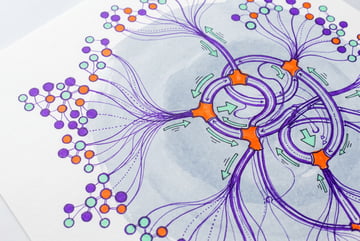
How to Build a Skill System in Claude Code: Chaining Skills Into Autonomous Pipelines
Skill systems chain multiple Claude Code skills so the output of one becomes the input of the next. Learn how to build modular, reusable skill pipelines.

How to Use Claude Fable 5 for Long-Running Agentic Tasks: Real-World Results
Claude Fable 5 excels at autonomous long-horizon tasks. See real coding demos, security audits, and multi-agent workflows that show what it can do.

How to Build a Portable AI Agent Stack That Avoids Vendor Lock-In
Use agents.md, skill.md, and standard MCP connections to build an AI agent stack that works across Claude Code, Codex, and Cursor without lock-in.

What Is HeyGen Avatar V? How to Build a Digital Twin from 15 Seconds of Video
HeyGen Avatar V creates a digital twin from a single 15-second clip. Learn how it works, what it can do, and how to use it in an AI content pipeline.

How to Build an AI Content Empire: One Input, 15 Outputs with AI Video Tools
Learn how to turn one PDF or newsletter into YouTube videos, shorts, LinkedIn posts, and multilingual content using AI avatar and video generation tools.

How to Build an AI Digital Twin for Content Creation Using HeyGen
Create a digital avatar from 15 seconds of video, then use it to publish scripts, change outfits, and deliver content in 15+ languages without re-filming.
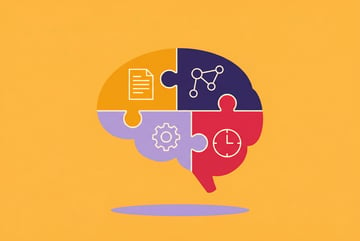
How to Build an AI Second Brain with the Four C's Framework: Context, Connections, Capabilities, Cadence
The Four C's framework gives you a repeatable system for building an AI operating system that knows your business and automates work while you sleep.

How to Use Claude Fable 5 for Complex Agentic Workflows: Tips and Best Practices
Claude Fable 5 excels at long, complex tasks but burns tokens fast. Learn how to set effort levels, manage costs, and get the most out of this model.
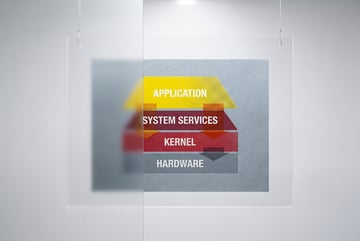
How to Build an AI Operating System Using the Four C's Framework
The Four C's—Context, Connections, Capabilities, and Cadence—are the building blocks of a personal AI OS. Learn how to implement each layer with Claude Code.
How to Build an AI Second Brain with Claude Fable 5 and Claude Code
Learn how to build a personal AI operating system using Claude Fable 5, the Four C's framework, and Claude Code skills for maximum productivity.

How to Use Claude Fable 5 Dynamic Workflows for Parallel Sub-Agent Execution
Claude Fable 5 paired with dynamic workflows can spawn hundreds of parallel sub-agents. Learn how to use this combination for massive agentic coding tasks.