How to Use Claude Fable 5 Dynamic Workflows for Parallel Sub-Agent Execution
Claude Fable 5 paired with dynamic workflows can spawn hundreds of parallel sub-agents. Learn how to use this combination for massive agentic coding tasks.

Why Parallel Sub-Agents Are the Biggest Shift in Agentic AI Right Now
Most AI workflows run sequentially. One task finishes, the next one starts. That works fine for simple automations, but it falls apart fast when you’re dealing with anything complex — large codebases, multi-source research, bulk content generation, or any task that has dozens of independent parts.
Claude paired with dynamic workflows changes that equation. With the right orchestration setup, Claude can spawn hundreds of parallel sub-agents, each handling a discrete chunk of work simultaneously, then fold the results back into a coherent output. The result is a dramatic compression of time-to-completion on large agentic tasks.
This guide walks through what parallel sub-agent execution actually means, how dynamic workflows make it possible with Claude multi-agent systems, and how to build this kind of architecture yourself — with or without code.
What Sequential vs. Parallel Execution Actually Means
Before getting into the how, it’s worth being precise about what changes when you go parallel.
Sequential Execution: The Default (and Its Limits)
In a sequential workflow, your agent pipeline looks like this:
- Agent receives a task
- Agent completes Step A
- Agent completes Step B
- Agent completes Step C
- Output is returned
Every step waits for the previous one to finish. If Step B takes 45 seconds and Step C takes 45 seconds, you’re waiting 90 seconds minimum — regardless of whether B and C have any dependency on each other.
Seven tools to build an app. Or just Remy.
Editor, preview, AI agents, deploy — all in one tab. Nothing to install.

For simple automations, this is fine. For anything with 20, 50, or 200 independent subtasks, it’s a bottleneck that compounds quickly.
Parallel Execution: The Multi-Agent Approach
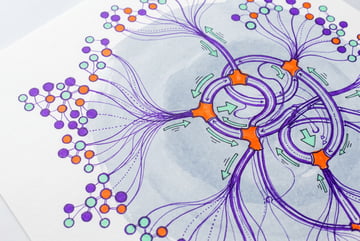
Parallel execution breaks that dependency. A orchestrator agent receives the top-level task, decomposes it into subtasks, and spawns individual sub-agents to handle each one simultaneously.
The same task that took 90 seconds sequentially might take 15 seconds with 6 sub-agents running in parallel — because Steps B and C (and D through F) all start at the same time.
With a capable reasoning model like Claude handling orchestration, the decomposition step itself becomes intelligent. The orchestrator doesn’t just split a task into equal chunks; it identifies which subtasks are independent (and can run in parallel) versus which ones depend on earlier results (and must run sequentially).
Claude’s Role as an Orchestrator in Multi-Agent Systems
Claude’s strength in multi-agent setups comes down to a few specific capabilities that matter for orchestration.
Long-Context Reasoning Across Subtasks
Effective orchestration requires the model to hold a lot in context simultaneously — the original task, the subtask breakdown, results coming back from sub-agents, and any constraints or dependencies between them. Claude’s extended context window handles this without the degradation you’d see in smaller models.
Tool Use and Subagent Invocation
Claude can natively call tools — including tools that trigger other agents or workflows. In a well-structured dynamic workflow, this means the orchestrator Claude instance can:
- Call a tool to spawn a sub-agent
- Pass task-specific parameters to that sub-agent
- Wait for the result asynchronously (or not wait, depending on the design)
- Collect results and synthesize them
This isn’t just a theoretical capability. Anthropic’s model card documentation for Claude explicitly describes its design for agentic settings where the model “takes sequences of actions” and “plans and makes a series of decisions to complete longer-horizon tasks.”
Adaptive Task Planning
Static workflows break down when the task isn’t perfectly predictable. Claude can adjust mid-execution — if a sub-agent returns an error or an unexpected result, the orchestrator can reroute, spawn a replacement agent, or change the approach for dependent tasks.
The Architecture of a Dynamic Workflow for Parallel Execution
Dynamic workflows differ from static ones in a key way: the structure of the workflow is determined at runtime, not at design time.
Here’s what a dynamic workflow for parallel sub-agent execution looks like in practice:
Layer 1: The Orchestrator
This is a single Claude instance with a clear mandate: understand the top-level task, decompose it, and coordinate execution. The orchestrator doesn’t do the actual work — it delegates.
A well-designed orchestrator prompt includes:
- The task definition and any constraints
- Instructions for how to break the task into subtasks
- Rules for which subtasks are independent (can run in parallel) vs. dependent (must run sequentially)
- A schema for passing parameters to sub-agents
- Instructions for synthesizing results once sub-agents complete
Layer 2: The Sub-Agents
Each sub-agent is a separate Claude instance (or a lighter model, if the subtask doesn’t require Claude’s full reasoning capability) with a narrower, more focused prompt.
Sub-agents typically:
- Receive a single, well-defined task
- Have access to only the tools they need for that task
- Return a structured output that the orchestrator can process
- Run completely independently of other sub-agents at the same layer
One coffee. One working app.
You bring the idea. Remy manages the project.
Layer 3: The Synthesis Step
Once parallel sub-agents complete, their outputs feed back to the orchestrator (or a dedicated synthesis agent). This layer:
- Validates sub-agent outputs
- Merges or reconciles results
- Handles conflicts or inconsistencies
- Produces the final deliverable
This three-layer pattern — orchestrate, parallelize, synthesize — is the core architecture behind most production multi-agent systems.
Step-by-Step: Building a Parallel Sub-Agent Workflow
Here’s a concrete walkthrough for setting up this kind of system.
Step 1: Define the Top-Level Task Clearly
Vague tasks produce poor decomposition. Before anything else, write a clear task definition that specifies:
- What the final output should look like
- What the input data or context is
- What constraints exist (time, format, scope)
- What counts as “done”
Example: Instead of “analyze this codebase,” write “review each of the 47 Python files in the /src directory for security vulnerabilities, return findings in JSON format with file name, line number, vulnerability type, and severity.”
Step 2: Design the Decomposition Logic
Decide how your orchestrator will split the top-level task. For the codebase example, the decomposition is obvious: one sub-agent per file, or one sub-agent per directory.
For less obvious tasks, you have a few options:
- Static decomposition: You pre-define the split logic in the orchestrator prompt. Works well when the task structure is predictable.
- Dynamic decomposition: The orchestrator analyzes the task first, then decides how to split it. More flexible, slightly more complex to prompt.
- Hybrid: Use static decomposition for the high-level split, then let sub-agents dynamically handle complexity within their domain.
Step 3: Write Sub-Agent Prompts
Sub-agent prompts should be narrow and specific. A sub-agent should know:
- Exactly what it’s analyzing or producing
- The format it should return results in
- What to do if it encounters an error or ambiguity
- What tools it has access to
Keep sub-agent prompts shorter than orchestrator prompts. The orchestrator does the reasoning; the sub-agents execute.
Step 4: Configure Parallel Execution
This is where the platform you’re using matters. To actually run sub-agents in parallel (not just sequentially), your infrastructure needs to:
- Support concurrent API calls or workflow runs
- Manage state across multiple simultaneous instances
- Aggregate results as they return
In code-first setups, this typically means using async/await patterns, thread pools, or event-driven architectures. In no-code platforms, look for native support for parallel branches or concurrent workflow execution.
Step 5: Build the Synthesis Step
The synthesis step is easy to underestimate. When you’re aggregating outputs from 50 parallel sub-agents, you need to handle:
- Inconsistency: Sub-agents may format results slightly differently, even with consistent prompts.
- Partial failures: Some sub-agents may return errors or incomplete results.
- Conflicts: Two sub-agents analyzing overlapping data may reach different conclusions.
Design your synthesis step to handle all three cases explicitly, not as afterthoughts.
Step 6: Test at Scale
Start small. Run 3–5 sub-agents before running 50. Verify outputs are consistent, the synthesis step works, and error handling behaves as expected.
Then scale up incrementally. Monitor for:
- Rate limiting from your AI provider (parallel calls hit rate limits faster than sequential ones)
- Context length issues in the orchestrator as more results come in
- Latency outliers from slow sub-agents blocking synthesis
Plans first. Then code.
Remy writes the spec, manages the build, and ships the app.
Real-World Use Cases for Parallel Sub-Agent Systems
Parallel sub-agent execution isn’t useful for everything. Here’s where it genuinely adds value.
Large-Scale Code Review and Generation
This is one of the most mature use cases. Development teams use multi-agent Claude workflows to:
- Audit entire codebases for security issues simultaneously
- Generate boilerplate code for dozens of modules in parallel
- Run independent test suites across microservices concurrently
- Refactor multiple files in parallel according to a style guide
A task that would take one agent hours can finish in minutes when each file or module gets its own dedicated sub-agent.
Multi-Source Research and Synthesis
When a research task requires pulling information from many independent sources, parallelism shines. Each sub-agent handles one source, extracts relevant information, and returns structured findings. The synthesis step combines them into a coherent report.
This pattern works well for competitive intelligence, due diligence, literature reviews, and market research.
Bulk Content Generation with Consistency
Generating 100 product descriptions, 50 email templates, or a full set of localized landing pages in multiple languages — all of these benefit from parallel execution.
The key is to use the orchestrator to establish guidelines and a shared “style brief,” then pass those guidelines to each sub-agent as part of its prompt. This keeps output consistent even when sub-agents run independently.
Data Processing Pipelines
When you have structured input data (a CSV with 1,000 rows, a database table, a batch of API responses), parallel sub-agents can process independent records simultaneously. The synthesis step aggregates results or writes them back to a data store.
Common Mistakes When Building Parallel Sub-Agent Systems
Most failures in multi-agent setups come from a handful of predictable mistakes.
Mistake 1: Insufficient Sub-Agent Isolation
Sub-agents that share state or have dependencies on each other defeat the purpose of parallelism. Design sub-agents to be fully independent: they receive their inputs, do their work, and return their outputs without needing to communicate with other sub-agents.
If sub-agents do need to share context, push that context into the orchestrator layer — not peer-to-peer between sub-agents.
Mistake 2: Weak Output Schema Enforcement
When sub-agents return free-form text instead of structured output, the synthesis step becomes much harder. Enforce structured output (JSON, XML, or a clearly defined template) in your sub-agent prompts. Validate outputs before passing them to synthesis.
Mistake 3: Ignoring Rate Limits
Running 100 parallel sub-agents means 100 simultaneous API calls to your AI provider. Most providers enforce rate limits that will throttle or reject excess requests. Plan for this explicitly — build in retry logic, consider batching parallel calls into smaller groups, or work with your provider on higher rate limits.
Mistake 4: Over-Parallelizing
Not every workflow benefits from heavy parallelism. If subtasks are very short (under 5 seconds), the overhead of spawning and coordinating sub-agents may exceed the time saved. Benchmark your workflow at different parallelism levels before assuming more sub-agents is always better.
Mistake 5: Skimping on Synthesis
Everyone else built a construction worker.
We built the contractor.
One file at a time.
UI, API, database, deploy.
Teams often invest heavily in the orchestration and sub-agent layers, then treat synthesis as an afterthought. A poorly designed synthesis step that can’t handle inconsistent or partial results will produce unreliable final outputs, even if every sub-agent performed perfectly.
Frequently Asked Questions
What is a sub-agent in a multi-agent Claude workflow?
A sub-agent is a separate AI model instance spawned by an orchestrator to handle a specific subtask. In a Claude multi-agent workflow, the orchestrator Claude instance receives a top-level task, breaks it into subtasks, and creates sub-agents to execute each one. Sub-agents are isolated — they receive their own prompts, tools, and input context — and return structured results to the orchestrator for synthesis.
How many parallel sub-agents can Claude actually run at once?
The technical limit depends on your infrastructure and your API provider’s rate limits, not on Claude itself. Claude can act as an orchestrator for systems running hundreds of concurrent sub-agents. In practice, teams run anywhere from 10 to 500+ parallel sub-agents depending on the task. Rate limit management and result aggregation are the main constraints to plan around.
What tasks are best suited for parallel sub-agent execution?
Tasks that can be broken into independent, discrete subtasks benefit most. This includes: reviewing large codebases (one sub-agent per file), processing bulk data (one sub-agent per record or batch), multi-source research (one sub-agent per source), and bulk content generation (one sub-agent per piece). Tasks with heavy sequential dependencies — where Step B truly cannot start until Step A completes — don’t benefit much from parallelism.
Do I need to code a multi-agent system from scratch?
No. Platforms like MindStudio let you build multi-agent workflows visually without writing code. You define the orchestration logic, sub-agent behavior, and synthesis steps in a workflow builder. If you do need to integrate with custom code, the MindStudio Agent Skills Plugin provides an SDK that lets code-based agents call MindStudio workflows as method calls. Both approaches are valid depending on your team’s technical setup.
How does the orchestrator know how to split a task into subtasks?
You define this in the orchestrator’s prompt. For structured tasks (like “review all files in this directory”), the decomposition logic is straightforward and can be hardcoded. For unstructured tasks, you can ask Claude to reason through the decomposition itself — the orchestrator analyzes the task, proposes a breakdown, and then begins spawning sub-agents. More sophisticated systems chain these steps: a planning phase first, then an execution phase.
What happens if a sub-agent fails or returns a bad result?
This depends on your error handling design. Best practice is to have the orchestrator validate each sub-agent’s output before passing it to synthesis. If a sub-agent returns an error or out-of-spec output, the orchestrator can: retry the sub-agent, spawn a new sub-agent with a modified prompt, flag the result for human review, or proceed without that result (if it’s non-critical). Build explicit error handling into your orchestrator prompt — don’t assume sub-agents will always succeed.
Key Takeaways
Parallel sub-agent execution with Claude and dynamic workflows is a genuinely useful pattern for large-scale agentic tasks — not just a theoretical capability. Here’s what to remember:
- The architecture has three layers: orchestrator (decomposes and coordinates), sub-agents (execute in parallel), synthesis (aggregates results).
- Dynamic workflows determine their own structure at runtime, adapting to the actual task rather than following a fixed path.
- Claude’s strength as an orchestrator comes from its long-context reasoning, tool use, and ability to handle adaptive planning when sub-agents return unexpected results.
- Rate limits and synthesis design are the two most common failure points when scaling parallel sub-agent systems.
- No-code platforms like MindStudio can handle the infrastructure complexity, letting you focus on the orchestration and reasoning design rather than concurrency management and API plumbing.
If you want to start building multi-agent workflows without writing infrastructure code from scratch, MindStudio is worth a look — you can go from idea to working agent pipeline in under an hour, with Claude and 200+ other models available out of the box.