
AI Concepts Articles
Browse 1363 articles about AI Concepts.

Multi-Perspective AI Research: How Sub-Agents Beat Single-Prompt Deep Research
Using 5 expert sub-agents for research produces better results than 100+ parallel agents. Here's the architecture and why it works for AI workflows.

What Is Claude Sonnet 5? Anthropic's Most Agentic Sonnet Model Explained
Claude Sonnet 5 is Anthropic's most agentic Sonnet yet. Learn how it compares to Opus 4.8, its pricing, and when to use it in your AI workflows.
What Is GPT-5.6? OpenAI's Three-Model Tier System Explained
GPT-5.6 comes in three tiers: Sol, Terra, and Luna. Learn what each model is designed for, how they're priced, and who gets access first.
What Is Seed Audio 1.0? ByteDance's Audio Scene Generator for AI Workflows
Seed Audio 1.0 generates full audio scenes with dialogue, ambient sound, and effects. Learn how it works and how to use it in AI video workflows.

The AI Context War: Why Siri, Claude Tag, and Codex Are All Solving the Same Problem
Apple, Anthropic, and OpenAI are all racing to connect AI to your real-world context. Here's why context access now matters more than model intelligence.

Confidence-Scheduled Verification: How DeepSpark Cuts Wasted GPU Compute in AI Agents
DeepSpark's confidence-scheduled verifier skips low-probability tokens under load, saving GPU resources and speeding up production AI agent inference.

Human-in-the-Loop Checkpoints for AI Agents: Why Full Autonomy Is the Wrong Goal
The best AI workflows aren't fully autonomous. Learn how to identify the two or three checkpoints where human review prevents costly mistakes and AI slop.
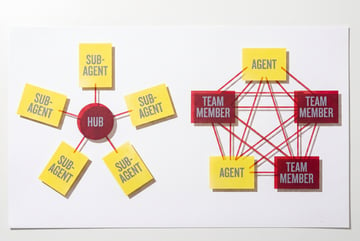
Sub-Agents vs Agent Teams in Claude Code: What's the Difference and When to Use Each
Sub-agents report to one session but can't talk to each other. Agent teams can debate and collaborate. Learn which architecture fits your workflow.

What Is DeepSpark? DeepSeek's Speculative Decoding Method That Makes Every LLM Faster
DeepSpark is DeepSeek's open-source speculative decoding system delivering 50–400% faster inference without retraining. Here's how it works.

What Is GLM 5.2? The Open-Weight Model Beating GPT 5.5 on Design and Coding Benchmarks
GLM 5.2 from ZAI offers a 1M token context window, MIT license, and frontier-level coding performance at a fraction of the cost of closed models.
What Is Seed Audio 1.0? ByteDance's Audio Scene Generator for AI Video Workflows
Seed Audio 1.0 generates full audio scenes with dialogue and ambient sound at 18 cents per minute. Learn how it improves Seedance video generation quality.

How to Prevent AI Sycophancy in Your Workflows: The Multi-Persona Council Method
AI models agree with you 88% of the time. Learn how to use a multi-persona council—contrarian, buyer, researcher—to stress-test ideas before you build.

Speculative Decoding Explained: How Draft Models Make AI Agents Faster
Speculative decoding uses a small draft model to guess tokens and a large model to verify them. Learn how it cuts AI agent latency without losing quality.
What Is DeepSpark? How DeepSeek Made Every LLM 50–400% Faster Without Retraining
DeepSpark is DeepSeek's speculative decoding method that speeds up LLM inference 50–400% with no retraining. Learn how it works and why it matters.

What Is Hermes Agent? The Open-Source AI Agent Platform Explained
Hermes Agent is an open-source AI agent with built-in skills, memory, scheduling, and Stripe payments. Learn how it compares to Claude Code and OpenClaw.

What Is Seedance 2.5? ByteDance's Volcano Arc IP Licensing Platform Explained
Seedance 2.5 adds 4K video, 30-second outputs, and a licensed IP platform that lets creators generate content using real film assets with revenue sharing.

ByteDance Volcano Arc: How Seedance Is Solving the IP Problem for AI Video
ByteDance's Volcano Arc platform licenses real actor likenesses and film assets for AI video generation with revenue sharing. Here's how it works.

Context Rot in AI Agents: What It Is and How to Fix It with Session Handoffs
AI models degrade as conversations grow longer. Learn what context rot is, when it starts, and how session handoff skills keep your agents sharp.

AI Model Regulation: What the GPT-5.6 Government Review Means for Your AI Stack
The US government is requiring staggered AI model releases. Learn what the GPT-5.6 preview rollout means for builders, startups, and enterprise AI teams.

Seedance 2.5: 30-Second Video, 4K Output, and 50 Multimodal References Explained
Seedance 2.5 doubles video length to 30 seconds, adds 4K output, and supports 50 multimodal references. Here's what it means for AI video workflows.