
AI Concepts Articles
Browse 1363 articles about AI Concepts.

Self-Scaffolding AI Models: How Ornith 1.0 Writes Its Own Agent Harness
Ornith 1.0 generates custom harnesses for each task instead of relying on human-written scaffolds. Learn how self-scaffolding works and why it matters.

AI Model Regulation: What the GPT-5.6 Government Review Means for Builders
The US government now reviews frontier AI models before public release. Here's what the GPT-5.6 staggered rollout means for AI builders and businesses.

GPT-5.6 Sol, Terra, and Luna: What the Three Model Tiers Mean for Builders
OpenAI previewed GPT-5.6 in three tiers: Sol for power, Terra for balance, and Luna for speed. Here's what each tier delivers and who should use which.

How to Prevent AI Sycophancy: Why Your Agent Agrees With Everything and How to Fix It
AI models agree with users 88% of the time. Learn how to use adversarial councils, devil's advocate prompts, and structured critique to get honest AI feedback.

Seedance 2.5: 30-Second Video, 4K, and 50 Multimodal References Explained
Seedance 2.5 doubles video length to 30 seconds, supports 50 reference inputs, and adds 4K output. Here's what the upgrade means for AI video workflows.

What Is the Agent Harness? Why It Matters More Than the Model You Choose
Google says the LLM is only 10% of an agentic system. The harness—rules, tools, context, and guardrails—drives the other 90%. Here's what that means.
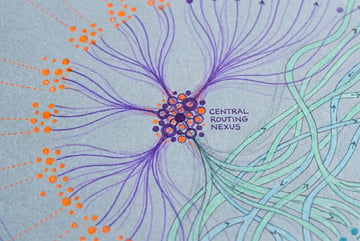
What Is Sakana Fugu? The Multi-Model Orchestrator Explained
Sakana Fugu is an AI orchestrator that routes prompts to the best model automatically. Learn how it works, its two tiers, and real benchmark results.

Agentic Engineering vs Vibe Coding: Google's Spectrum and Why It Matters for Builders
Google's AI coding masterclass defines a spectrum from vibe coding to agentic engineering. Learn which approach to use and when for reliable AI-built software.

GLM 5.2 Architecture Deep Dive: Index Share, Sparse Attention, and Multi-Token Prediction
GLM 5.2 achieves 2.9x fewer compute operations at 1M token context using Index Share sparse attention. Here's the technical breakdown for AI builders.

How to Use the Graphify Skill to Build a Queryable Knowledge Graph for AI Agents
Graphify converts codebases and notes into a queryable knowledge graph that reduces token costs by letting agents query structure instead of raw files.

What Is the AI-Driven SDLC? How Agentic Engineering Shifts the Software Bottleneck
The AI-driven SDLC compresses implementation from weeks to hours but shifts the bottleneck to specification quality and validation. Here's what that means.

What Is GLM 5.2? The Open-Weight Model With Frontier-Level Coding and 1M Token Context
GLM 5.2 is a 744B MoE open-weight model with a 1M token context window, sparse attention, and pricing 10x cheaper than Claude. Here's what sets it apart.
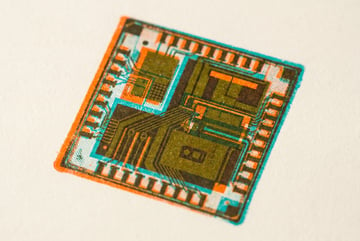
What Is OpenAI's Jalapeno Chip? The Custom AI Inference Processor Explained
OpenAI's Jalapeno is a custom ASIC built for LLM inference, designed in 9 months with AI assistance. Here's what it means for AI speed and cost.

What Is Sakana Fugu Ultra? The Multi-Model Orchestrator That Beats Frontier AI
Sakana Fugu Ultra is an LLM pool that coordinates multiple models to outperform GPT and Claude on coding benchmarks. Here's how it works.

What Is Cursor's Composer Model? How a Coding Tool Became a Frontier AI Lab
Cursor trained Composer 2.5 on Qwen K2.5 with novel RL techniques, competing with GPT 5.5 and Opus. Learn how the SpaceX acquisition changes everything.

What Is Seedance 2.5's 50-Reference Multimodal Input? How It Solves Consistency in Long AI Videos
Seedance 2.5 accepts 50 multimodal references including images, video, audio, and 3D assets to keep characters and scenes consistent across 30-second clips.

Seedance 2.5 vs Kling Omni Director: What the Next Generation of AI Video Control Looks Like
Seedance 2.5 brings 30-second clips and 50 references while Kling's Omni Director matches camera movements from reference video. Compare what's coming next.

Vibe Coding vs Agentic Engineering: Google's Spectrum Explained
Google's AI coding guide defines a spectrum from vibe coding to agentic engineering. Learn which approach fits your project and when to use each level.

What Is Index Share? How GLM 5.2 Achieves 2.9x Fewer Compute Operations at 1M Token Context
Index Share reuses sparse attention indexers across four layers, cutting compute by 2.9x at 1M token context. Learn how this makes GLM 5.2 affordable to serve.

What Is a Loop of Loops? How to Build AI Agents That Manage Recurring Work
A loop of loops lets recurring AI jobs notice each other, share context, and hand off without you managing every step. Learn the concept and how to apply it.