Claude Code Source Code Leak: What the Unshipped Features Tell Us About Anthropic's Roadmap
Anthropic accidentally leaked Claude Code's source code. The hidden features—AutoDream, Chyros, Ultra Plan, and Coordinator Mode—reveal what's coming next.

What the Leak Actually Was
Anthropic didn’t upload a ZIP file to a public GitHub repo. The leak was quieter than that — and arguably more revealing because of it.
Claude Code is distributed as an npm package. Like most production JavaScript, it ships minified and obfuscated: a dense wall of renamed variables and compressed logic designed to make the source difficult to read. What researchers discovered is that the obfuscation wasn’t enough. By decompiling and deobfuscating the package, a handful of developers were able to recover large portions of the underlying source code — including string literals, feature flags, and internal configuration objects that Anthropic hadn’t intended to expose.
What they found inside wasn’t just refactored code. It was a map of what Anthropic is building next.
References to unreleased subscription tiers, new agent operating modes, and internal project codenames surfaced. None of it was announced. Some of it contradicts how Anthropic has publicly talked about Claude’s near-term direction. And all of it, taken together, paints a fairly coherent picture of where Claude — and specifically Claude Code — is heading as an autonomous multi-agent system.
This article breaks down the most significant unshipped features discovered in the leak, what each one actually implies, and what it collectively tells us about Anthropic’s product roadmap.
The Ultra Plan: A Higher Ceiling Is Coming
The most commercially significant discovery was a reference to an “Ultra” plan — a subscription tier that doesn’t currently exist in Anthropic’s public pricing.
Remy is new. The platform isn't.
Remy is the latest expression of years of platform work. Not a hastily wrapped LLM.

Right now, Claude’s subscription tiers are Free, Pro, and Max. The Max plan (currently around $100/month) gives users significantly higher usage limits and priority access. The Ultra reference suggests there’s a tier above that in development — one aimed at power users who are hitting the ceiling on Max.
What Higher Limits Mean for Agentic Workflows
This matters more than it might seem for a simple pricing announcement. The bottleneck for agentic coding tools isn’t usually the model’s capability — it’s the usage limits. Claude Code, when running autonomously on a complex task, can consume a massive number of tokens in a single session. Long file reads, multi-file edits, test runs, debugging iterations: all of it burns through context quickly.
A user working on a large codebase might exhaust their daily token budget before finishing a single substantial feature. The Ultra plan likely isn’t just about bragging rights — it’s about making long-horizon autonomous work actually practical.
If Anthropic is building toward multi-agent coordination (more on that below), usage limits become the foundational constraint. You can’t run a fleet of collaborating agents on a Pro plan. Ultra may be the pricing layer that makes serious agentic workflows economically viable for individual developers and small teams.
Who It’s Targeting
The existence of an Ultra tier signals that Anthropic sees a meaningful segment of users who need more than Max provides. That’s probably a mix of:
- Professional developers using Claude Code as a primary coding environment
- Teams where one person manages multiple Claude Code sessions
- Researchers running large automated evaluation pipelines
- Builders testing multi-agent orchestration
It’s also a sign that Anthropic is watching usage patterns closely enough to know that Max isn’t the ceiling for everyone.
Coordinator Mode: Claude as an Orchestrator
This is the most technically interesting find from the leak.
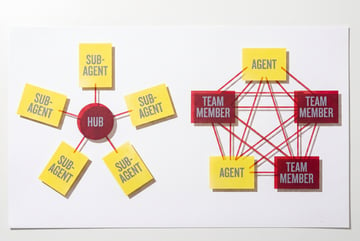
References to a “Coordinator” mode suggest Anthropic is building a specific operating mode where Claude Code doesn’t just execute tasks — it orchestrates other agents to execute tasks on its behalf.
What Coordinator Mode Likely Does
In standard operation, Claude Code is a single agent: it reads files, writes code, runs commands, and iterates. Coordinator mode appears to change that model fundamentally. Instead of doing the work itself, Claude Code in Coordinator mode would break a task into subtasks, assign those subtasks to specialized sub-agents, monitor their outputs, and integrate results.
This is the multi-agent architecture pattern that’s been widely discussed in AI research: a “planner” or “orchestrator” agent at the top of a hierarchy, with specialized “worker” agents below it. What’s notable here is that Anthropic is apparently building this directly into Claude Code — not as a separate product or framework, but as an operational mode within the existing tool.
Why This Is a Big Deal for Developers
If Coordinator mode ships as the leak suggests, it would mean Claude Code could autonomously:
- Spin up parallel sub-agents to work on different parts of a codebase simultaneously
- Assign one agent to write tests while another writes implementation
- Coordinate a code review agent, a documentation agent, and a refactoring agent in sequence
- Handle tasks that are currently too large for a single agent context window by distributing work across multiple sessions
Remy doesn't write the code. It manages the agents who do.
Remy runs the project. The specialists do the work. You work with the PM, not the implementers.
This represents a qualitative shift in what a coding assistant can do. The jump from “Claude helps me write code” to “Claude manages a team of agents that write code” is not incremental — it’s a different product category.
The Trust and Safety Implications
Coordinator mode also creates new challenges that Anthropic is clearly thinking through. When an orchestrator agent spins up sub-agents, questions about permissions, sandboxing, and output verification become significantly more complex. The leak suggests there are also references to permission controls specific to this mode, implying Anthropic is working on a governance layer for multi-agent Claude Code — not just the capability itself.
AutoDream: Background Autonomy
One of the more cryptic references in the leaked source is to something called “AutoDream.”
The name and surrounding context suggest this is a feature for running Claude Code autonomously in the background — without a user actively engaged in the session. Think: you describe a task, kick it off, walk away, and Claude Code works through it while you’re doing something else.
How AutoDream Differs from Current Claude Code
Right now, Claude Code is interactive by design. Even in its most autonomous modes, it’s expected to surface decisions, ask clarifying questions, and pause at certain gates. That interaction model keeps users in the loop but also keeps users at the keyboard.
AutoDream appears to be designed for longer-horizon, fire-and-forget tasks. Based on the references found, it would allow Claude Code to run through a complex multi-step problem — potentially over an extended period — without requiring real-time input.
This is similar in concept to what services like Devin from Cognition have offered: a coding agent that works asynchronously on a task and reports back when done. The difference is that Anthropic would be folding this directly into Claude Code rather than building a separate product.
Scheduling and Triggers
Some of the surrounding code references suggest AutoDream could support scheduled or triggered runs — not just manual invocation. That would mean a developer could configure Claude Code to run a maintenance task every morning, or trigger a code review pass whenever a PR is opened.
If accurate, this would put Claude Code in direct competition with automated CI/CD tooling and background workflow systems — a significant expansion of its intended use case.
Chyros: The Codename Nobody Has Explained
“Chyros” is the most ambiguous reference in the leak, and it’s worth being honest about what we don’t know here.
The codename appears in the source but without enough surrounding context for anyone to determine definitively what it refers to. A few interpretations have circulated:
- A new model variant or fine-tune optimized for specific coding tasks
- An internal name for a new product tier or bundle
- A code-generation-specific subsystem within Claude Code
- A project name for a team or initiative rather than a specific user-facing feature
The honest answer is that Chyros is still opaque. What’s notable is that it appears as a distinct named entity, suggesting it’s significant enough internally to have its own identifier. The fact that it shows up alongside the other unshipped features implies it’s on a similar development timeline.
Watch for it in future Anthropic announcements — it’s likely to become clearer as shipping dates approach.
- ✕a coding agent
- ✕no-code
- ✕vibe coding
- ✕a faster Cursor
The one that tells the coding agents what to build.
What These Features Say About Anthropic’s Strategy
Taken individually, each leaked feature is interesting. Taken together, they reveal something more deliberate about Anthropic’s direction with Claude Code specifically and with Claude as an agentic platform generally.
Anthropic Is Building Claude Code as Infrastructure
The pattern across Ultra, Coordinator mode, and AutoDream is the same: Anthropic is building Claude Code to handle serious, large-scale, long-running work. Not sessions. Not prompts. Work.
That’s a different product vision than a coding assistant that helps you autocomplete functions or explains what a regex does. It’s a vision of Claude Code as the primary execution environment for software development — the thing that actually runs projects, not just helps with them.
Multi-Agent Is the Architecture, Not a Feature
The inclusion of Coordinator mode isn’t an isolated addition. It suggests Anthropic is building toward a multi-agent architecture as the underlying model for how Claude Code operates. Single-agent interaction becomes a special case of a more general system capable of orchestrating multiple agents.
This aligns with what Anthropic has said publicly about multi-agent systems being important to their roadmap, but the specific implementation details in the leak are more concrete than anything they’ve announced. The Claude multi-agent framework isn’t just a theoretical capability — it’s apparently being built into Claude Code’s operating modes.
The Developer Is the Target Customer
Every feature in the leak is oriented toward professional developers with serious workloads. The Ultra plan removes usage friction for heavy users. Coordinator mode enables workflows that aren’t possible in a single-agent model. AutoDream removes the requirement for real-time human involvement.
Anthropic is clearly treating developers — not casual users — as the primary target for Claude Code’s near-term expansion. That’s consistent with how they’ve positioned Claude Code since launch: as a tool for people who actually live in terminals and codebases, not as a consumer product.
Frequently Asked Questions
What exactly was leaked in the Claude Code source code leak?
Claude Code ships as a minified and obfuscated npm package. Researchers who decompiled and deobfuscated the package discovered internal source code that included string literals, feature flag references, and configuration objects pointing to unreleased features. The most significant discoveries were references to an “Ultra” subscription plan, a “Coordinator” operating mode for multi-agent orchestration, a feature called “AutoDream” suggesting background/scheduled autonomous operation, and an internal codename “Chyros” of unknown purpose.
Is the Claude Code source code leak confirmed by Anthropic?
Anthropic has not publicly confirmed the details of the leak or issued a formal statement about the specific features discovered. The information comes from independent researchers who analyzed the public npm package. Given that the package is legitimately distributed and the code was recovered through decompilation rather than unauthorized access, Anthropic’s legal position on this is ambiguous. The features described have not been officially announced.
What is Coordinator Mode in Claude Code?
Remy doesn't build the plumbing. It inherits it.
Other agents wire up auth, databases, models, and integrations from scratch every time you ask them to build something.
Remy ships with all of it from MindStudio — so every cycle goes into the app you actually want.
Based on references in the leaked source, Coordinator Mode would allow Claude Code to act as an orchestrator — breaking tasks into subtasks and delegating them to specialized sub-agents rather than handling everything in a single agent session. This is consistent with the multi-agent architecture Anthropic has discussed publicly. It would represent a fundamental shift in how Claude Code handles complex, large-scale work.
What is AutoDream in Claude Code?
AutoDream appears to be a feature that enables Claude Code to run autonomously in the background without requiring active user engagement. Unlike current Claude Code sessions, which are largely interactive, AutoDream would allow for fire-and-forget task execution — potentially with scheduling or trigger-based invocation. This would put Claude Code in a similar space to asynchronous AI coding agents.
When will these Claude Code features ship?
There’s no official release date for any of the features discovered in the leak. The presence of feature flags and configuration references suggests they’re in active development, but Anthropic has not announced timelines. Feature flags found in source code can represent anything from features weeks from launch to long-running internal experiments that may never ship publicly.
What does the Ultra plan mean for Claude pricing?
The Ultra plan reference suggests Anthropic is planning a subscription tier above the current Max plan (approximately $100/month). This would likely offer higher usage limits and potentially early access to features like Coordinator Mode or AutoDream. The existence of this tier suggests Anthropic has identified a segment of power users — particularly those building or using multi-agent systems — who regularly exhaust the limits of existing plans.
Key Takeaways
- The leak came from decompiling Claude Code’s public npm package, not a traditional data breach — making the recovered code more of an accidental disclosure than a security incident.
- Four major unshipped features surfaced: an Ultra subscription tier, Coordinator Mode for multi-agent orchestration, AutoDream for background autonomous execution, and an ambiguous internal codename “Chyros.”
- Coordinator Mode is the most architecturally significant find — it suggests Anthropic is building multi-agent orchestration directly into Claude Code as an operating mode, not as a separate product.
- The cumulative picture is of Claude Code as serious infrastructure for professional developers running long-horizon, large-scale work — not a coding assistant in the traditional sense.
- These capabilities exist in other platforms today — if you need multi-agent workflows, background autonomous agents, or orchestration across multiple AI models before Anthropic ships these features, platforms like MindStudio offer them now.
If the Claude Code roadmap revealed by this leak sounds like what you want to build on today, MindStudio is worth exploring — you can get started for free without writing a line of code.