
AI Reality Checks
Is it actually working? Demo-vs-reality posts, hype audits, 'what they're not telling you' takes on model releases and tool launches.

Agent Burnout Hits at Hour 4 — Not Hour 8: Why AI-Assisted Work Drains Differently Than Normal Work
Agent work burns through judgment and context-switching, not typing. Why you hit a wall at 4 hours and what to do about it.

AI Benchmarks Are Broken: 5 Methodological Flaws in Time Horizon Metrics You Need to Understand
A fixed-slope fix alone would push Meter's numbers up 35%. Five structural problems with how AI capability benchmarks are built and reported.

Run the 4-Bucket AI Job Audit in 20 Minutes: Which Parts of Your Work Are Already on Thin Ice?
Theater, Commodity, On-the-Line, Durable. Audit the last two weeks of your work and find out what AI can already replace before your boss does.

Anthropic's Economic Index Shows 49% of Jobs Already Have 25%+ of Tasks Done by Claude — Is Yours One of Them?
Nearly half of all jobs have already handed a quarter of their tasks to Claude. Here's how to find out where your role stands.

Beth Barnes on Meter's Time Horizons: The Error Bars Are 2x — Here's What the Benchmark Actually Tells You
Meter's co-founder admits error bars are 2x in either direction. Here's the honest breakdown of what time horizon benchmarks can and can't tell you.

GPQA: The Graduate-Level Benchmark Every Major AI Lab Uses — and Why Its Creator Says It Has Limits
David Rein built GPQA and now co-authors Hcast. He's the first to explain where graduate-level benchmarks mislead capability estimates.

How to Read an AI Time Horizons Report Without Getting Misled: A 10-Minute Interpretation Guide
Most readers misinterpret the 50th percentile framing. This guide explains what Meter's numbers actually mean for planning and policy.

The Legibility Paradox: 6 Actions to Take After You Audit Your Job for AI Displacement
Durable work must be visible but not fully specified. Six post-audit moves — from stopping theater to refusing commodity work — to protect your role.
SWE-Bench Score vs. Real Merge Rate: Why Your Agent's Benchmark Number Doesn't Match Production Reality
Agent solutions pass SWE-bench but merge at half the rate of human solutions. The gap between benchmark and production is wider than you think.

How to Use the GSD Framework to Prevent Context Rot in Long Claude Code Sessions
The GSD framework spawns fresh sub-agents per task so your main session stays clean. Learn how to install it and use it on complex multi-day projects.

Harvard and Stanford Physicians Built the Toughest Medical AI Benchmark Yet — Here's How AI Co-Clinician Scored
DeepMind's evaluation used 140 consultation dimensions, 20 synthetic clinical scenarios, and 10 real physicians as role-playing patients. Here are the results.

OpenAI's Goblin Problem: How RL Training in Codex Infected GPT-5.4 with Creature References Across Model Generations
GPT started mentioning goblins and gremlins in responses. The cause: RL 'nerdy personality' training in Codex scored creature references highly and bled…

Anthropic's Harness Detection Bug: 3 Things That Triggered Unexpected Claude Code Charges
A git commit mentioning 'hermes.md' triggered a $200.98 overage on a plan showing 86% unused. Here's exactly what caused it and how Anthropic responded.

What Is the Anthropic Billing Controversy? What It Means for AI Tool Vendors
Anthropic scanned user code for competitor harness keywords and charged extra. Here's what happened, why it matters, and what it means for AI tool builders.
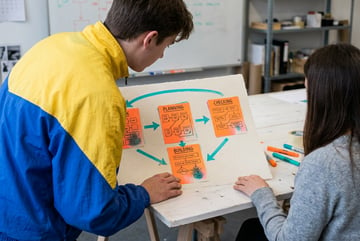
How to Build an Agentic Coding Workflow: The PIV Loop Explained
The PIV loop—Plan, Implement, Validate—is a structured approach to AI-assisted coding that keeps you in the driver's seat without micromanaging every line.

How Anthropic's Harness Detection Actually Works — and Why It Triggered a $200 Overcharge
Anthropic scans git commit messages for keywords like 'hermes.md' to detect third-party harnesses and switch to API billing. Here's the exact mechanism.

How to Make the Case for Better AI Tools at Work: A Data-Driven Approach
If your company's approved AI tool isn't delivering results, here's how to measure the gap, frame the ask, and get a specialist tool approved without politics.

How to Avoid AI Slop When Using Claude Design (The Design System Approach)
Every Claude Design output looks the same because most people skip the design system step. Here's how to build one that makes your output look nothing like AI.

Deploying AI Apps: The Hidden Infrastructure Costs Nobody Warns You About
A $800 Vercel bill from two weeks of AI-assisted shipping. Here's what default platform settings cost you and how to configure deployments correctly.

What Is Context Rot? Why Long AI Coding Sessions Produce Worse Results
Context rot degrades AI coding quality as sessions grow. Learn why it happens, how to measure it, and the session management habits that prevent it.

How to Build an AI Video Editing Workflow with Claude Code and Hyperframes
Claude Code and Hyperframes let you generate motion graphics, animated overlays, and synced captions from plain-language prompts. Here's how it works.

The Hidden Cost of AI-Assisted Development: What Your Coding Agent Isn't Telling You
AI coding agents recommend services, set defaults, and make infrastructure choices you never review. Here's what that costs and how to stay in control.

What Is the Jagged Frontier? Why AI Models Improve Unevenly
The jagged frontier explains why AI models excel at hard tasks while failing simple ones. Understanding it helps you pick the right model for each job.

What Is Context Rot in AI Agents and How Do You Prevent It?
Context rot degrades AI agent output as sessions grow longer. Learn how skills, planning frameworks, and reference files keep Claude Code on track.