
AI Audio: Voice, Speech & Music
AI for audio — real-time voice agents (Pika Me-style), text-to-speech, voice cloning (ElevenLabs), music generation (Suno, Udio), sound effects, audio editing, transcription. Anything where the output or input is audio.
What Is Seed Audio 1.0? ByteDance's Audio Scene Generator for AI Video Workflows
Seed Audio 1.0 generates full audio scenes with dialogue and ambient sound at 18 cents per minute. Learn how it improves Seedance video generation quality.

What Is NVIDIA Nemotron 3.5 ASR? The Streaming Speech-to-Text Model for AI Agents
NVIDIA Nemotron 3.5 ASR is a 600M parameter streaming model supporting 40 languages. Learn how cache-aware streaming and word boosting make it agent-ready.
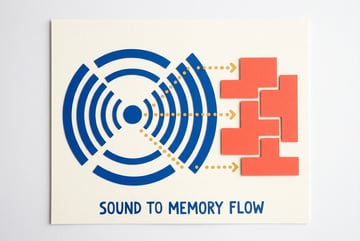
Cache-Aware Streaming ASR: How NVIDIA Nemotron 3.5 Cuts Transcription Latency
Cache-aware streaming reuses encoder states instead of reprocessing audio chunks, cutting latency by up to 17x. Here's how it works for real-time transcription.

What Is Miso One? The Open-Source Voice Model That Sounds Like a Real Human
Miso One is an open-weight TTS model that produces highly emotive, human-sounding speech. Here's what it can do and how it compares to closed voice models.

What Is NVIDIA Nemotron 3.5 ASR? The Streaming Speech-to-Text Model Explained
NVIDIA Nemotron 3.5 ASR is a 600M streaming model supporting 40 languages with cache-aware architecture. Learn how it works and when to use it.

Word Boosting in AI Transcription: How to Fix Product Names and Rare Vocabulary
Word boosting lets you inject custom vocabulary into ASR models at decode time—no fine-tuning needed. Here's how it works and when to use it.

MAI Transcribe 1.5: Is Microsoft's New Model the Best Transcription AI?
MAI Transcribe 1.5 claims to be the world's most accurate transcription model and 5x faster than competitors. Here's what the data shows.

Miso One Voice Model: The Open-Source TTS That Sounds Like a Real Human
Miso One is an open-weight voice model that claims to be the most emotive TTS available. Learn how it compares and how to run it locally.

MAI Transcribe 1.5: Is Microsoft's New Model Really the Best Transcription AI?
MAI Transcribe 1.5 claims to be the world's most accurate and fastest transcription model—5x faster than competitors. Here's what the benchmarks show.

How to Use ElevenLabs Dubbing V2 to Localize AI-Generated Content at Scale
ElevenLabs Dubbing V2 preserves your voice and emotion across 175 languages. Learn how to use it to localize videos for global audiences.

How to Use ElevenLabs Music V2 for Commercial Content: Licensed AI Music Explained
ElevenLabs Music V2 is trained on licensed data and cleared for commercial use. Learn how to generate original music for your AI workflows and content.

ElevenLabs Dubbing V2: How to Dub Videos While Preserving Your Voice and Emotion
ElevenLabs Dubbing V2 translates videos into 175+ languages while keeping your original voice, emotion, and facial expressions. Here's how it works.

How to Use ElevenLabs Voice Cloning to Replace AI-Generated Voices in Video
Seedance 2.0 often generates Rick and Morty-style voices. Learn how to use ElevenLabs voice cloning to replace them with original characters in your AI videos.
ElevenLabs Music V2 vs Suno AI: Which AI Music Generator Is Better?
Compare ElevenLabs Music V2 and Suno AI on voice quality, genre performance, token efficiency, and pricing to find the best AI music tool for your needs.
What Is ElevenLabs Music V2? AI Music Generation with Multilingual Support
ElevenLabs Music V2 is a major upgrade for AI music generation. Learn its strengths, weaknesses, pricing, and how it compares to Suno and Stable Audio.

How to Use Voice Agents for Business: ElevenLabs, RAG, and Calendar Booking
Voice agents are finally production-ready. Learn how to build a voice agent that handles customer questions, books appointments, and integrates with your CRM.

Stable Audio 3.0: What Open-Weight AI Music Generation Means for Content Creators
Stability AI's Stable Audio 3.0 generates 6-minute songs with open weights. Learn what it can do, how it compares to Suno, and how to use it in workflows.

How to Build a Voice Agent That Books Meetings Using ElevenLabs and Calendly
Learn how to build a no-code voice agent that answers questions, checks availability, and books meetings directly on your calendar using ElevenLabs.

What Is Stable Audio 3.0? Stability AI's Open-Weight Music Generation Model
Stable Audio 3.0 generates up to 6-minute songs and sound effects with open weights. Learn what it can do and how it compares to Suno and Udio.

What Is DramaBox by Resemble AI? Open-Source Emotional Text-to-Speech Explained
DramaBox generates text-to-speech with emotional arcs, breath control, and voice cloning from 10 seconds of audio. Here's how it works and how to try it.

What Is LipDub? Open-Source Multilingual Lip-Sync for AI-Generated Video
LipDub is an open-source tool built on LTX that replaces dialogue in video with new speech in any language while preserving the original performance.

What Is LipDub? Open-Source Multilingual Lip-Sync for AI Video Explained
LipDub is an LTX-based in-context LoRA that replaces what characters say in video while preserving the original performance, camera movement, and expression.

DramaBox by Resemble AI: Open-Source Text-to-Speech with Emotional Acting
DramaBox is an open-source TTS model that generates speech with pacing, breath control, and emotional arcs. Learn how to run it locally for free.

What Is LipDub? Multilingual Lip-Sync for AI-Generated Video Explained
LipDub is an in-context LoRA for LTX that replaces dialogue in existing videos while preserving original performance and camera movement.