
Optimization Articles
Browse 263 articles about Optimization.

How to Build an AI Workflow That Converts Text Prompts to Images to Cut Token Costs
Discover how rendering text as compressed images exploits Claude's vision billing to reduce input token costs by 30–60% in agentic workflows.
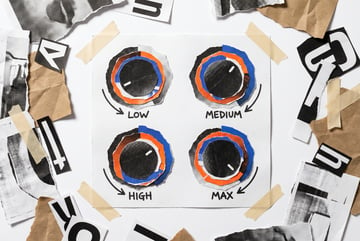
How to Use Effort Levels in Claude to Get Better Results Without Overspending
Claude's effort levels—low, medium, high, max—dramatically affect cost and quality. Learn when each level helps and when max effort actually hurts.
Claude Fable 5 vs Sonnet 5 for Dynamic Workflows: Cost, Quality, and When to Switch
Real-world tests show Fable 5 orchestrating Sonnet sub-agents matches all-Fable quality at a fraction of the cost. Here's how to structure your workflows.

What Is Diffusion Language Modeling? How NVIDIA's Two-Tower Architecture Works
NVIDIA's Two-Tower diffusion LLM generates text in parallel blocks instead of token-by-token, achieving 2.4x speed gains with 98.7% quality retention.

AI Model Routing: When to Use Frontier Models vs Cheap Models in Your Agent Stack
Frontier models excel at imagining new tasks; cheap models execute known ones. Learn how to route intelligently and where each model tier creates real value.

What Is Semantic Compression? How to Cut AI Token Costs by 75% Without Losing Quality
Semantic compression rewrites prompts and system files to maximum information density. Learn how to reduce token usage by 75% with zero quality loss.

Token Reduction Strategies for AI Agents: 8 Techniques That Cut Costs by 50% or More
Semantic compression, RTK, logs to SQLite, and capped thinking budgets can cut AI agent token costs by 50–99% with near-zero quality loss. Here's how.
How to Use Claude Fable 5 Without Triggering the Opus 4.8 Safety Fallback
Claude Fable 5 silently routes certain requests to Opus 4.8. Learn which prompts trigger the fallback and how to avoid it in your agent workflows.

Claude Fable 5 Effort Levels Explained: When to Use Low, Medium, High, and Max
Claude Fable 5 has five effort levels that control cost and reasoning depth. Learn which to use for routine tasks vs complex agentic workflows.

How to Prompt Claude Fable 5 for Maximum Output Quality: 6 Rules from Anthropic
Anthropic's own documentation reveals six prompting rules for Claude Fable 5—including effort levels, negative prompting, and avoiding Opus fallback.

Claude Sonnet 5 Token Efficiency Problem: Why It Can Cost More Than Opus 4.8 in Agents
Claude Sonnet 5 uses 30% more tokens than other models due to its agentic design. Learn when it costs more than Opus and how to manage usage.

How to Prompt Claude Fable 5 Like an Anthropic Engineer: 6 Rules That Actually Work
Anthropic's own best practices for Claude Fable 5 include giving context, negative prompting, effort levels, and avoiding reasoning requests that trigger Opus.

Claude Sonnet 5 Token Efficiency Problem: Why It Can Cost More Than Opus 4.8
Claude Sonnet 5 uses 30% more tokens than previous models. Learn why this happens and how to manage costs in agentic AI workflows.

Confidence-Scheduled Verification: How DeepSpark Cuts Wasted GPU Compute in AI Agents
DeepSpark's confidence-scheduled verifier skips low-probability tokens under load, saving GPU resources and speeding up production AI agent inference.

How to Use Seed Audio as a Reference for Seedance Video Generation
Generating audio first with Seed Audio and using it as a Seedance reference produces better voice acting and ambient sound while reducing expensive re-rolls.

What Is DeepSpark? DeepSeek's Speculative Decoding Method That Makes Every LLM Faster
DeepSpark is DeepSeek's open-source speculative decoding system delivering 50–400% faster inference without retraining. Here's how it works.
What Is DeepSpark? How DeepSeek Made Every LLM 50–400% Faster Without Retraining
DeepSpark is DeepSeek's speculative decoding method that speeds up LLM inference 50–400% with no retraining. Learn how it works and why it matters.

How to Prevent AI Sycophancy: Why Your Agent Agrees With Everything and How to Fix It
AI models agree with users 88% of the time. Learn how to use adversarial councils, devil's advocate prompts, and structured critique to get honest AI feedback.

Static Context vs Dynamic Context in AI Agents: How to Manage What Your Agent Knows
Static context loads every session; dynamic context loads on demand. Learn how to balance both for token efficiency and reliable AI agent performance.

What Is Index Share? How GLM 5.2 Achieves 2.9x Fewer Compute Operations at 1M Token Context
Index Share reuses sparse attention indexers across four layers, cutting compute by 2.9x at 1M token context. Learn how this makes GLM 5.2 affordable to serve.