Claude Fable 5 vs Sonnet 5 for Dynamic Workflows: Cost, Quality, and When to Switch
Real-world tests show Fable 5 orchestrating Sonnet sub-agents matches all-Fable quality at a fraction of the cost. Here's how to structure your workflows.
The Model Selection Problem Nobody Talks About
When you’re building dynamic AI workflows, the model you pick isn’t just a technical decision — it’s a cost decision you’ll keep paying every time the workflow runs.
Claude’s latest generation makes this sharper than ever. Fable 5 sits at the top of Anthropic’s capability stack: excellent reasoning, strong instruction-following, and reliable performance on complex multi-step tasks. Sonnet 5 is the mid-tier option — significantly cheaper, still highly capable, and fast enough to use in production at scale.
The question most teams are wrestling with right now: can you get Fable 5 quality without paying Fable 5 prices at every step? Based on real workflow testing, the answer is yes — but only if you understand where each model earns its keep.
This article breaks down the cost and quality tradeoffs between Claude Fable 5 and Sonnet 5, shows you how hybrid orchestration works in practice, and tells you when it’s worth paying the premium versus when Sonnet 5 will do the job just fine.
What Makes Fable 5 and Sonnet 5 Different
Before comparing them head-to-head, it helps to understand what Anthropic actually optimized for in each model.
Claude Fable 5: The High-Reasoning Tier
Remy doesn't write the code. It manages the agents who do.
Remy runs the project. The specialists do the work. You work with the PM, not the implementers.

Fable 5 is Anthropic’s most capable model for complex reasoning tasks. It handles ambiguity well, maintains context over long instruction chains, and makes better judgment calls when the task isn’t clearly defined. In multi-step workflows, this shows up as fewer errors that require correction, more consistent output formatting, and stronger performance on tasks that require weighing competing priorities.
It’s not just smarter — it’s more reliable in the way that matters for automated workflows: it fails less often and fails more gracefully when it does.
The tradeoff is cost. Fable 5 is priced significantly higher per token than Sonnet 5. In single-pass tasks, that’s manageable. In agentic workflows that loop, branch, and call multiple LLM steps, those tokens add up fast.
Claude Sonnet 5: The Production Workhorse
Sonnet 5 is genuinely excellent for well-defined tasks. When the instructions are clear, the format is specified, and the task is bounded, Sonnet 5 performs nearly identically to Fable 5 — at a fraction of the cost.
Where it falls short is in ambiguous or underspecified tasks. Give Sonnet 5 a vague prompt with competing objectives and it’ll still produce an output, but the output is more likely to miss something or interpret the prompt in an unexpected way. It’s not bad at reasoning — it just has a lower ceiling for tolerating instruction complexity.
For production workflows, this distinction matters a lot. Most workflows aren’t uniformly complex. They have a few hard planning steps and many execution steps.
The Real Cost Gap (And Why It Compounds in Workflows)
Let’s put some numbers on this.
At current pricing, Claude Fable 5 runs roughly 5–8x more expensive per token than Sonnet 5 for both input and output. For a short standalone task, that might be a difference of a few cents. In a workflow that makes 15–20 LLM calls across multiple steps, that multiplier compounds.
Here’s a simplified example of what that looks like in a document analysis workflow:
| Step | Model Used | Tokens (est.) | Cost (Fable 5) | Cost (Sonnet 5) |
|---|---|---|---|---|
| Parse task requirements | Planning step | 2,000 | $0.060 | $0.008 |
| Extract key sections | Execution | 5,000 | $0.150 | $0.020 |
| Summarize each section | Execution × 8 | 16,000 | $0.480 | $0.064 |
| Cross-reference findings | Reasoning step | 4,000 | $0.120 | $0.016 |
| Generate final report | Execution | 6,000 | $0.180 | $0.024 |
| Total | 33,000 | $0.99 | $0.132 |
Approximate costs using representative per-token rates. Actual pricing varies by usage tier.
That’s a 7.5x cost difference for the same workflow. At 500 runs per month, you’re looking at ~$495 versus ~$66. The gap widens further when workflows run thousands of times.
The key insight from the table: only two of the five steps actually require Fable 5-level reasoning. The rest are execution tasks where Sonnet 5 performs just as well. If you route those execution steps to Sonnet 5, you keep the output quality high while collapsing the cost toward the lower number.
Where Fable 5 Earns the Premium
Not every step benefits from Fable 5. But some genuinely do, and cutting corners on those steps shows up in output quality.
Complex Task Decomposition
When a workflow starts with a high-level goal and needs to figure out what steps to take, Fable 5 consistently produces better task decompositions. It handles ambiguous inputs better, catches edge cases in the initial plan, and writes clearer instructions for sub-agents.
Everyone else built a construction worker.
We built the contractor.
One file at a time.
UI, API, database, deploy.
If this step goes wrong, every downstream step inherits the error. This is the one place where the Fable 5 premium is almost always worth paying.
Judgment-Heavy Decisions Mid-Workflow
Some workflows reach branch points that aren’t rule-based — they require actual judgment. Should this piece of content be flagged for review? Does this customer query need escalation? Is this data anomaly worth investigating?
Fable 5 handles these with noticeably better calibration. It’s less likely to flag benign cases and more likely to catch real ones. Sonnet 5 can do this too, but it needs tighter prompts and more specific criteria to match Fable 5’s accuracy.
Final Output Assembly for High-Stakes Deliverables
When the final output is a document, report, or customer-facing response that someone will read critically, Fable 5’s stronger writing quality shows. The structure is cleaner, the tone is more consistent, and it handles nuance better.
For internal tooling or intermediate processing steps, this matters less. For external-facing content, it often does.
Where Sonnet 5 Is the Better Choice
The majority of steps in most workflows fall into this category.
Structured Data Extraction
If you’re pulling specific fields from documents, emails, or web pages with a clear schema, Sonnet 5 is more than capable. The task is bounded — the model knows what success looks like — and Sonnet 5 executes it reliably.
Running data extraction at Fable 5 prices is one of the most common sources of unnecessary cost in AI workflows.
Format Conversion and Transformation
Turning a JSON blob into a formatted report, converting markdown to HTML, or restructuring data to match a downstream API — these are precision tasks that don’t require advanced reasoning. Sonnet 5 handles them well with a clear prompt.
Summarization of Well-Defined Content
Summarizing a single document, a support ticket, or a product description is not a hard reasoning task. The content is there; the model just needs to condense it. Sonnet 5 produces summaries that are essentially indistinguishable from Fable 5’s at a fraction of the cost.
Classification and Tagging
If you’re using an LLM to classify content into categories, tag entries in a database, or route items through a pipeline, Sonnet 5 typically matches Fable 5’s accuracy with a well-crafted prompt. The gains from Fable 5 are marginal for tasks with clear classification criteria.
The Hybrid Orchestration Pattern
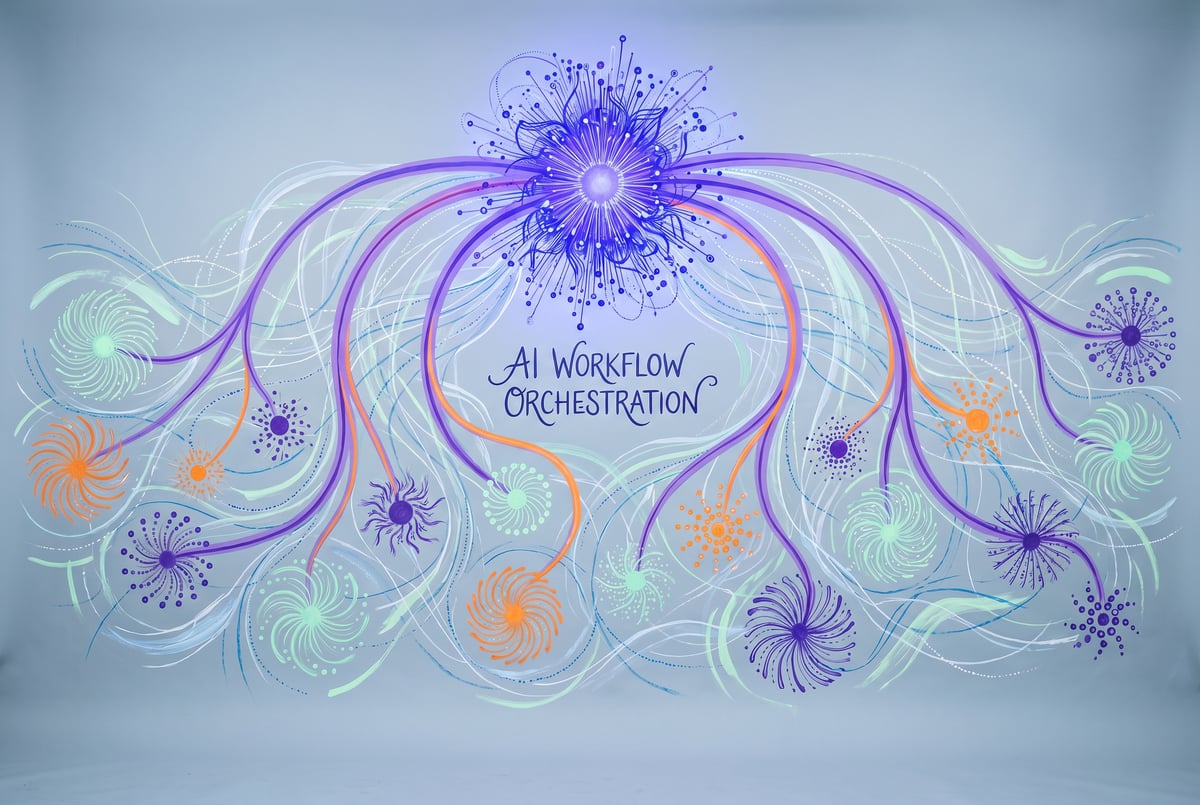
Once you understand which steps need Fable 5 and which don’t, the architecture becomes straightforward: use Fable 5 as the orchestrator and Sonnet 5 as the execution layer.
Here’s how that looks in practice.
The Orchestrator-Worker Architecture
Fable 5 (Orchestrator)
- Receives the initial goal or task
- Breaks it into a concrete execution plan
- Decides which tools or sub-agents to call
- Handles mid-workflow decisions that require judgment
- Assembles and validates the final output
Sonnet 5 (Workers)
- Receives specific, well-defined sub-tasks from the orchestrator
- Executes extraction, summarization, classification, and transformation steps
- Returns structured outputs that the orchestrator can use
The orchestrator doesn’t need to know everything — it just needs to reason well. The workers don’t need to reason — they just need to execute reliably.
Other agents start typing. Remy starts asking.
Scoping, trade-offs, edge cases — the real work. Before a line of code.
This pattern works because Fable 5 is good at writing clear sub-task instructions. It produces prompts for Sonnet 5 that are specific enough to get reliable results, which is why the output quality of the hybrid approach matches all-Fable quality on most tasks.
Prompt Engineering for Sub-Agent Handoffs
The quality of Fable 5’s instructions to Sonnet 5 workers is the biggest variable in this architecture. A few principles that consistently improve results:
- Be explicit about output format. Don’t ask Sonnet 5 to “summarize this” — tell it “write a 3-bullet summary of the key points, each under 20 words.”
- Give context about what the output will be used for. Sonnet 5 performs better when it understands the downstream purpose.
- Set a clear scope boundary. Ambiguity is where Sonnet 5 underperforms. Remove it in the handoff prompt.
- Include a validation step. Have the Fable 5 orchestrator check the output before it moves to the next step. A single review pass catches most Sonnet 5 errors before they propagate.
When to Break the Pattern
The hybrid pattern isn’t a universal rule. For some use cases, you’re better off with a flat architecture:
- Simple, single-step tasks — If your workflow is one LLM call, just use Sonnet 5. There’s no orchestration overhead to justify.
- Tasks requiring deep context throughout — Some tasks maintain a continuous chain of reasoning from start to finish. Splitting between models can break that chain.
- High-volume, low-stakes pipelines — If you’re processing thousands of items per day with low error tolerance requirements, Sonnet 5 alone (with strong prompts) is often the right call.
Measuring Quality in Hybrid Workflows
The claim that hybrid Fable/Sonnet workflows match all-Fable quality needs to be tested, not assumed. Here’s a practical evaluation framework.
Define Failure Modes Before You Run
Before comparing approaches, specify what “bad output” looks like for your use case:
- Does the output miss required fields?
- Does it make incorrect inferences?
- Does it fail to flag edge cases?
- Is the tone or style off?
Different tasks have different failure modes. Track the ones that matter for your specific workflow.
Run Parallel Comparisons on Real Data
Take 50–100 representative inputs from your actual use case. Run them through three configurations:
- All Fable 5 — your quality baseline
- All Sonnet 5 — the floor
- Fable 5 orchestrator + Sonnet 5 workers — the hybrid
Score outputs on your defined failure modes. The hybrid typically matches or approaches the all-Fable benchmark on most structured task types, while falling short on tasks with high ambiguity in the execution steps.
Track Error Propagation Rates
In multi-step workflows, a single bad output from one step can corrupt all downstream outputs. Measure how often each configuration produces an error that propagates to the final output. The orchestrator’s quality has an outsized effect on this metric, which is why keeping Fable 5 in the planning role pays off even when workers use Sonnet 5.
Practical Routing Logic
If you’re building dynamic workflows, you need a way to route steps to the right model automatically. Here are the routing criteria that work well in practice.
Route to Fable 5 when:
- The step involves planning or decomposing a goal
- The input is ambiguous or underspecified
- The output will be used to direct other agents
- The step requires weighing tradeoffs without clear rules
- The output is final and high-stakes
Remy is new. The platform isn't.
Remy is the latest expression of years of platform work. Not a hastily wrapped LLM.
Route to Sonnet 5 when:
- The task has a clear, specific schema or format requirement
- The input is well-structured and bounded
- The step is repeating the same transformation many times
- The output is an intermediate step (not final)
- Failure is catchable by a downstream validation step
You can implement this routing as a simple configuration in your workflow builder, or let Fable 5 decide dynamically — though the latter adds latency and its own cost.
How MindStudio Makes This Architecture Easy to Build
Building a hybrid Fable 5/Sonnet 5 workflow from scratch means managing model routing, handling outputs between steps, error handling, and API costs yourself. That’s a lot of plumbing before you get to the actual task your workflow is supposed to do.
MindStudio removes that overhead. Its visual workflow builder lets you assign different models to different steps without touching any configuration files or writing API integration code. You can set up a Fable 5 orchestrator node, wire it to Sonnet 5 worker nodes, define the handoff prompts, and start testing — all in the same interface.
This matters for the hybrid pattern specifically because you can iterate quickly. If a Sonnet 5 worker step is producing inconsistent results, you can tighten the prompt in the UI, re-run the test, and see immediately whether it fixed the problem. Doing the same with raw API calls means rebuilding your test harness every time.
MindStudio also handles the 200+ model options without requiring separate API keys — Claude Fable 5, Sonnet 5, and every other available model are accessible directly from the builder. You’re not locked into one provider or one model version, which matters when Anthropic releases updates to the Sonnet or Fable series.
For teams running high-volume workflows, the cost visibility in MindStudio’s dashboard is useful: you can see per-run token costs broken down by step, which makes it easy to identify which steps are consuming the most budget and whether switching a step to Sonnet 5 would change the output quality in a meaningful way.
FAQ
Is Claude Sonnet 5 good enough for production workflows?
Yes, for most execution tasks. Sonnet 5 performs reliably on structured data extraction, summarization, classification, and format transformation when given clear, specific prompts. Where it underperforms is in tasks that require resolving ambiguity, making nuanced judgment calls, or planning across many steps. For a well-designed production workflow with clear task boundaries, Sonnet 5 handles the majority of steps without quality issues.
How much cheaper is Sonnet 5 compared to Fable 5?
The gap is roughly 5–8x depending on the specific model tier and usage volume. In single-pass tasks, this difference is small in absolute terms. In workflows with many LLM steps running thousands of times per day, the difference becomes significant — often reducing monthly AI costs by 60–80% compared to running all steps through Fable 5.
Does using Sonnet 5 as a sub-agent actually produce worse outputs?
One coffee. One working app.
You bring the idea. Remy manages the project.
Not consistently, and not by much on most tasks. The quality gap is meaningful in high-ambiguity and high-reasoning tasks, but negligible on execution tasks that are well-specified. The key variable is prompt quality: Sonnet 5 with a precise, well-scoped prompt often matches Fable 5 with a vaguer one. The orchestrator-worker pattern works partly because Fable 5 generates better sub-task prompts for Sonnet 5 than most humans write manually.
When should I just use Fable 5 for everything?
When the complexity is uniformly high across all steps, when errors are very costly and hard to catch, or when your workflow runs infrequently enough that cost isn’t the primary concern. Some domains — legal analysis, medical reasoning, complex financial modeling — have enough nuance throughout that running Sonnet 5 on execution steps creates unacceptable risk. For most business automation workflows, though, these conditions don’t apply.
Can I switch models mid-workflow dynamically?
Yes, and this is actually one of the more powerful patterns. A Fable 5 orchestrator can decide which sub-agent to call, allowing it to route simple tasks to Sonnet 5 and reserve more complex sub-tasks for another Fable 5 call. The tradeoff is that dynamic routing adds latency and itself consumes Fable 5 tokens for the routing decision. For most workflows, static routing (Fable 5 for planning/assembly, Sonnet 5 for everything else) is simpler and nearly as effective.
What’s the best way to evaluate which model to use for a specific step?
Run a side-by-side comparison on 30–50 real examples from your use case, using a clear scoring rubric. Don’t rely on synthetic benchmarks or general capability comparisons — the answer depends heavily on your specific task and prompt quality. Check both average quality and worst-case failures; Sonnet 5’s failure modes matter more than its average performance if a bad output causes downstream problems in your workflow.
Key Takeaways
- Fable 5 earns its premium in specific places: task planning, ambiguous inputs, mid-workflow judgment calls, and final output assembly on high-stakes deliverables.
- Sonnet 5 is the right choice for most execution steps: extraction, summarization, transformation, and classification with clear schemas.
- The hybrid pattern — Fable 5 orchestrating Sonnet 5 workers — matches all-Fable quality on most workflows while reducing cost by 60–80% depending on step distribution.
- Prompt quality in handoffs is the biggest variable. Fable 5 generates better sub-task prompts than most people write manually, which is a hidden advantage of the orchestrator pattern.
- Test on real data before committing. General capability comparisons don’t predict task-specific performance as well as 50 examples from your actual workflow.
If you’re running AI workflows at any volume, the model selection decision compounds every time a workflow runs. Getting it right once, through honest evaluation rather than defaulting to the most capable model, is one of the highest-leverage optimizations available. Start with the MindStudio workflow builder to run your own side-by-side tests without the infrastructure overhead.