
AI Concepts Articles
Browse 1363 articles about AI Concepts.

What Is GPT 5.5 Instant? OpenAI's New Default Model Explained
GPT 5.5 Instant is OpenAI's new default ChatGPT model. Learn what changed, how it differs from GPT 5.3, and what it means for your AI workflows.

XAI Is Dead: 5 Surprising Facts About Elon Musk's U-Turn on Anthropic
Elon called Anthropic 'missanthropic' in March 2026. Weeks later he leased them his entire data center and dissolved XAI. Here's the full story.
Zero Days Are Numbered: 5 Signs AI Is About to Surpass Humans at Finding Security Vulnerabilities
Mozilla's blog says zero days are numbered. Mythos found 271 Firefox bugs in one cycle. Here are five signs AI is taking over adversarial code analysis.
An AI Agent Deleted a Production System Because No One Defined 'Staging' — Here's the Fix
A real agent confused staging and production and deleted a live system. The fix isn't better prompts — it's semantic authority primitives.

Why Computer Use Isn't Enough: The 3-Layer Framework Every AI Product Needs
Access, meaning, and authority — most AI products only have the first layer. Here's the full framework for building durable agent products.
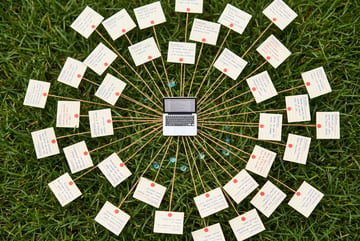
Andrej Karpathy's LLM Wiki: Build a Personal Knowledge Base with Obsidian and Codeex in 5 Minutes
Karpathy's LLM Wiki architecture, extended with a CRM and journal layer. Here's how to build it with Obsidian and Codeex today.
How Anthropic Built a $200B+ Compute Empire in Under 12 Months: A Timeline
From Amazon to Google to SpaceX in under a year. Here's every Anthropic compute deal, what it costs, and when it comes online.

Anthropic SpaceX Compute Deal: What 220,000 GPUs Mean for Claude Users
Anthropic's deal with SpaceX's Colossus 1 data center doubles Claude Code rate limits and removes peak-hour restrictions. Here's what changed and why.
Claude Code's Creator Says Anthropic Has Zero Manually Written Code — Here's How They Did It
Boris Churnney, who built Claude Code, says every line at Anthropic is now AI-generated. Here's the multi-agent setup behind that claim.
Claude for PowerPoint's Hidden Beta Flaw: It Can't Actually See Your Slides
Claude's PowerPoint add-in processes slides as markdown internally — meaning it can hallucinate about content already on your deck.

Dario Amodei's 80x Growth Claim at Code with Claude: What the Numbers Actually Mean
Dario Amodei said Anthropic hit 80x annualized revenue growth in Q1 2026. We break down what that trajectory actually signals.

Granite Speech 4.1 2BN Transcribes 1 Hour of Audio in 2 Seconds on H100 — How NLE Makes It Possible
IBM's non-autoregressive model hits a real-time factor of 1820. Here's how the NLE technique achieves that without sacrificing accuracy.
How to Build an AI Second Brain with a Built-In CRM and Journal
Learn how to build a second brain using Obsidian and Claude Code with a wiki, CRM, and journaling system that responds from your saved knowledge.

LTX 2.3 Video-to-Video: Modes, Strengths, and Real-World Results
Explore LTX 2.3 video-to-video controls including pose, depth, and edge modes. See real results, limitations, and tips for stylization transfers.
Natural Language Harnesses vs Code Harnesses: Which Performs Better for AI Agents?
Tsinghua research shows rewriting agent control logic in natural language boosted performance from 30% to 47% and cut runtime from 361 to 41 minutes.

What Is Non-Auto-Regressive ASR? IBM Granite Speech 4.1 Explained
IBM Granite Speech 4.1's non-auto-regressive model transcribes an hour of audio in 2 seconds. Learn how NLE architecture achieves this speed.
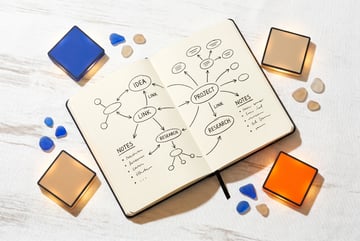
Build a 3-Pillar AI Second Brain in Obsidian: Wiki, CRM, and Journal That Talk to Each Other
Wiki, CRM, and journal — three Obsidian folders wired together so your AI grounds every answer in your actual saved knowledge.

OpenBrain Memory Provenance for OpenClaw: 4 Labels That Make Agent Recall Trustworthy
OpenBrain's memory provenance system tags every recalled fact as observed, inferred, confirmed, or imported. Here's why that changes agent reliability.
OpenClaw's Creator Joined OpenAI — Then OpenAI Made OpenClaw Free. What's the Play?
Peter Steinberger built OpenClaw, then joined OpenAI. Days later, OpenAI made OpenClaw free for all paid users. Here's what that signals.

SAP vs. Salesforce on AI Agents: One Is Blocking Access, One Is Going Headless-First
SAP is blocking agent access to its products. Salesforce is going headless and MCP-open. Here's which bet wins in an agentic world.