What Is the Anthropic OpenClaw Ban? Why Third-Party Harnesses Were Blocked
Anthropic blocked Claude subscriptions from powering third-party tools like OpenClaw. Learn what changed, why it happened, and what to do instead.

When Anthropic Drew the Line on Subscription Workarounds
If you’ve tried to use a tool like OpenClaw to run Claude through your existing Claude.ai subscription, you’ve probably run into an error message, a ban, or just a broken workflow. Anthropic has moved decisively to block third-party harnesses — tools that wrap the Claude web interface and use a paid subscription account to power automated tasks.
This article explains what OpenClaw and similar tools actually do, why Anthropic blocked them, what the Terms of Service actually say, and what your options are now if you need Claude for programmatic or multi-agent use.
What OpenClaw Was (and What “Third-Party Harnesses” Mean)
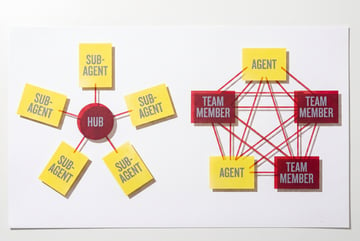
OpenClaw was a third-party client designed to let developers and power users access Claude’s capabilities through their existing Claude.ai subscription — without going through Anthropic’s official API. Think of it as a wrapper: it sat between the user and Claude’s web interface, automating interactions that were designed to be manual.
Similar tools have appeared in the AI space repeatedly. Some wrapped ChatGPT’s web interface before OpenAI tightened enforcement. Others targeted Claude. The appeal is obvious: a Claude Pro subscription costs $20/month, while heavy API usage can cost significantly more depending on token volume.
How These Harnesses Worked
The basic mechanism involved:
- Session hijacking or cookie reuse — logging into Claude.ai programmatically using saved credentials
- Browser automation — tools like Playwright or Puppeteer controlling a headless browser to interact with Claude’s web UI
- Reverse-engineered endpoints — some tools called Claude’s internal web API directly, bypassing the official developer API
Remy is new. The platform isn't.
Remy is the latest expression of years of platform work. Not a hastily wrapped LLM.

The result was that a $20/month subscription could power automated workflows, multi-step agent pipelines, or high-volume tasks that Anthropic expected to be handled through its metered API.
Why Anthropic Blocked Them
The bans weren’t arbitrary. Anthropic had concrete reasons — technical, commercial, and legal — to shut this down.
Terms of Service Violations
Anthropic’s Terms of Service for Claude.ai are explicit: the service is for personal, non-automated use. Specifically, the ToS prohibit:
- Using Claude.ai through automated means (bots, scripts, scrapers)
- Accessing the service in ways that bypass authentication or rate limiting
- Using a consumer subscription to build or power applications or services
When third-party harnesses route automated traffic through a subscription account, they’re in direct violation of these terms. Anthropic can and does terminate accounts caught doing this.
The Subscription vs. API Distinction Is Intentional
Anthropic runs two distinct products for a reason. The Claude.ai subscription is priced and resourced for a single human having conversations. The Anthropic API is priced per token specifically because programmatic and agentic use is unpredictable at scale.
When a harness converts a flat-fee subscription into unlimited API-like access, it disrupts that model entirely. A single power user running automated pipelines through a subscription could consume the same compute as hundreds of normal users.
Security and Data Risks
Consumer subscriptions and developer API accounts have different security postures. A consumer account stores conversation history, has different data retention policies, and wasn’t designed to handle authentication flows from external tools. Using a third-party harness means routing your data (and potentially your users’ data) through unofficial channels — which creates real privacy and security exposure.
Protecting Model Access Quality
When automated traffic floods through consumer accounts, it degrades the experience for everyone. Anthropic’s infrastructure is tuned for the traffic patterns of real users. Harnesses create usage spikes that weren’t accounted for in capacity planning.
The Official Path: Anthropic’s API
If you need Claude for anything beyond personal, manual use, the official answer is the Anthropic API. It gives you:
- Programmatic access to Claude 3.5 Sonnet, Claude 3 Opus, Claude 3 Haiku, and other models
- Tool use and function calling for agentic workflows
- Vision, document processing, and extended context
- Proper rate limits and usage controls
- Compliance with Anthropic’s enterprise and developer terms
The API is token-priced, so costs scale with actual usage. For light use, it’s often cheaper than a subscription. For heavy use, you’re paying for what you consume rather than circumventing the model.
What Happens If You Need Multi-Agent Capabilities?
OpenClaw and similar tools were particularly popular among people trying to build multi-agent pipelines — automated sequences where Claude would reason, call tools, and complete tasks without a human in the loop. The official API fully supports this through:
- Tool use — Claude can call defined tools, APIs, and functions mid-conversation
- System prompts and structured outputs — for reliable agent behavior
- Long context windows — up to 200K tokens in Claude 3 models
- Streaming — for real-time agent responses in pipelines
The key is that multi-agent use belongs on the API, not wrapped around a consumer subscription.
What Developers Should Do Instead
Other agents ship a demo. Remy ships an app.
Real backend. Real database. Real auth. Real plumbing. Remy has it all.
If you were using OpenClaw or a similar tool, here are your real alternatives — organized by what you were actually trying to do.
If You Were Running Automated Workflows
Get an Anthropic API key and use it directly, or through a platform that manages API access for you. Platforms like MindStudio give you access to Claude and 200+ other models without needing to manage API keys yourself, set up infrastructure, or write integration code from scratch.
If You Were Building Agent Pipelines
Multi-agent frameworks like LangChain, LlamaIndex, AutoGen, and CrewAI all integrate with Claude via the official API. These frameworks are purpose-built for the kind of agentic behavior that harnesses were trying to approximate through browser automation.
If You Were Trying to Keep Costs Down
This is worth addressing directly: the API is more cost-effective than it looks for moderate use. Claude 3 Haiku, for example, is priced at fractions of a cent per thousand tokens. If your use case is genuinely light, the API cost is often lower than a monthly subscription.
If cost is a real constraint, look at platforms that pool API access across users and offer usage-based billing — which is what MindStudio and similar platforms do.
If You Needed a No-Code Interface for Claude
Some people used harnesses not because they wanted raw API access, but because they needed a way to orchestrate Claude without writing code. That’s a legitimate need, and it’s what no-code AI platforms are built for.
How MindStudio Handles Claude Integration Properly
MindStudio is a no-code platform for building AI agents and automated workflows. It gives you access to Claude — alongside GPT-4o, Gemini, and 200+ other models — through a visual builder, without requiring you to manage your own API keys or worry about Terms of Service compliance.
The distinction matters here: MindStudio accesses Claude through Anthropic’s official API with proper licensing and terms in place. You’re not routing traffic through a consumer subscription or using unofficial endpoints. You’re building on a compliant, production-grade foundation.
Here’s what that looks like in practice:
- Visual workflow builder — chain Claude with other models, tools, and integrations using a drag-and-drop interface. No code required for most use cases.
- 1,000+ integrations — connect Claude to Google Workspace, Slack, HubSpot, Airtable, Notion, and more without writing integration code.
- Multi-step agents — build agents that reason, call tools, retrieve information, and complete tasks across multiple steps — the actual use case most harness users were after.
- Scheduled and triggered agents — run agents on a schedule, via webhook, email trigger, or API endpoint.
- No separate API accounts required — MindStudio handles the infrastructure layer. You focus on what the agent should do.
If you were using something like OpenClaw because you wanted Claude to power a workflow without coding it yourself, MindStudio is the compliant, supported alternative.
You can start for free at mindstudio.ai.
The Broader Pattern: Why Platform Rules Around AI Subscriptions Are Tightening
Other agents start typing. Remy starts asking.
Scoping, trade-offs, edge cases — the real work. Before a line of code.
The OpenClaw situation isn’t unique. This has happened across the AI space — tools get built to extract more value from consumer subscriptions than the platforms intended, and the platforms respond with enforcement.
OpenAI has cracked down on ChatGPT scraping. Google has enforced terms around Gemini web interface automation. The pattern is consistent: consumer products are not developer APIs, and using one as the other violates the terms and undermines the business model.
This isn’t purely commercial protectionism. Consumer AI interfaces lack the rate limiting, audit logging, data handling controls, and reliability guarantees that production applications need. Building on them creates fragile, non-compliant systems that can break overnight when the platform changes its authentication flow or bot detection.
The right infrastructure for programmatic AI use is the API — with all the guarantees, SLAs, and developer tooling that implies.
Frequently Asked Questions
What exactly did Anthropic ban?
Anthropic didn’t pass a specific named “ban” policy — it enforced existing Terms of Service provisions. The ToS for Claude.ai have always prohibited automated, programmatic, and commercial use through consumer subscription accounts. Tools like OpenClaw that routed automated traffic through these accounts were always in violation. What changed is enforcement: Anthropic actively detects and terminates accounts using third-party harnesses.
Is it against Anthropic’s rules to use Claude in my application?
No — but you have to use the right product. Using Claude in an application is exactly what the Anthropic API is designed for. What’s prohibited is using a Claude.ai consumer subscription (the $20/month plan) to power an application. Developer and commercial use belongs on the API, not the consumer interface.
What happened to my OpenClaw account or access?
If your Claude.ai account was suspended or banned for using a third-party harness, you’d need to contact Anthropic support. In some cases, accounts may be reinstated if the violation was unintentional. Going forward, using Claude for automation or agentic work requires either a direct API key or a licensed platform.
Can I build a Claude-powered app without the API?
Not legitimately. Any application, tool, or workflow that uses Claude needs to go through the Anthropic API (or a platform that has licensed API access). No-code platforms like MindStudio provide a way to build Claude-powered applications without writing your own API integration code — but they’re still using the official API under the hood.
Why did developers use harnesses in the first place?
Mostly cost and convenience. A $20/month subscription looked cheaper than API token costs for high-volume use. And some users didn’t want to deal with API keys, account setup, or integration code. But both of these problems have legitimate solutions: the API is more cost-effective at moderate volumes than it appears, and no-code platforms handle the integration layer without requiring code.
Will Anthropic ever allow third-party clients for Claude subscriptions?
Anthropic hasn’t announced anything like this. Their general approach — like most AI companies — is to maintain a clear separation between consumer products and developer products. If anything, enforcement is likely to get stricter, not looser, as detection technology improves.
Key Takeaways
- OpenClaw and similar tools routed automated traffic through Claude.ai consumer subscriptions — which has always violated Anthropic’s Terms of Service.
- Anthropic blocked these harnesses due to ToS violations, commercial model integrity, security concerns, and infrastructure strain.
- The legitimate alternative for programmatic Claude use is the Anthropic API — it supports tool use, agentic workflows, long context, and developer-grade reliability.
- No-code platforms like MindStudio provide compliant, official API-based access to Claude for users who want to build workflows and agents without writing integration code.
- The broader trend is clear: AI companies are enforcing the distinction between consumer subscriptions and developer APIs, and building on consumer interfaces is an increasingly risky foundation for any real application.
Plans first. Then code.
Remy writes the spec, manages the build, and ships the app.
If you were using a harness to get Claude into your workflows, the right move is to shift to compliant infrastructure.