What Is Sakana Fugu? The Multi-Model Orchestrator That Routes Prompts Automatically
Sakana Fugu is an orchestrator model that routes prompts to the best AI model automatically. Learn how it works and when to use Fugu vs Fugu Ultra.

Automatic Model Routing Is the Problem Nobody Talks About
Picking the right AI model for a given task sounds simple until you’re doing it dozens of times a day. Should this summarization task go to a cheaper, faster model? Does this coding problem need a frontier reasoner? Is this creative prompt better suited to a model with looser constraints?
Most teams default to one model for everything — which means overpaying for simple tasks, or underperforming on complex ones. Sakana Fugu is designed to solve this. It’s a multi-model orchestrator that automatically routes prompts to the best available model based on what the task actually requires. This article explains what Sakana Fugu is, how its routing logic works, what distinguishes Fugu from Fugu Ultra, and when this kind of automated model selection actually makes sense.
Who Is Sakana AI?
Before getting into Fugu specifically, it helps to understand where it comes from.
Sakana AI is a Tokyo-based research lab founded in 2023. Its co-founders include Llion Jones, one of the original authors of the landmark “Attention Is All You Need” paper that introduced the transformer architecture underpinning most modern LLMs. The company’s name means “fish” in Japanese, and its research philosophy draws from nature — specifically, the idea that collective intelligence from many smaller, specialized components can outperform a single massive system.
Built like a system. Not vibe-coded.
Remy manages the project — every layer architected, not stitched together at the last second.

That philosophy is baked directly into Fugu. Rather than building one giant model to handle everything, Sakana built a system that orchestrates across many models and routes intelligently.
What Is Sakana Fugu?
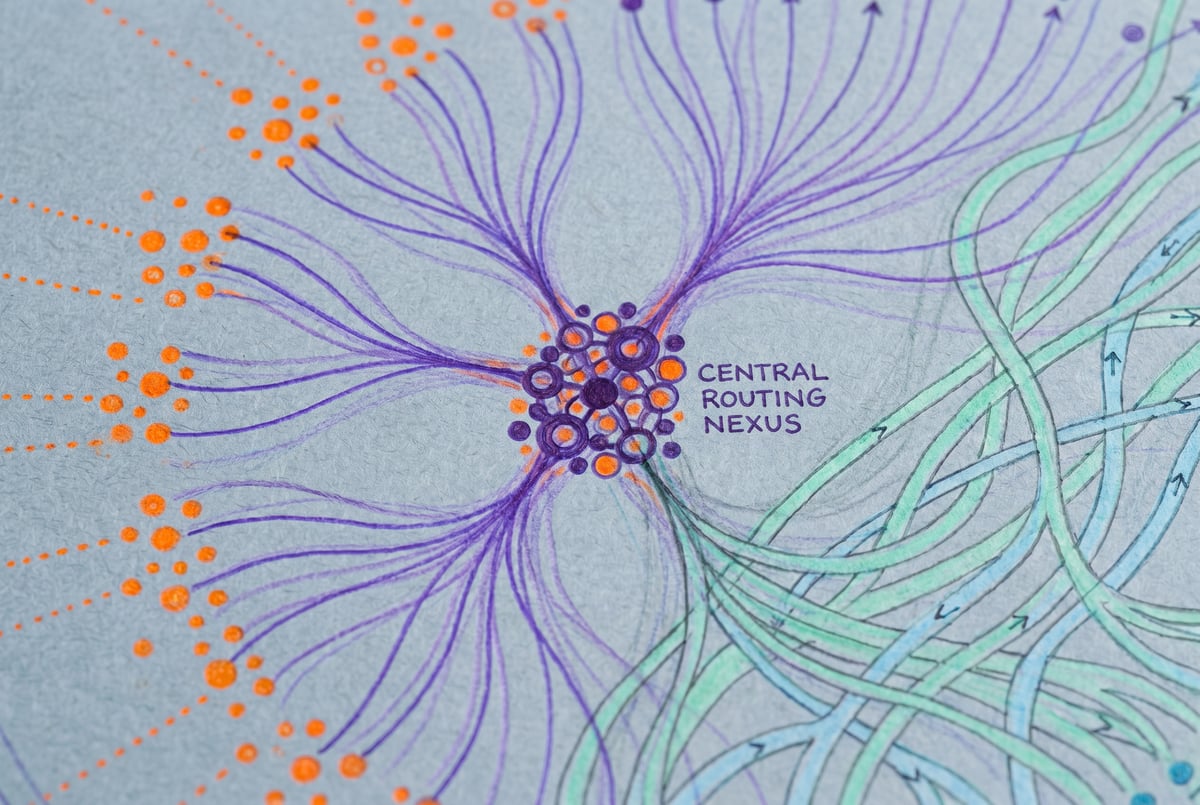
Sakana Fugu is an orchestrator model — a system that sits above a pool of AI models and decides which one handles each incoming prompt.
The core idea: not every task needs the same model. A simple factual lookup doesn’t need a trillion-parameter frontier model. A nuanced multi-step reasoning problem might. Fugu analyzes the prompt, classifies what kind of task it is, estimates the computational and quality requirements, and dispatches it to whichever model in its pool is best suited.
This is different from just calling multiple models and comparing outputs. Fugu is making a routing decision upfront, before generation happens. The result is a system that aims to deliver high-quality outputs across a wide range of task types without always defaulting to the most expensive or slowest option.
The name “fugu” refers to the Japanese pufferfish — a fitting choice for a company built around fish-themed AI research.
How the Routing Mechanism Works
Fugu’s routing isn’t random or round-robin. It’s a learned system that has been trained to match prompt characteristics to model capabilities.
Prompt Classification
When a prompt arrives, Fugu first classifies it. This involves analyzing the structure, length, domain indicators (is this code? a question? a creative task?), and complexity signals. That classification determines which “category” the task falls into.
Model Pool Matching
Fugu maintains a pool of candidate models. Each model has a profile — what it’s good at, its typical latency, its cost per token, and its known performance benchmarks across task types. The routing decision maps the task classification to the best-fit model in the pool.
Quality and Cost Tradeoffs
A key design goal is optimizing the cost-quality tradeoff. For straightforward tasks, Fugu routes to a smaller, cheaper, faster model. For high-complexity or high-stakes outputs, it routes to a frontier model. This means users aren’t paying frontier model prices for tasks that don’t require frontier model capabilities.
This is especially valuable at scale. If you’re running thousands of AI completions per day, even a 20–30% improvement in routing efficiency has a significant impact on both cost and output quality.
Confidence and Fallback
When Fugu’s confidence in its routing decision is low — because the prompt is ambiguous or sits across multiple categories — it can escalate to a stronger model as a fallback. This prevents low-confidence routing from producing poor outputs.
Fugu vs. Fugu Ultra: What’s the Difference?
Sakana offers two tiers of the Fugu orchestrator, and they’re designed for different use cases.
Fugu
The base Fugu model handles most standard routing scenarios well. It’s capable of classifying a wide range of task types and routing to appropriate models from its pool. It’s optimized for speed and efficiency and works well for production pipelines where most tasks are within well-defined categories.
Think of Fugu as the right choice when:
- Your use cases are relatively predictable (customer support, content generation, summarization, Q&A)
- Cost efficiency is a priority
- Latency matters and you need fast routing decisions
- You’re handling high volumes of routine tasks
Remy is new. The platform isn't.
Remy is the latest expression of years of platform work. Not a hastily wrapped LLM.
Fugu Ultra
Fugu Ultra is the more sophisticated version. It handles more complex routing scenarios — tasks that are harder to classify, prompts that require multiple capabilities simultaneously, or cases where the cost of a wrong routing decision is high.
Fugu Ultra is better suited for:
- Complex agentic workflows where tasks are dynamic and unpredictable
- Research and analysis tasks with high quality requirements
- Applications where output consistency matters more than cost savings
- Use cases involving specialized domains (legal, medical, technical)
The Ultra tier generally runs slower and costs more than standard Fugu, reflecting the more intensive classification and routing process. But for high-stakes applications, the improved accuracy in routing decisions justifies the overhead.
Why Multi-Model Orchestration Matters
The broader context here is important. The AI industry isn’t converging on a single dominant model — it’s fragmenting. Different models have different strengths, pricing models, safety constraints, context windows, and capabilities. Research from AI benchmarking organizations consistently shows that no single model dominates across all task types.
This creates a real operational challenge. Teams that hard-code a single model into their pipelines either:
- Use an expensive frontier model for everything (overspending on simple tasks)
- Use a cheaper model for everything (underperforming on complex tasks)
- Manually route different task types to different models (expensive engineering overhead)
Fugu is attempting to automate option 3. The routing intelligence becomes a layer that sits above your models, handling the selection logic so your application doesn’t have to.
This is also the reason why multi-agent AI systems increasingly include a “planner” or “router” component — the intelligence about which tool or model to use for a given sub-task is itself valuable. Sakana’s contribution is treating that routing layer as a dedicated trained model rather than a heuristic or rule-based system.
Practical Use Cases for Fugu
Fugu makes the most sense in contexts where prompt diversity is high and cost efficiency matters. Here are a few scenarios where it’s a strong fit:
High-volume content pipelines — If you’re generating large amounts of content across different formats (short social copy, long-form articles, SEO metadata, translations), routing each task type to an appropriately-sized model can cut costs significantly.
Customer-facing AI applications — Chatbots and support agents handle everything from “what’s my order status?” to complex troubleshooting. A routing layer ensures simple queries don’t consume frontier model compute.
Developer tooling — Code generation, debugging, and documentation each have different model requirements. Fugu can route code generation to a model optimized for programming while sending documentation tasks elsewhere.
Research and analysis workflows — When users submit queries ranging from quick lookups to deep multi-step analysis, Fugu can calibrate the model selection to match the depth required.
Enterprise knowledge bases — Internal Q&A systems often see wildly varying query complexity. Intelligent routing keeps costs manageable without degrading quality for complex queries.
Limitations to Keep in Mind
Fugu is a useful tool, but it’s not appropriate for every situation.
Other agents ship a demo. Remy ships an app.
Real backend. Real database. Real auth. Real plumbing. Remy has it all.
Routing latency — Adding a routing layer adds a step before generation begins. In latency-sensitive applications, this overhead may be unacceptable. For real-time user interactions, every millisecond counts.
Router errors — Fugu can misclassify prompts, especially when a task is genuinely ambiguous. A complex prompt that looks simple on the surface might get routed to a weaker model, producing a poor output.
Reduced controllability — When you use Fugu, you’re handing routing control to the orchestrator. Teams that need deterministic, auditable model selection may find this uncomfortable.
Dependency on pool quality — Fugu’s effectiveness depends on the quality of the models in its pool. If the pool doesn’t include models that are good at a particular task type, the routing decision doesn’t help much.
Evolving benchmarks — Model capabilities shift as new versions are released. A routing model trained on historical benchmark data may not perfectly reflect the current capabilities of each model it routes to.
These aren’t reasons to avoid Fugu — they’re things to account for when deciding if it fits your architecture.
How MindStudio Handles Multi-Model Selection
If you’re building AI workflows and don’t want to manage model routing yourself, MindStudio takes a complementary approach.
MindStudio gives you access to 200+ AI models in a single no-code platform — including Claude, GPT-4o, Gemini, Mistral, Llama, and many others — without requiring separate API accounts or model management overhead. When you build an agent or workflow in MindStudio, you can specify which model handles each step, or configure routing logic that selects models based on task requirements.
This is useful when you want more explicit control over the routing logic than an opaque orchestrator provides. You can build a multi-step workflow where:
- Step 1 uses a fast, cheap model for initial classification
- Step 2 routes to a specialized model based on that classification
- Step 3 uses a frontier model for final synthesis
All of this is configurable in MindStudio’s visual builder — no code required, no API key juggling. And because MindStudio handles the infrastructure layer (rate limiting, retries, authentication), you’re not writing plumbing code to manage model connections.
For teams that want Fugu-style routing logic but with more transparency and control over each step, building a routing agent in MindStudio is a practical alternative. You can try it free at mindstudio.ai.
Sakana Fugu in the Broader Orchestration Landscape
Fugu isn’t the only system attempting intelligent model routing. There are several adjacent approaches worth understanding:
LLM routing research from academic labs has explored cost-performance tradeoffs in multi-model settings. The general finding is that well-designed routing can achieve near-frontier quality at significantly lower cost.
RouteLLM (from LMSYS) is an open-source framework for training routing models that decide between strong and weak LLMs. It’s conceptually similar to what Fugu is doing, but open-source and model-agnostic.
Martian is another commercial routing product focused specifically on optimizing cost-quality tradeoffs across model providers.


What distinguishes Fugu is Sakana AI’s research-first approach and the integration with their broader ecosystem of specialized models. The team has published work on evolutionary model merging and other techniques for creating specialized AI components — which informs how they think about the model pool Fugu routes across.
Frequently Asked Questions
What exactly does Sakana Fugu do?
Sakana Fugu is an orchestrator model that analyzes incoming prompts and automatically routes them to the most appropriate AI model from a pool of candidates. Instead of sending every prompt to a single model, Fugu classifies the task, estimates what capabilities it requires, and dispatches it to a model that matches those requirements — balancing quality and cost in the process.
How is Fugu different from just calling multiple models?
Fugu makes a routing decision before generation, not after. Rather than calling multiple models and comparing outputs (which is slow and expensive), Fugu predicts which single model will perform best for a given task and routes to that model directly. It’s a classification and dispatch system, not an ensemble or voting system.
When should I use Fugu Ultra instead of standard Fugu?
Use Fugu Ultra when your tasks are unpredictable, high-stakes, or require nuanced classification. Standard Fugu handles well-defined, routine task types efficiently. Fugu Ultra is designed for complex agentic workflows, specialized domains, or applications where a routing error has significant consequences.
Can Fugu route to any AI model?
Fugu routes within its defined model pool — it doesn’t arbitrarily route to any model on the market. The pool is curated and the routing model is trained relative to those specific options. Adding a new model to the pool would require retraining or updating the routing model’s knowledge of that model’s capabilities.
Is multi-model orchestration worth the added complexity?
For high-volume applications with diverse task types, yes — the cost savings and quality improvements from smart routing typically justify the overhead. For simple, single-purpose applications where all tasks are similar, a single well-chosen model is usually simpler and sufficient.
How does Fugu compare to building routing logic manually?
Manual routing (rule-based or heuristic) is faster to implement but brittle — it breaks when task patterns change or new edge cases appear. A trained routing model like Fugu is more adaptive but less transparent. The tradeoff is control vs. flexibility. Manual routing gives you explicit, auditable logic; Fugu gives you a learned system that can handle complexity you didn’t anticipate.
Key Takeaways
- Sakana Fugu is an orchestrator model that routes prompts to the best-fit AI model automatically, optimizing for quality and cost.
- Routing decisions are based on prompt classification, model capability profiles, and cost-quality tradeoffs — not random selection.
- Fugu handles routine, high-volume routing; Fugu Ultra handles complex, unpredictable, or high-stakes workflows.
- Multi-model orchestration is a real solution to a real problem — hard-coding a single model into all tasks either wastes money or limits quality.
- For teams that want routing logic with more transparency and control, platforms like MindStudio let you build explicit model selection into each step of an AI workflow without writing code.

If you’re evaluating whether Fugu or a custom routing architecture fits your use case, the deciding factor is usually how well-defined your task types are. Predictable pipelines benefit from either approach. Unpredictable, diverse inputs are where a trained routing model like Fugu earns its keep.