
AI Model Reviews & Comparisons
Reviews, explainers, and head-to-head comparisons of released AI models. Includes 'What is [model]?' evergreen posts, single-model reviews, capability deep-dives, and side-by-side comparisons. Closed-source frontier models (GPT, Claude, Gemini) are the main beat; non-deployment content on open models lives here too. Deployment guides for open models stay in Local & Open-Weight Models.

Minimax M3: The 1M Token Coding Model That Claims to Beat GPT 5.5 on SWEbench
Minimax M3 is a coding-focused model with a 1 million token context window that outperforms GPT 5.5 and Gemini on SWEbench Pro at a fraction of the cost.

Minimax M3: A 1M Token Context Coding Model That Claims to Beat GPT 5.5
Minimax M3 is a coding model with a 1 million token context window that outperforms GPT 5.5 on SWE-bench Pro. Here's what it can do and how to access it.

Claude Opus 4.8 vs GPT 5.5: Which Model Wins for Long-Running Agentic Tasks?
Claude Opus 4.8 and GPT 5.5 take different approaches to agentic work. Compare harness quality, reasoning consistency, and real-world task performance.
NVIDIA Nemotron 3 Ultra vs Claude Opus 4.8: Which Open Model Wins for Agents?
Compare NVIDIA Nemotron 3 Ultra and Claude Opus 4.8 on agent benchmarks, speed, cost, and tool-calling to find the right model for your agentic workflows.

What Is Claude Opus 4.8? Anthropic's Incremental Model Update Explained
Claude Opus 4.8 brings improved agentic task performance and a new /workflows command. Here's what changed, what didn't, and when to use it.

Claude Opus 4.8 vs GPT 5.5 in Real Agentic Workflows: Which Model Wins?
Claude Opus 4.8 and GPT 5.5 take different approaches to agentic work. Here's how they compare on speed, harness quality, and real task completion.

Gemini 3.5 Flash vs Claude Opus 4.8 for UI Generation: Which Builds Better Frontends?
Gemini 3.5 Flash builds better-looking UIs while Claude Opus 4.8 handles planning and page copy. Here's how to use both in one workflow.

Claude Opus 4.8 vs GPT 5.5 on Coding Benchmarks: What the DeepSuite Results Show
Compare Claude Opus 4.8 and GPT 5.5 on the DeepSuite software engineering benchmark. See which model wins on real coding tasks.

What Is the History of AI? From Alan Turing to Claude Code in 100 Years
Trace AI history from Turing's Bombe to the transformer revolution and Claude Code. Understand the breakthroughs that made modern AI agents possible.
What Is Arc AGI 3? How Claude Opus 4.8 Achieved State-of-the-Art Fluid Intelligence
Arc AGI 3 tests fluid intelligence in AI models. Claude Opus 4.8 reached 1.5% — the highest score ever — by reasoning at a higher abstraction level.

What Is Backpropagation? The Algorithm That Made Modern AI Agents Possible
Backpropagation solved the multi-layer neural network training problem in 1986. Learn how this algorithm underpins every LLM and AI agent today.
What Is NVIDIA Neotron 3 Ultra? The Open-Source AI Model That's 5x Faster
NVIDIA Neotron 3 Ultra is a 550B open-source model that's 5x faster and 30% cheaper than competing frontier models. Here's what it means.

What Is Claude Opus 4.8 Honesty Mode? How Anthropic's Model Flags Uncertainty
Claude Opus 4.8 improves honesty by flagging uncertainties and avoiding unsupported claims. Here's what changed and why it matters for AI agents.
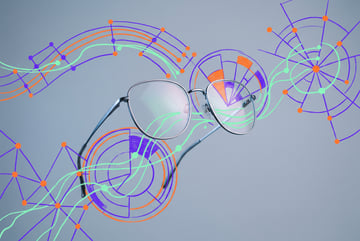
What Is Google Gemini AI Glasses? Audio vs Display Versions and What's Actually Shipping
Google announced two Gemini AI glasses at I/O 2026: audio-only launching this fall and a display prototype. Here's what's real and what's still coming.
What Is NVIDIA Cosmos 3? The World Foundation Model for Robotics and Physical AI
NVIDIA Cosmos 3 is a multimodal world model that handles text, images, video, audio, and actions in one architecture. Here's what it means for AI builders.

Google Gemini AI Glasses Explained: Audio Version vs Display Version and What's Actually Shipping
Google's Gemini AI glasses come in two versions. Here's what the audio-only pair launching this fall can do and what the display version offers.
Claude Opus 4.8 vs Claude Opus 4.7: What Actually Changed?
Claude Opus 4.8 fixes 4.7's biggest complaints: less attitude, better honesty, and restored creativity. Here's a real-world comparison of both models.

What Is Claude Opus 4.8? Anthropic's Most Honest Agentic Model Yet
Claude Opus 4.8 brings sharper judgment, improved honesty, and dynamic workflows for long-running tasks. Here's what changed and how to use it.

What Is Google Personal Intelligence? How AI Search Connects to Gmail and Photos
Google Personal Intelligence lets AI Search query your Gmail, Photos, and Calendar. Learn how it works, what data it accesses, and how to use it.

Claude Opus 4.7 vs GPT 5.5 on the DeepSuite Benchmark: Real-World Coding Results
DeepSuite is the first coding benchmark that matches real developer experience. See how Claude Opus 4.7 and GPT 5.5 compare on speed, cost, and output quality.

What Is the DeepSuite Benchmark? Why It's the Most Accurate AI Coding Test Yet
DeepSuite tests AI coding agents the way developers actually use them—short prompts, complex solutions. Learn why it beats SWEBench and what the results show.

Google AI Search Mode Explained: What It Means for Your Content Strategy
Google's AI Mode is the biggest search upgrade in 25 years. Learn how conversational search, personal intelligence, and agents change how you get found.

What Is Google Gemini Personal Intelligence? How AI Search Connects to Your Data
Gemini Personal Intelligence connects AI search to your Gmail, Photos, and Calendar. Learn how it works and what it means for personal productivity.

What Is Gemini 3.5 Flash? Google's Fastest Frontier Model for Agentic Workflows
Gemini 3.5 Flash delivers pro-level intelligence at 2-3x the speed of competitors. Learn its pricing, benchmarks, and best use cases for AI agents.