
AI Industry Strategy
Vendor moves, compute economics, what each lab is betting on. Less product, more strategy — Anthropic compute shortages, OpenAI vs Anthropic vs Google bets, business-of-AI takes.

Decentralize the Building. Centralize the Seeing.
The two motions look contradictory: push building to the edges, pull visibility to the center. They only conflict when every tool is a separate island.

Your Best Engineers Should Architect Substrates, Not CRUD Apps
When non-engineers build the long tail of internal tools, scarce engineering talent moves up: design the governed substrate, set patterns, review what ships.

What Is Inference-Time Compute? Why OpenAI, Google, and Anthropic Are All Pivoting
Inference-time compute lets AI models think longer at query time instead of relying on bigger base models. Here's why every major lab is making this shift.

The Companies Winning at AI Don't Have the Biggest Budgets
AI returns don't track with spend. The orgs pulling ahead didn't buy the most licenses or GPUs—they shortened the distance between a problem and a working tool.

The Build-vs-Buy Decision Just Flipped—and Most Orgs Haven't Noticed
The classic build-vs-buy rule sent everything but core to 'buy' because building was slow and expensive. That input just collapsed—and the rule needs rewriting.

Data Silos Aren't a Tech Problem. They're a Buying Decision.
Silos get blamed on bad integration. But every point tool an org buys is a deliberate choice to create one more island. The fix isn't more middleware; it's what you build on.

What Is the Mythos 5 vs Fable 5 Distinction? Anthropic's Two-Tier Model Strategy
Mythos 5 and Fable 5 share the same base model but differ on safety guardrails. Learn who gets Mythos access and what Fable 5 restricts for general users.
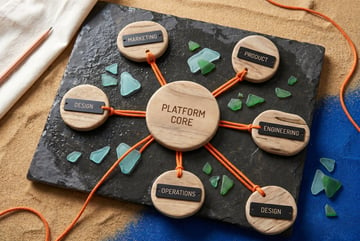
The Org Chart of 2027: Everyone Builds, IT Owns the Substrate
By 2027, the org chart that funnels every software request through a central engineering queue is gone. Domain teams build; IT owns the governed substrate they build on.

You don't have a skills gap. You have a description gap.
Most orgs think AI adoption is blocked by too few people who can code. The real bottleneck is turning what your experts already understand into working software.

Banning Shadow IT Just Drives It Underground
Prohibition doesn't stop employees solving problems with software—it just makes the solving invisible. The winning move is to make building sanctioned and observable, not banned.

From problem to tool should take days, not quarters
The variable that decides who wins with AI is how fast an org turns a noticed problem into working software. Most measure that gap in quarters; winners in days.

Every SaaS Tool Is Built for a Company That Isn't Yours
Generic SaaS is designed for the average company, so it fits no one exactly. The orgs that win stop bending their work to fit the tool and build the fit themselves.

IT Doesn't Disappear When Everyone Can Build—It Moves Up the Stack
When domain experts build their own tools, IT doesn't shrink—it moves up the stack: from ticket-queue construction crew to the platform and review function.
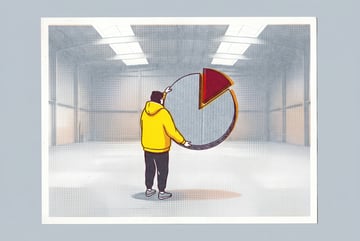
The 80% You Don't Use: The Per-Seat SaaS Trap
Per-seat SaaS taxes every hire and bills you for features you'll never touch. The build-vs-buy math just quietly flipped for the long tail of internal tools.

Shadow IT Was Never a Building Problem. It's a Visibility Problem.
Leaders fight shadow IT by trying to stop the building. The building will happen regardless—what actually hurts is that it's invisible. The real fix is visibility, not prohibition.

Your Org Runs on 60 Tools and Can't Answer One Question Across Them
Leadership can't get a single answer that spans systems: who touched this customer, where this data lives, what depends on what. That unanswerable question is the real cost of fragmentation.

Citizen Development Failed Three Times. Here's What's Different Now.
Spreadsheets, low-code, and RPA all tried to let non-engineers build software—and all stalled on the same flaw. The fourth attempt removes it.

The Real Cost of SaaS Sprawl Isn't the Bill. It's the Blindness
Most leaders fight SaaS sprawl by cutting subscriptions. The expensive part is that 60 disconnected tools make your own organization impossible to see clearly.

The Winning Org in the AI Era: Everyone Builds, Nothing Hidden
The companies that win with AI won't be the ones with the biggest budget. They'll be the ones that let everyone build software while leadership keeps full visibility across it all.

Your Best Software Engineers Don't Work in Engineering
The people who understand your operations best aren't in the engineering org—they're in finance, ops, and support. The companies that let them build their own tools pull ahead.

Where the AI App Builder Category Is Headed in 2027
Seven predictions for the AI app builder in 2027 — why every tool ships a backend, the spec becomes the differentiator, and apps start composing each other.

The Death of the $50K Internal Tool Build (and What Survives It)
AI app builders now compile production-grade internal tools for the cost of dinner. Here's what that does to the custom-software dev-shop economy.

The Compiler Comparison: Is the LLM Actually a Compiler?
An LLM is non-deterministic where gcc is not — but reproducibility is a workflow property, not an engine one. Here is why that distinction matters.

What Lovable's Backend Push Reveals About the Spec-Layer Race
As Lovable, Bolt, and v0 all ship backends, feature parity stops being a differentiator. The real race is over who owns the spec layer.