
Workflows Articles
Browse 1206 articles about Workflows.
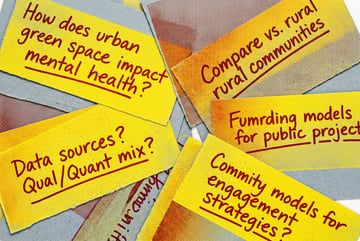
How to Build a Multi-Perspective AI Research Workflow Using the STORM Method
Stanford's STORM method uses five expert agent personas to produce research 25% more organized than single-prompt approaches. Here's how to build it.
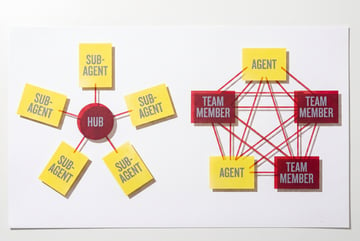
Sub-Agents vs Agent Teams in Claude Code: What's the Difference and When to Use Each
Sub-agents report to one session but can't talk to each other. Agent teams can debate and collaborate. Learn which architecture fits your workflow.

Claude Code Auto Mode, /goal, and /routines: How to Run Agents Without You
Learn how to combine Claude Code's auto mode, /goal command, and routines to build AI workflows that run scheduled tasks without human supervision.

How to Build an AI Second Brain Knowledge Base with Claude Code
Learn how to build an AI second brain using Claude Code with voice profiles, visual identity files, and positioning docs that power every agent session.

How to Prevent AI Sycophancy in Your Workflows: The Multi-Persona Council Method
AI models agree with you 88% of the time. Learn how to use a multi-persona council—contrarian, buyer, researcher—to stress-test ideas before you build.
How to Use the /goal Command in Claude Code for Fully Autonomous Workflows
The /goal command in Claude Code keeps agents running until a measurable condition is met. Learn how to set goals, exit criteria, and combine with sub-agents.

What Is Hermes Agent? The Open-Source AI Agent Platform Explained
Hermes Agent is an open-source AI agent with built-in skills, memory, scheduling, and Stripe payments. Learn how it compares to Claude Code and OpenClaw.

How to Build a Brand Context Folder for AI Agents: Voice, Visual Identity, and Positioning
A brand context folder gives every AI session your voice, design tokens, and ICP. Learn how to build one in 30 minutes and inject it into every workflow.

Context Rot in AI Agents: What It Is and How to Fix It with Session Handoffs
AI models degrade as conversations grow longer. Learn what context rot is, when it starts, and how session handoff skills keep your agents sharp.

How to Coordinate Multiple AI Agents Without Copying and Pasting Between Tools
Most AI users manually carry context between tools. Learn how ticket-based queues and shared state let agents hand off work without human intervention.
OpenAI Codex Record and Replay: How to Automate Repetitive Computer Tasks
OpenAI Codex's record-and-replay feature lets you record any workflow and replay it automatically. Learn how it works, its reliability, and best practices.

What Is the Agent Harness? Why It Matters More Than the Model You Choose
Google says the LLM is only 10% of an agentic system. The harness—rules, tools, context, and guardrails—drives the other 90%. Here's what that means.

Agentic Engineering vs Vibe Coding: Google's Spectrum and Why It Matters for Builders
Google's AI coding masterclass defines a spectrum from vibe coding to agentic engineering. Learn which approach to use and when for reliable AI-built software.
Claude Tag Explained: Anthropic's Slack-Native AI Agent and What It Means for Enterprise
Claude Tag embeds Claude directly into Slack with ambient context and org-wide tools. Learn what it means for enterprise AI adoption and vendor lock-in.

G Stack by Garry Tan: 23 AI Specialists and 8 Power Tools for Your Coding Agent
G Stack turns Claude Code into a virtual engineering team with 23 specialists including CEO, QA lead, and security officer. Here's how to install and use it.

How to Build a Brand Context Folder for Claude Code: Voice, Visual Identity, and Positioning
A brand context folder gives Claude your voice profile, design tokens, and ICP so every output inherits your identity. Here's how to build one in 30 minutes.
How to Use AI Agent Skills and Plugins in Claude Code and Codex: A Practical Guide
Skills are reusable instruction files; plugins bundle skills, agents, and MCPs. Learn how to install and use both in Claude Code, Codex, and other harnesses.

How to Use the Graphify Skill to Build a Queryable Knowledge Graph for AI Agents
Graphify converts codebases and notes into a queryable knowledge graph that reduces token costs by letting agents query structure instead of raw files.

What Is the AI-Driven SDLC? How Agentic Engineering Shifts the Software Bottleneck
The AI-driven SDLC compresses implementation from weeks to hours but shifts the bottleneck to specification quality and validation. Here's what that means.

How to Build an AI Agent Loop for Recurring Business Tasks: A Practical Guide
AI agent loops handle recurring jobs with memory so you stop re-prompting the same tasks. Learn how to identify, design, and deploy loops for your workflows.