
Workflows Articles
Browse 1206 articles about Workflows.

How to Use GLM 5.2 in Agent Harnesses: Cursor, OpenCode, and Claude Code
GLM 5.2 integrates with Cursor, OpenCode, and Claude Code for agentic coding tasks at roughly one-fifth the cost of frontier models.

What Is Seedance 2.5's Multimodal Reference System? 50 Inputs, One Consistent Video
Seedance 2.5 supports up to 50 image, video, and audio references in a single generation. Here's how the reference system works and when to use it.

What Is GLM 5.2? The Open-Weight Model With 1M Token Context for Agentic Workflows
GLM 5.2 is ZAI's flagship open-weight model with 1M token context, MCP support, and frontier-level coding at a fraction of the cost.

What Is the Open Knowledge Format (OKF)? Google's Standard for AI Knowledge Bases
OKF is Google's open standard for building shareable LLM knowledge bases. Learn how it works, why it matters, and how to adopt it for your agents.

How to Build a Brand Context Folder for AI Agents: Voice Profile, Visual Identity, and Positioning
Stop getting generic AI outputs. Build a brand context folder with voice profile, design tokens, and positioning files that every agent session inherits.

Claude Code /goal vs /routines vs /loop: Which Autonomous Scheduling Method Should You Use?
Claude Code offers three ways to run agents autonomously: /goal for completion conditions, /loop for intervals, and /routines for cloud-based cron jobs.

How to Build an OKF Knowledge Bundle: Share Your AI Knowledge Base with Any Agent
Google's Open Knowledge Format lets you package knowledge bases as shareable bundles. Learn how to build one and import it into your second brain.

How to Use GLM 5.2 for Agentic Workflows: Agent Harness, Chrome Extensions, and Game Clones
GLM 5.2 excels at coding agents, Chrome extensions, and long-context tasks at a fraction of frontier model costs. Here's how to use it effectively.

Open-Weight AI Models vs Closed Frontier Models: How to Choose for Your Agent Stack
GLM 5.2, Qwen, and DeepSeek are catching up to Claude and GPT. Learn when open-weight models win and when frontier models are worth the cost.
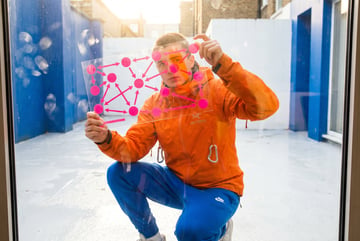
What Is the Open Knowledge Format (OKF)? Google's Standard for Shareable AI Knowledge Bases
OKF is Google's open standard for LLM wikis—a minimal layer on top of Karpathy's knowledge base pattern that makes wikis shareable across AI agents.

What Is an AI Second Brain Knowledge Base? How to Build One with Claude Code
An AI second brain stores your knowledge so agents can search it by meaning. Learn how to build one with Claude Code using automated hourly processing.

How to Use the Gemini Omni Flash API for Conversational Video Editing
Learn how to use Google's Gemini Omni Flash Interactions API to edit videos with text prompts, swap characters, and restyle scenes programmatically.

Multi-Perspective AI Research: How Sub-Agents Beat Single-Prompt Deep Research
Using 5 expert sub-agents for research produces better results than 100+ parallel agents. Here's the architecture and why it works for AI workflows.

How to Use the STORM Research Method in Your AI Agent Workflows
Stanford's STORM method uses 5 expert perspectives to produce 25% more organized research. Learn how to implement it as a Claude Code skill.

The AI Context War: Why Siri, Claude Tag, and Codex Are All Solving the Same Problem
Apple, Anthropic, and OpenAI are all racing to connect AI to your real-world context. Here's why context access now matters more than model intelligence.

How to Build a Brand Context Folder That Makes Every AI Output Sound Like You
A brand context folder with voice profile, visual identity, and positioning files gives every Claude session consistent, on-brand outputs from the start.

How to Use Claude Code's /goal Command with Routines for Fully Autonomous Scheduled Workflows
Combining /goal with Claude Code routines lets you set finish conditions and run recurring tasks on a cron schedule without ever sitting at your terminal.
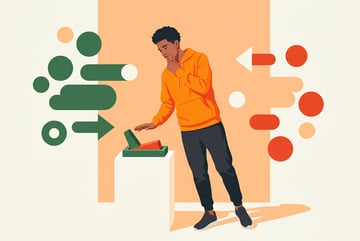
Human-in-the-Loop Checkpoints for AI Agents: Why Full Autonomy Is the Wrong Goal
The best AI workflows aren't fully autonomous. Learn how to identify the two or three checkpoints where human review prevents costly mistakes and AI slop.
OpenAI Codex Record and Replay: How to Automate Repetitive Computer Tasks Without Code
Codex's record-and-replay feature lets you demonstrate a workflow once and have AI repeat it. Learn how it works, its limits, and how to use it effectively.

How to Use Seed Audio as a Reference for Seedance Video Generation
Generating audio first with Seed Audio and using it as a Seedance reference produces better voice acting and ambient sound while reducing expensive re-rolls.