
Multi-Agent Articles
Browse 597 articles about Multi-Agent.

AI Model Routing: When to Use Frontier Models vs Cheap Models in Your Agent Stack
Frontier models excel at imagining new tasks; cheap models execute known ones. Learn how to route intelligently and where each model tier creates real value.

AI Agent Evaluators and Verifiers: How to Stop Agents from Grading Their Own Work
Learn why AI agents shouldn't evaluate their own output and how to build separate evaluator and verifier components that catch errors before they ship.

AI Agent Observability: How to Monitor Agents Running for Hours Without Babysitting
Discover how to add observability to long-running AI agents so you can catch failures, track costs, and fix issues before users notice.

What Is the Gate Pattern for AI Agents? Why Agents Should Prepare, Not Submit
The gate pattern stops AI agents before they submit, pay, or sign. Learn why this design principle is essential for high-trust agentic workflows.

How to Build a Long-Running AI Agent: 7 Components You Need
Learn the 7 essential components for building autonomous AI agents that run for hours without drifting, stopping early, or going off the rails.

What Is the Outer Loop Pattern for AI Agents? How to Keep Agents Running Until Done
The outer loop pattern wraps AI agents in a control mechanism that checks progress, compares against goals, and restarts agents that stop too early.

What Is the Dark Factory Approach to AI Coding? How to Ship Code Without Human Bottlenecks
The dark factory is a fully autonomous AI coding pipeline that takes a spec and ships production code. Learn what it takes to build one reliably.

How to Build an OKF Knowledge Bundle and Share It with Any AI Agent
OKF bundles let you package structured knowledge and share it across agents. Here's how to build one, add metadata, and deploy it to your second brain.

How to Use GLM 5.2 in Agent Harnesses: Cursor, OpenCode, and Claude Code
GLM 5.2 integrates with Cursor, OpenCode, and Claude Code for agentic coding tasks at roughly one-fifth the cost of frontier models.

What Is GLM 5.2? The Open-Weight Model With 1M Token Context for Agentic Workflows
GLM 5.2 is ZAI's flagship open-weight model with 1M token context, MCP support, and frontier-level coding at a fraction of the cost.

Claude Sonnet 5 Token Efficiency Problem: Why It Can Cost More Than Opus 4.8 in Agents
Claude Sonnet 5 uses 30% more tokens than other models due to its agentic design. Learn when it costs more than Opus and how to manage usage.

Multi-Perspective AI Research: How Sub-Agents Beat Single-Prompt Deep Research
Using 5 expert sub-agents for research produces better results than 100+ parallel agents. Here's the architecture and why it works for AI workflows.

Human-in-the-Loop Checkpoints for AI Agents: Why Full Autonomy Is the Wrong Goal
The best AI workflows aren't fully autonomous. Learn how to identify the two or three checkpoints where human review prevents costly mistakes and AI slop.
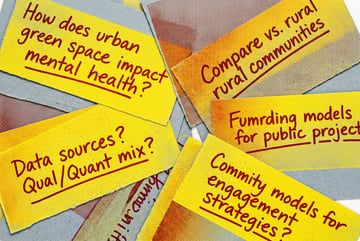
How to Build a Multi-Perspective AI Research Workflow Using the STORM Method
Stanford's STORM method uses five expert agent personas to produce research 25% more organized than single-prompt approaches. Here's how to build it.
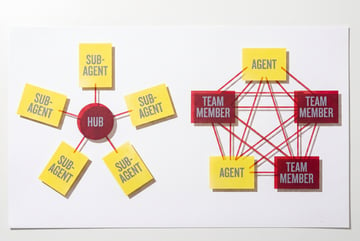
Sub-Agents vs Agent Teams in Claude Code: What's the Difference and When to Use Each
Sub-agents report to one session but can't talk to each other. Agent teams can debate and collaborate. Learn which architecture fits your workflow.

How to Coordinate Multiple AI Agents Without Copying and Pasting Between Tools
Most AI users manually carry context between tools. Learn how ticket-based queues and shared state let agents hand off work without human intervention.

Self-Scaffolding AI Models: How Ornith 1.0 Writes Its Own Agent Harness
Ornith 1.0 generates custom harnesses for each task instead of relying on human-written scaffolds. Learn how self-scaffolding works and why it matters.

What Is the Agent Harness? Why It Matters More Than the Model You Choose
Google says the LLM is only 10% of an agentic system. The harness—rules, tools, context, and guardrails—drives the other 90%. Here's what that means.
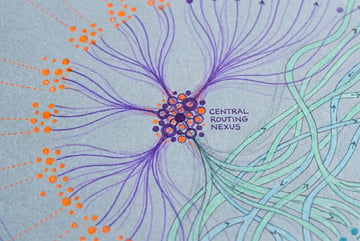
What Is Sakana Fugu? The Multi-Model Orchestrator Explained
Sakana Fugu is an AI orchestrator that routes prompts to the best model automatically. Learn how it works, its two tiers, and real benchmark results.

What Is Sakana Fugu Ultra? The Multi-Model Orchestrator That Beats Frontier AI
Sakana Fugu Ultra is an LLM pool that coordinates multiple models to outperform GPT and Claude on coding benchmarks. Here's how it works.