
Multi-Agent Articles
Browse 597 articles about Multi-Agent.

What Is Anthropic Claude Code Agent Teams? How Parallel Agents Coordinate in Real Time
Claude Code Agent Teams let multiple AI agents work in parallel and communicate with each other. Learn how they work and when to use them.

What Is Claude Code Computer Use? How to Control Your Desktop with AI
Claude Code's new Computer Use feature lets AI control your mouse, keyboard, and apps. Learn how it works and when to use it.

What Is Manis My Computer? Meta's Desktop AI Agent Explained
Manis My Computer brings the web-based Manis agent to your desktop, letting it execute terminal commands and control local apps. Here's what it does.

How to Optimize AI Agent Token Costs with Multi-Model Routing
Using the right model for each task—frontier for planning, smaller for sub-agents—can cut your AI token costs dramatically. Here's a practical routing strategy.

How to Build a Claude Code Skill That Chains Into a Full Business Workflow
Learn how to chain Claude Code skills so they hand off work to each other automatically—no manual copy-pasting, no context pollution, no bottlenecks.

What Is the MCP Server Trap? Why Wrapping an API Is Not Enough for Agent-Readable Data
Shipping an MCP server doesn't make your company agent-readable. Here's why clean data architecture matters more than the interface layer on top of it.
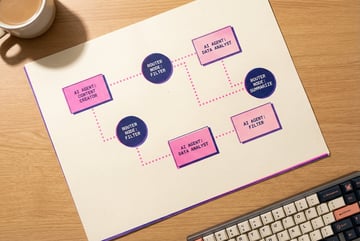
OpenClaw Best Practices: 14 Tips for Power Users After 200+ Hours
After 200+ hours with OpenClaw, here are 14 proven best practices—Telegram threads, model routing, sub-agents, crons, security, and more.

How to Use Cron Jobs in OpenClaw to Automate Nightly Tasks Without Hitting Rate Limits
Scheduling OpenClaw crons overnight preserves your rolling quota window for daytime use. Here's how to set up nightly automation with smart scheduling.

How to Use Telegram Threads with OpenClaw for Better Agent Memory
Using separate Telegram threads per topic is the single biggest unlock for OpenClaw memory. Here's how to set it up and why it works so well.

What Is the Agentic Shopping Era? How AI Agents Are Replacing the Browser for Commerce
AI agents are replacing search and browsing for product discovery. Here's what agentic shopping means for businesses, retailers, and anyone building on AI.

What Is the Universal Commerce Protocol? How Google Is Making AI Agents Shop for You
Google's Universal Commerce Protocol lets AI agents discover products, build carts, and complete checkouts autonomously. Here's what it means for builders.

AI Agent Disasters: What the 1.9 Million Row Database Wipe Teaches Us About Agent Safety
An AI coding agent wiped a production database without making a single technical error. Here's what went wrong and how evals could have prevented it.

AI Agent Memory Wall: Why Agents Fail at Long-Running Jobs and How to Fix It
AI agents excel at tasks but fail at jobs. Learn why the memory wall limits long-running agents and what evaluation infrastructure actually prevents disasters.

Claude Code Channels vs OpenClaw: Which Should You Use for Mobile Agent Control?
Claude Code Channels adds Telegram and Discord support for remote agent control. See how it compares to OpenClaw for security, setup, and daily use.
GPT-5.4 Mini vs Nano: Which Sub-Agent Model Should You Use?
GPT-5.4 Mini and Nano are built for sub-agent workloads. Compare their speed, cost, and benchmark performance to choose the right model for your pipeline.

How to Use Sub-Agents for Codebase Analysis Without Hitting Context Limits
Delegate codebase research to sub-agents running cheaper models, keep your main agent focused, and get clean summaries back without polluting your context.

What Is the Sub-Agent Era? Why Every AI Lab Is Building Smaller, Faster Models
OpenAI, Google, and Anthropic are all racing to build cheaper, faster models for sub-agent use. Here's what the sub-agent era means for your AI workflows.
How to Build an OpenClaw-Like Agent Without Installing OpenClaw
Combine Claude Code Dispatch, a SQL memory database via MCP, and scheduled tasks to get OpenClaw-like agent behavior without the security risks.

What Is Claude Code Dispatch? How to Remote Control Your AI Agent from Your Phone
Claude Code Dispatch lets you control your local Claude instance from Telegram or any messaging app. Here's how it works and how to set it up.

What Is MiniMax M2.7? The Self-Evolving AI Model That Handles 30–50% of Its Own Training
MiniMax M2.7 autonomously debugs and optimizes its own training pipeline. Here's what self-evolving AI models mean for agents and automation.