
Comparisons Articles
Browse 524 articles about Comparisons.

Claude MCP for Adobe vs Photoshop/Premiere: What the Connector Actually Does (and Doesn't Do)
The Adobe MCP works at Express level — not Photoshop or Premiere. A 3-minute reframe wasn't even centered. Here's what creative pros need to know.

Cursor SDK vs Claude Code Harness: Which One Gets More Out of Your Model?
Opus 4.7 scores 91.1% in Cursor vs 87.2% in Claude Code's own harness. The harness gap is now bigger than the model gap.

DeepSeek V4 vs GPT-5.5 vs Claude Opus 4.7: Is 3x Cheaper Worth the Benchmark Trade-Off?
DeepSeek V4 costs $1.74/M tokens vs $5/M for GPT-5.5 and Opus 4.7. We break down where benchmark parity holds and where it doesn't.

Google's AGI Definition vs Musk's 'Grok 5' Claim: Why Parameter Count Alone Won't Get You There
Google's AGI paper requires broad cognitive profiles across 5 dimensions. Musk says 10T parameters = AGI. Here's why those two definitions don't match.

Google Cloud vs AWS vs Azure Q1 2026: Which Cloud Is Actually Winning the AI Infrastructure Race?
Google Cloud grew 63%, Azure 39%, AWS 28% in Q1 2026. We break down which cloud is winning on AI and why Google search survived the chatbot threat.

Google vs Anthropic vs OpenAI on Military AI: Who Drew the Line and Who Didn't
Anthropic refused and got blacklisted. OpenAI drew red lines. Google signed with no binding restrictions. Here's where each lab stands on military AI.

Google vs OpenAI vs Anthropic Momentum in 2026: Why the Leader on Paper Is Losing the Narrative Race
Google leads overall but scores 3/10 on momentum. OpenAI gets a perfect 10. Here's why coding dominance is reshaping who's winning the AI narrative war.

Grok 5 vs GPT-5.5 vs Claude Opus 4.7: Can a 10 Trillion Parameter Model Actually Reach AGI?
Grok 5 at 10T parameters would be 20x larger than today's Grok. We compare xAI's scaling bet against GPT-5.5 and Opus 4.7 on the path to AGI.
Hermes Agent vs OpenClaw: Which Open-Source AI Agent Should You Use?
Hermes Agent and OpenClaw are both open-source AI agents with persistent memory and tool integrations. Here's how they compare for real automation work.
Mac Mini M4 Pro vs Mac Studio vs RTX 5090 vs DGX Spark: Which Local AI Hardware Is Right for Your Stack?
Four local AI hardware options, four different use cases. Here's how to choose between Mac mini M4 Pro, Mac Studio, RTX 5090, and Nvidia DGX Spark.

Nvidia's DGX Spark Puts 128GB of Unified Memory on Your Desk — Is It Finally the Personal AI Computer?
The DGX Spark matches cloud inference nodes with 128GB coherent unified memory on a desktop. Here's who should buy it and who should stick with Mac.

OpenAI on Azure vs OpenAI on AWS: What the Microsoft Deal Restructure Means for Your Cloud AI Strategy
OpenAI dropped Azure exclusivity but locked in Microsoft's 20% revenue share. Here's how to think about Azure vs AWS for OpenAI workloads now.
xAI's Grok Roadmap: 7 Models in Training Now, Grok 5 at 10 Trillion Parameters — Full Timeline
xAI's May 2026 roadmap put Grok 4.4 at 1T parameters and Grok 5 at 10T, with 7 models training on Colossus 2. Here's that timeline and what shipped since.

AI Agent Frameworks Compared: BMAD, GSD, Hermes, and Building Your Own
BMAD, GSD, and Hermes are popular AI coding frameworks—but most are overengineered. Here's how to evaluate them and when to build your own instead.
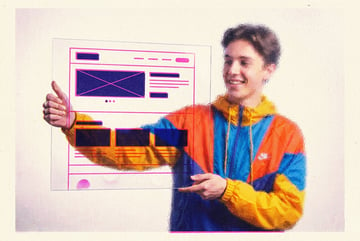
Claude Design vs Figma: Is Anthropic's New Tool a Real Design Platform?
Claude Design lets you build websites, pitch decks, and prototypes with natural language. See how it stacks up against Figma for real design work.

Open Source AI vs Closed Source: Why the Business Model Matters for Your Stack
The US open-source AI business model is broken while China dominates. Here's what it means for enterprises choosing between open and closed AI models.

Zapier MCP vs Native Integrations: Which Is Better for AI Agent Workflows?
Zapier's MCP server gives AI agents access to 8,000+ tools instantly. Compare it to native MCP integrations to decide which fits your automation stack.
Claude Code vs OpenAI Codex: Which AI Coding Agent Is Better?
Claude Code and OpenAI Codex are the leading AI coding agents. Compare their strengths, workflows, and real-world performance for agentic development.

GPT 5.5 vs Claude Opus 4.7: Which Model Should You Use for Agentic Work?
GPT 5.5 and Claude Opus 4.7 are the top frontier models right now. Here's how they compare on coding, writing, data work, and long-horizon agentic tasks.

GPT Image 2 vs Gemini Imagen: Which AI Image Model Wins in 2025?
Compare GPT Image 2 and Gemini Imagen on quality, text accuracy, multi-image output, and real-world use cases to find the best model for your work.