What Is the SubCube SSA Architecture? A 12M Token Context Window Explained
SubCube's sparse attention architecture claims a 12M token context window at 5% the cost of Claude Opus. Here's what it is and why it matters for agents.

The Context Window Bottleneck That Everyone Keeps Running Into
If you’ve ever tried to run an AI agent over a large codebase, a full year’s worth of customer support tickets, or a lengthy legal document corpus, you already know the problem. Even the most capable models have a ceiling. Claude 3 Opus tops out at 200K tokens. GPT-4 Turbo handles 128K. Gemini 1.5 Pro pushed the boundary to 1–2 million. These are genuine improvements — but they still fall short of what enterprise-scale tasks actually need.
SubCube’s sparse structured attention (SSA) architecture claims something more aggressive: a 12 million token context window at roughly 5% the cost of Claude Opus. That’s not a modest step forward. If the claims hold, it represents a meaningful shift in what’s computationally feasible for long-context AI tasks.
This article explains what the SubCube SSA architecture actually is, why the underlying math makes long-context inference so expensive, how sparse attention approaches solve part of that problem, and what any of this means for AI agents running in production.
Why Standard Attention Breaks Down at Scale
To understand what SubCube SSA is doing, you need to understand what it’s solving.
Standard transformer models use full self-attention. Every token in the input attends to every other token — and the computational cost of doing that scales quadratically with sequence length. Double your context, quadruple your compute. That relationship, written as O(n²), is the reason long-context inference is so expensive.
- ✕a coding agent
- ✕no-code
- ✕vibe coding
- ✕a faster Cursor
The one that tells the coding agents what to build.

At 200K tokens, you’re already dealing with 40 billion attention operations. At 1 million tokens, that number becomes 1 trillion. At 12 million tokens, full attention would require approximately 144 trillion attention computations per layer. No one’s running that in production.
The memory requirements compound the problem. Attention scores need to be stored in memory, and that footprint scales with the square of sequence length. Even with highly optimized kernels, full attention at millions of tokens either runs out of GPU memory or becomes economically unviable.
Why Bigger Context Actually Matters
Before moving to the architecture itself, it’s worth being clear on why you’d want 12 million tokens in the first place.
A 12M token context can hold:
- Roughly 9,000 pages of text
- An entire medium-to-large codebase
- Months of conversation history across a multi-agent system
- Thousands of customer records or support tickets simultaneously
- Multiple long-form documents alongside structured database exports
For AI agents that need to reason over large bodies of information in a single pass — without chunking, retrieval, or approximations — this kind of context window is operationally significant. You stop patching around the limitation and start building differently.
What Is SubCube SSA?
SubCube SSA stands for Sparse Structured Attention. It’s an architectural approach to attention that avoids full pairwise token comparison by being selective about which tokens attend to which others — and structuring that selectivity in a mathematically principled way.
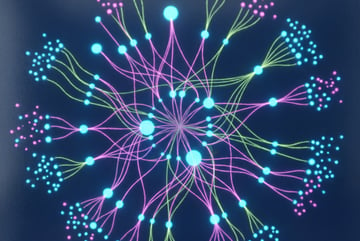
The “SubCube” naming refers to how the architecture organizes tokens spatially. Rather than treating the input as a flat sequence, the model conceptually arranges tokens into multi-dimensional block structures — cubes — and then applies attention within sub-regions of those cubes. Full attention happens locally, within blocks. Across blocks, a sparse, structured set of connections handles long-range dependencies.
This creates a hybrid attention pattern: dense where it needs to be (nearby tokens, within-block), and sparse where it can afford to be (cross-block, long-range), without randomly dropping connections. The “structured” part of SSA is key — the sparsity isn’t random. It follows a pattern designed to preserve the information flow needed for coherent reasoning.
How the Sparse Structure Works
In practice, SSA attention patterns typically combine three types of connections:
Local window attention — Each token attends fully to its nearest neighbors within a fixed window. This handles syntactic and semantic relationships between adjacent tokens.
Block-level structured attention — Tokens at the boundaries or centroids of each block attend to tokens in other blocks. This propagates information across large distances without requiring every token to participate.
Global tokens — A small number of designated tokens attend to (and are attended to by) all other tokens. These act as information hubs that allow global context to propagate.
The result is a computation graph that looks like a sparse sub-cube of the full attention matrix — hence the name. Compute scales closer to O(n log n) or O(n √n) depending on the specific configuration, rather than O(n²).
What 5% of Claude Opus Cost Actually Means
SubCube’s claim is that their architecture achieves a 12M token context window at approximately 5% the inference cost of Claude Opus running at its full 200K context.
To put that in concrete terms: if you were paying $X to run a 200K token inference on Claude Opus, SubCube SSA is claiming you could process 60 times more tokens for roughly the same price. That’s a 60x context-per-dollar improvement if the figures are accurate.
This kind of cost efficiency matters enormously for production agents. Most enterprise AI deployments are cost-constrained, not capability-constrained. You might have access to a powerful model, but you can’t afford to run it over every document in your data warehouse. An architecture that makes million-scale context economically viable changes the calculus.
The Architecture in More Depth
Hierarchical Block Organization
The SubCube approach organizes token sequences into a hierarchy. At the lowest level, tokens are grouped into small blocks where local attention is computed fully. These blocks are then grouped into larger super-blocks, with structured cross-block attention connecting them. At the highest level, global attention integrates information across the entire sequence.
This hierarchy mirrors how humans naturally process long texts: you understand sentences locally, then paragraphs, then sections, then the document as a whole. The architecture enforces a similar compositional structure, which turns out to align well with how meaning is actually organized in natural language and code.
Structured Sparsity vs. Random Sparsity
Earlier sparse attention methods experimented with random sparsity — essentially dropping a random fraction of attention weights. The problem: random sparsity can cut critical long-range connections by chance, degrading model quality unpredictably.
Structured sparsity, as used in SSA, follows deterministic patterns. The model always attends to local context, always connects block boundaries, always routes through global tokens. No important connection class gets randomly dropped. This makes the quality degradation more predictable and, when tuned correctly, minimal.
How It Compares to Existing Approaches
| Architecture | Max Context | Attention Type | Relative Cost |
|---|---|---|---|
| Standard Transformer | 128K–200K | Full O(n²) | Baseline |
| Longformer | 4K–16K (typical) | Local + Global | Lower |
| Flash Attention | 128K–200K | Full (memory-optimized) | Similar to baseline |
| Ring Attention | 1M+ | Full (distributed) | High (multi-device) |
| Gemini 1.5 | 1M–2M | MoE + sparse | High |
| SubCube SSA | 12M (claimed) | Structured sparse | ~5% of Opus |
Ring Attention and distributed approaches can technically handle long contexts, but they do so by spreading full attention computation across multiple devices — the cost per token doesn’t decrease, you just pay in hardware rather than time. SubCube SSA is claiming the cost actually drops, not just gets distributed.
What Makes 12M Tokens Practically Useful
Whole-Repository Code Analysis
At 12M tokens, you can load an entire large software project — source code, documentation, test suites, configuration files, and commit history — into a single context. An agent can reason about dependencies, identify bugs, suggest refactors, and understand architectural decisions without chunking or retrieval approximations.
Current approaches to long-code tasks rely heavily on retrieval-augmented generation (RAG): you embed code chunks, retrieve the most relevant ones, and hope you’ve pulled the right context. With a 12M context, an agent can simply hold the entire codebase and reason over it directly.
Multi-Agent Communication Logs
In multi-agent systems, agents pass messages to each other and accumulate context over time. As tasks get more complex — involving dozens of sub-agents working over hours or days — that context grows. A 12M token window means you can preserve full conversation history across a long agent run without truncation.
This is significant for reliability. Truncated context means agents lose track of earlier decisions, constraints, and intermediate results. Full context preservation keeps the agent’s understanding coherent across the entire task.
Enterprise Document Processing
A 12M token context can hold thousands of financial reports, legal contracts, research papers, or customer records simultaneously. Instead of processing documents in batches and aggregating results, an agent can analyze relationships across the full corpus in a single pass. Cross-document reasoning becomes straightforward rather than a complex engineering problem.
The Caveats Worth Knowing
Claims vs. Benchmarks
SubCube’s 12M token and 5% cost figures are claims, not independently benchmarked results across diverse tasks. Attention architecture papers often demonstrate impressive token counts on specific synthetic tasks while showing more modest gains on general benchmarks.
The relevant questions to ask:
- Does quality hold up on tasks requiring genuine long-range reasoning, not just retrieval?
- What’s the latency profile at 12M tokens, not just cost?
- How does it perform on standard benchmarks (SCROLLS, ZeroSCROLLS, LongBench)?
- What’s the fine-tuning story — does the architecture support it efficiently?
Sparse Attention Quality Trade-offs
Structured sparse attention doesn’t always match full attention quality. For tasks where every token-to-token relationship is potentially relevant, sparse patterns can miss connections that matter. The degree to which this affects real-world performance depends heavily on what you’re using the model for.
For tasks with natural locality — where nearby tokens are usually more relevant than distant ones — SSA-style architectures perform well. For tasks requiring dense cross-document reasoning, the quality gap can be more noticeable.
Infrastructure Requirements
A 12M token context, even at reduced attention cost, still requires significant infrastructure. Memory bandwidth, KV cache management, and I/O become bottlenecks at this scale. The compute cost reduction from sparse attention doesn’t automatically translate to the same reduction in total inference cost once you account for these factors.
Why This Matters for AI Agents
The context window has been one of the most consequential architectural constraints on AI agents. It determines what an agent can “see” at once, which in turn determines what kinds of tasks it can complete in a single coherent pass.
Most current agent frameworks work around context limits through:
- Retrieval-augmented generation (RAG) — embedding and retrieving relevant chunks
- Summarization — compressing older context to make room for new information
- Hierarchical task decomposition — breaking tasks into sub-tasks with separate contexts
These aren’t bad techniques. But they’re workarounds. Each one introduces approximation errors, latency, and architectural complexity. An agent that can hold 12M tokens in context can often solve the task more directly.
This is particularly relevant for multi-agent systems, where the accumulated context of agent-to-agent communication can grow rapidly over complex, multi-step tasks. Longer context windows reduce the need for agents to compress or summarize their state — they can just keep the full record.
For enterprise AI specifically, the cost dimension is as important as the capability dimension. A 95% cost reduction at 60x the context isn’t a minor optimization — it’s the difference between something that’s economically viable at scale and something that’s a proof of concept.
Frequently Asked Questions
What is SubCube SSA?
Remy doesn't build the plumbing. It inherits it.
Other agents wire up auth, databases, models, and integrations from scratch every time you ask them to build something.
Remy ships with all of it from MindStudio — so every cycle goes into the app you actually want.
SubCube SSA (Sparse Structured Attention) is an attention architecture for large language models that replaces full pairwise token attention with a hierarchically structured sparse pattern. Tokens attend fully to local neighbors, and structured cross-block connections handle long-range dependencies. The result is sub-quadratic compute scaling, which makes very long context windows — like 12 million tokens — computationally feasible.
How does a 12M token context window compare to other models?
Current major models cap out between 128K tokens (GPT-4 Turbo) and 2M tokens (Gemini 1.5 Pro). A 12M token context is 6x larger than Gemini 1.5 Pro’s maximum and roughly 60x larger than GPT-4 Turbo’s. At that scale, you can hold entire large codebases, years of documents, or extensive multi-agent conversation histories in a single context.
Is sparse attention as good as full attention?
It depends on the task. For tasks with natural locality — where nearby context is usually more relevant — sparse attention performs comparably to full attention with significantly lower compute. For tasks requiring dense, global cross-sequence reasoning, there can be quality trade-offs. The degree of quality difference varies by architecture design and task type.
What does “5% the cost of Claude Opus” actually mean?
SubCube claims that running inference at 12M tokens costs approximately 5% of what you’d pay for Claude Opus at its 200K token limit. If accurate, this means you’re getting 60x more context for the same price. In production agent workloads, this kind of efficiency difference can make previously impractical use cases economically viable.
Why does context window size matter for AI agents?
AI agents work by reasoning over available context — instructions, tool outputs, memory, and conversation history. When context overflows the window, agents must either truncate history, use retrieval systems, or summarize earlier content. Each of these introduces approximation errors and complexity. A larger context window lets agents maintain coherent state over longer, more complex tasks without these workarounds.
What is the difference between SubCube SSA and Flash Attention?
Flash Attention is a memory-efficient implementation of full self-attention. It reduces memory usage and speeds up computation through better GPU memory management, but the underlying attention is still O(n²) — it attends to all pairs. SubCube SSA uses structured sparse attention, which fundamentally reduces the number of attention operations performed, achieving sub-quadratic scaling. Flash Attention makes full attention faster; SSA makes the attention itself cheaper.
Key Takeaways
- Standard transformer attention scales quadratically (O(n²)), making context windows beyond a few hundred thousand tokens prohibitively expensive
- SubCube SSA uses structured sparse attention — hierarchically organized blocks with local, cross-block, and global attention — to achieve sub-quadratic scaling
- The claimed 12M token context window at 5% the cost of Claude Opus, if accurate, represents a substantial improvement in context-per-dollar efficiency
- Sparse structured attention preserves quality better than random sparsity by ensuring local, boundary, and global connections are always maintained
- For AI agents, larger context windows reduce dependence on retrieval approximations and context compression — enabling more coherent reasoning over complex, long-horizon tasks
- Enterprise use cases — whole-codebase analysis, cross-document reasoning, multi-agent communication logs — are the clearest immediate beneficiaries
Seven tools to build an app. Or just Remy.
Editor, preview, AI agents, deploy — all in one tab. Nothing to install.
As long-context architectures like SubCube SSA mature, building agents that can handle them cleanly becomes more important. MindStudio’s no-code agent builder lets you build and iterate on agent workflows quickly, with access to the latest models as they become available — so you can take advantage of improvements like extended context windows without rebuilding your agent stack from scratch.