Apple's New Macs Bet You'll Own AI Instead of Renting It
Apple's refreshed Mac mini and Mac Studio push local AI agents and up to 512GB unified memory, betting owners will skip cloud token bills.

What did Apple actually announce?
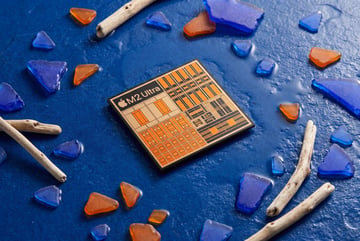
Apple refreshed its entire desktop Mac lineup around local AI, with machines beginning to ship September 22. The Mac mini starts at $899 and comes in M6 or M5 Pro configurations, with unified memory ranging from 16GB up to 64GB on the Pro chip. The Mac Studio scales further: M5 Max reaches 128GB of unified memory, and M5 Ultra tops out at 512GB with 1.2 terabytes per second of memory bandwidth. The Studio starts at $2,500 for the Max configuration and $5,500 for the Ultra, with the 512GB configuration priced higher still and not arriving until late October. Apple is explicitly marketing the mini as a home for “always-on agentic computing” and the Studio as a machine for “on-device frontier class models.”
TL;DR
- Apple is positioning the Mac as a permanent, always-on home for AI agents rather than trying to out-build frontier labs on model quality.
- The top Mac Studio configuration reaches 512GB of unified memory, enough to run large open-weight models like GLM’s flash-tier releases entirely on-device.
- The core pitch is owning intelligence instead of renting it: pay once for hardware, then only pay for electricity, versus ongoing API or subscription costs to OpenAI, Anthropic, or others.
- Apple oddly put its newest M6 chip in the cheapest Mac mini, while the more powerful mini and Studio configurations still run M5 silicon, suggesting Apple prioritized shipping more memory now over waiting for a clean chip generation.
- Reports say OpenAI and Anthropic have been buying Mac minis in bulk for reinforcement learning and computer-use agent training, which may explain recent shortages.
- Nvidia’s roughly $19 billion acquisition of Hugging Face landed within days of Apple’s announcement, and both moves point toward the same bet: the open-model ecosystem is about to matter a lot more.
- Analysts framed this as a genuine fork in strategy for serious AI users: bet on cloud-rented frontier intelligence or locally-owned hardware and open models, with a hybrid approach likely to dominate for most people.
Other agents start typing. Remy starts asking.
Scoping, trade-offs, edge cases — the real work. Before a line of code.

Why is Apple building for local AI agents now?
Apple has spent most of the generative AI boom looking behind the frontier labs. Siri hasn’t been competitive, and Apple Intelligence hasn’t produced a model anyone uses for serious agentic work. Instead of trying to close that gap by building a frontier model of its own, Apple is repositioning the Mac itself as the product: a machine built to host other people’s open-weight models and keep them running continuously, privately, on your desk.
This matters because the economics of “renting” intelligence, through API token costs or flat monthly subscriptions, scale with usage forever. An agent that runs 24/7 doing repetitive tasks racks up a permanent bill. Apple’s pitch flips that: buy the hardware once, absorb a higher upfront cost, and then the only ongoing expense is electricity. For workloads that run constantly rather than occasionally, that math starts to look attractive, especially for businesses running agent swarms rather than individuals firing off occasional prompts.
Apple doesn’t need to win the model race to benefit from this. Open-weight labs like the ones producing models such as GLM’s flash-tier releases can compete with each other indefinitely, and Apple profits either way by selling the hardware those models run on. It’s a similar posture to the App Store: Apple didn’t need to write the best apps, it needed to own the platform developers built on.
How does the memory ladder work across the new Macs?
Apple built a tiered lineup where memory capacity, not just chip generation, defines what each machine is for:
The Mac mini starts as the low-cost entry point at $899, aimed at running a modest local model or keeping a single lightweight agent alive continuously. Stepping up to the M5 Pro mini roughly doubles memory bandwidth and takes unified memory to 64GB, enough for a meaningfully larger always-on setup.
The Mac Studio is the serious machine. The M5 Max configuration reaches 128GB, a level some AI-focused users see as a sweet spot for running one significant local model alongside two or three smaller supporting agents at once. The M5 Ultra pushes to 256GB and, in its top configuration, 512GB with far higher memory bandwidth, enough headroom to run large open-weight models entirely on-device with no cloud round-trip.
That 512GB ceiling is the headline number, but it’s worth being precise about what it does and doesn’t mean. It does not mean the Mac Studio can run every frontier-scale model people might want. A data center can still give a cloud-hosted agent more context, more parallel copies of itself, and continuous model updates in ways a single desktop machine cannot match. What 512GB does mean is that a substantial share of currently available open-weight models, including recent large releases, become runnable locally rather than remaining a data-center-only proposition.
Why did Apple put its newest chip in the cheapest Mac?
Everyone else built a construction worker.
We built the contractor.
One file at a time.
UI, API, database, deploy.
The oddest detail in this launch is chip placement. Apple’s new M6 generation went into the base Mac mini, its least powerful and cheapest machine, while the more capable mini configuration and the entire Mac Studio line still run M5-generation chips (M5 Pro, M5 Max, M5 Ultra). There’s no M6 Pro, Max, or Ultra in this release.
That’s unusual for Apple, which typically rolls out a new chip generation across a product tier all at once. The read here is that Apple prioritized getting more unified memory into buyers’ hands immediately over waiting for the M6 family to mature into Pro, Max, and Ultra variants. Memory, not raw chip generation, is the bottleneck for running larger local models, and Apple apparently judged that shipping now with M5-based high-memory configurations mattered more than chip-generation symmetry. It signals urgency: Apple would rather sell the memory capacity people need today than wait another product cycle for a tidier lineup.
Is buying a Mac Studio for local AI actually worth it?
It depends entirely on how you use AI and how much you value privacy, predictable costs, and control versus raw frontier capability.
For businesses or individuals running agents constantly (customer support bots, coding assistants, document processing, repetitive analysis tasks) that run dozens of times a day, a fixed hardware cost followed by only electricity bills can beat an open-ended token bill, especially at scale. Privacy-sensitive fields like medical and financial work are also natural early movers, since keeping data local avoids sending sensitive information to a third-party cloud API entirely.
For most casual users, the calculus is different. A $2,500 to $5,500+ machine (before memory and storage upgrades push it higher) is a serious investment, and most people don’t want to manage which open model to download, how to quantize it, or when to route a query locally versus to the cloud. That technical friction is real, and there isn’t yet a smooth, universal system for automatically routing tasks between local and cloud models. Some expect that Hugging Face, now owned by Nvidia after a roughly $19 billion acquisition that landed within days of Apple’s Mac announcement, could end up building that routing layer, since it’s already the place people go to find open models to run on hardware like this.
What does this mean for OpenAI, Anthropic, and Nvidia?
Local AI hardware doesn’t have to kill the cloud AI business to matter. Apple’s Mac business alone generated a significant multi-billion-dollar quarterly revenue with a healthy gross margin even before this AI-focused push, and Apple doesn’t need to dominate global AI compute to grow that slice meaningfully. It just needs a profitable minority of technically comfortable buyers, sometimes called AI prosumers, to decide that owning their compute is worth it.
For the frontier labs, the likely effect isn’t losing frontier capability, it’s losing the default. If local models get good enough for routine, repetitive, or privacy-sensitive work, cloud usage shifts toward the harder, higher-stakes queries that genuinely need frontier-level reasoning. That’s a smaller slice of total usage, even if it’s still valuable. Meanwhile, reports that OpenAI and Anthropic have been buying up Mac minis for reinforcement learning and computer-use agent training suggest the frontier labs also see value in Apple’s hardware, just for training their own systems rather than deploying to consumers.
Frequently Asked Questions
Other agents ship a demo. Remy ships an app.
Real backend. Real database. Real auth. Real plumbing. Remy has it all.
What is the maximum unified memory in the new Mac Studio?
The top Mac Studio configuration with the M5 Ultra chip reaches 512GB of unified memory with 1.2 terabytes per second of memory bandwidth, though this configuration ships later than the rest of the lineup, in late October.
Can a Mac Studio run frontier AI models entirely offline?
It can run many large open-weight models entirely on-device, including large models in the GLM family, without needing an internet connection or per-token cloud costs. It cannot match a data center’s ability to run the very largest frontier models, provide massive context windows, or run many parallel model copies simultaneously.
Why is Apple pushing local AI agents instead of building its own frontier model?
Apple doesn’t need to win the model race to profit from AI. By making the Mac the best hardware for running open-weight models locally, Apple can benefit regardless of which open-model lab produces the best model, similar to how the App Store didn’t require Apple to write the best apps.
Is the Mac mini or Mac Studio better for running AI agents?
The Mac mini, especially the entry $899 configuration, suits lightweight, always-on tasks like running a single agent or small local model. The Mac Studio, particularly with M5 Max or Ultra chips, is built for running larger models and multiple agents simultaneously, at a significantly higher price.
Did Nvidia’s Hugging Face acquisition relate to Apple’s Mac announcement?
The two events happened within days of each other. Nvidia acquired Hugging Face for a reported figure around $19 billion shortly after Apple announced its AI-focused Mac lineup, and both moves point toward growing strategic bets on the open-model ecosystem, though there’s no confirmed direct coordination between the two companies.