What Is Seedance 2.5? ByteDance's Next-Gen AI Video Model Explained
Seedance 2.5 generates 30-second native clips with 50 multimodal references. Learn what's new, when it launches, and how it changes AI video workflows.
ByteDance Is Serious About AI Video
ByteDance built its empire on understanding video at scale. So when the company behind TikTok releases an AI video generation model, it’s worth paying attention. Seedance 2.5 is the latest iteration of their video generation research, and it pushes the envelope on clip length, reference fidelity, and the kind of multimodal control that production teams actually need.
This isn’t just another model announcement. Seedance 2.5 introduces capabilities — particularly 30-second native video generation and support for up to 50 multimodal references — that directly address the frustrations anyone working in AI video workflows knows well: clips that are too short, consistency that falls apart, and the inability to give the model enough context about what you actually want.
This article covers what Seedance 2.5 is, how it works, what’s genuinely new compared to earlier versions and competing models, and what it means for practical video production workflows.
What Seedance 2.5 Actually Is
Seedance 2.5 is a large-scale video generation model developed by ByteDance’s AI research division. It belongs to ByteDance’s broader “Seed” model family — a collection of foundation models that includes Seed-TTS (text-to-speech), Seed-ASR, and other multimodal systems.
The Seedance line specifically targets video generation with a focus on motion quality, temporal consistency, and practical creative control. Version 2.5 is positioned as a significant capability upgrade over Seedance 1.0, addressing limitations that made earlier outputs feel restricted in professional use cases.
The Seed Model Philosophy
- ✕a coding agent
- ✕no-code
- ✕vibe coding
- ✕a faster Cursor
The one that tells the coding agents what to build.

ByteDance’s Seed models are designed with scale and real-world deployment in mind. Given that ByteDance operates one of the largest video platforms in the world, their training data advantages are considerable — the company has deep institutional knowledge of what makes video content engaging, shareable, and visually coherent.
That context shapes how Seedance 2.5 was designed. It’s not just about generating video that looks technically impressive in a demo. It’s about generating video that holds up across longer timeframes, responds predictably to reference inputs, and produces output that can slot into real production pipelines.
The 30-Second Clip Breakthrough
One of the most significant changes in Seedance 2.5 is native 30-second video generation. That might not sound like a big deal until you understand the problem it solves.
Why Clip Length Has Always Been a Bottleneck
Most AI video models generate clips in the 4–10 second range natively. To create longer content, you’d need to chain multiple clips together, either manually or through a workflow — which introduces consistency problems at every seam. Characters look slightly different. Lighting shifts. Camera motion doesn’t match. The result often looks like a slideshow of related videos, not a single coherent piece.
The workaround is time-consuming and produces outputs that require significant cleanup. For commercial use — branded content, short films, product demos, social video — this limitation has been a real blocker.
How 30-Second Native Generation Changes the Equation
When the model generates a full 30-second clip in one pass, it maintains consistency across the entire duration by design. The attention mechanisms and temporal modeling work across a longer window, so characters, lighting, and motion hold together without patchwork fixes.
Thirty seconds is also a meaningful unit for actual content. It’s enough for a complete scene, a product walkthrough, a short brand spot, or a social video. You’re not generating a fragment — you’re generating something with a beginning, middle, and end.
This changes the math on production time. Instead of generating and stitching five 6-second clips, you generate one 30-second clip. That’s fewer inference calls, less post-production, and a cleaner result.
Multimodal References: What 50 Inputs Actually Means
The other headline feature in Seedance 2.5 is support for up to 50 multimodal references. This requires some unpacking, because “multimodal references” does a lot of work.
What Counts as a Reference
In the context of video generation models, a reference is any input that constrains or guides the output. That can include:
- Image references — photos, concept art, style guides, brand assets
- Video references — existing footage, motion references, examples of camera movement
- Text references — descriptive prompts, scene descriptions, character notes
- Frame references — specific keyframes that must appear in the output at defined points
Most models accept a small number of these — typically a single image or a short text prompt, occasionally a reference video. Fifty multimodal references is a fundamentally different category of control.
Why More References Matter in Practice
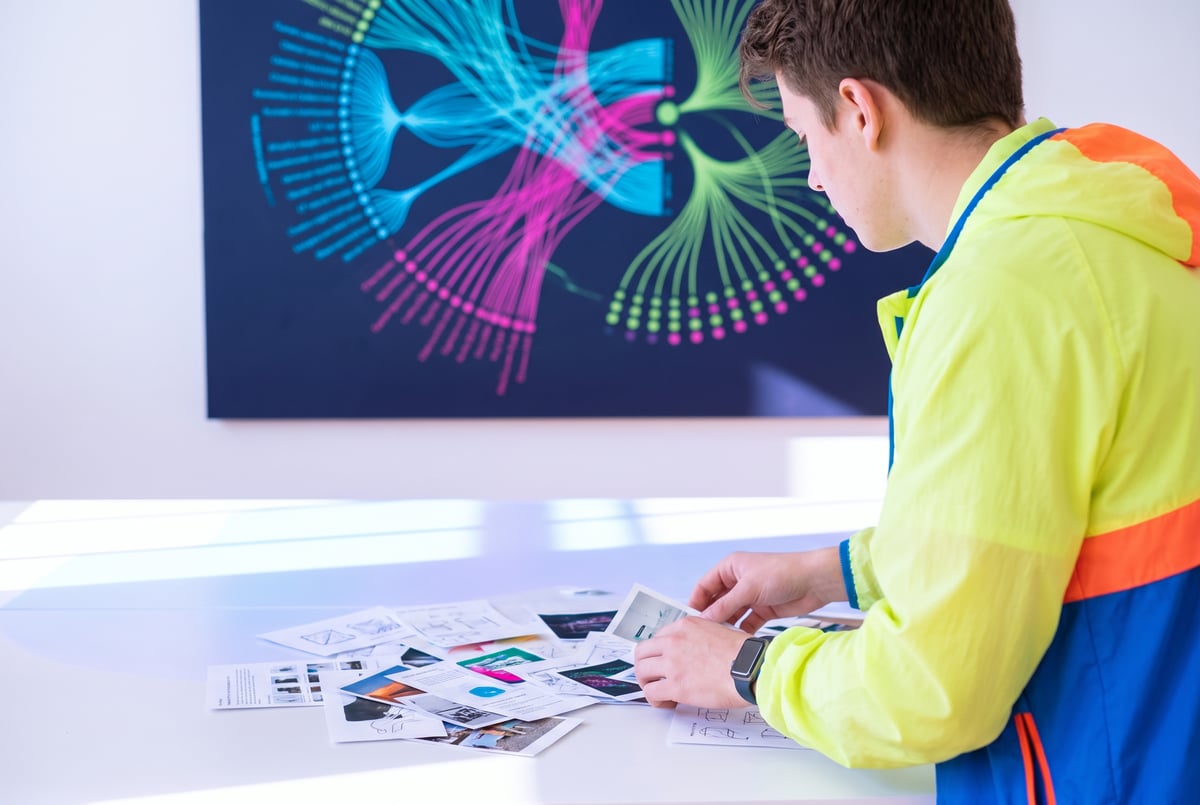
Think about what a real production brief looks like. You might have:
- A character design sheet (3–4 images)
- A reference video for the camera movement style
- Brand color and environment references (5–10 images)
- Specific keyframes for the opening and closing shots
- A detailed text prompt describing the action
- Example footage establishing the lighting mood
Seven tools to build an app. Or just Remy.
Editor, preview, AI agents, deploy — all in one tab. Nothing to install.
With earlier models, you’d pick one or two of these inputs and hope the model interpolated the rest correctly. Most of the time, it didn’t — you’d get a clip that captured the text prompt but ignored the character design, or matched the lighting but moved the camera in ways that didn’t fit the brand aesthetic.
Fifty references means you can feed the model the full brief. Character consistency, environmental consistency, motion style, and narrative arc can all be specified simultaneously. The output is more likely to match what was envisioned on the first generation pass.
Multimodal Isn’t Just More — It’s Different Types Together
The “multimodal” part matters as much as the number. Seedance 2.5 can process image references and video references and text references simultaneously, weighting them together to produce a single coherent output.
That’s architecturally more complex than accepting more images of the same type. It requires the model to understand how a still image relates to a motion reference, and how both relate to a text description. Models that can do this well tend to produce outputs that feel like the result of intentional direction rather than statistical approximation.
How Seedance 2.5 Compares to Other Video Generation Models
The AI video space has gotten competitive quickly. To understand where Seedance 2.5 fits, it helps to look at what else is available.
The Current Landscape
Several models have established themselves as serious options for professional video generation:
Sora (OpenAI) — Strong visual quality, capable of long-form generation, but access has been limited and pricing reflects that. Reference control is more constrained compared to Seedance 2.5’s approach.
Runway Gen-3 Alpha — Well-regarded for cinematic quality and creative flexibility. Shorter native clip lengths, but strong ecosystem of tools. Widely used in professional post-production workflows.
Kling (Kuaishou) — Another Chinese competitor with strong motion quality. Has been competitive on clip length and realism. Seedance 2.5 appears to push ahead on reference handling.
Veo 2 (Google DeepMind) — Impressive physics simulation and cinematic control. Strong competitor on quality metrics. More focused on quality per clip than reference-heavy workflows.
Wan2.1 (Alibaba) — Open-weight model that has attracted significant attention for its accessibility and performance relative to closed models.
Where Seedance 2.5 Differentiates
Seedance 2.5’s specific combination of 30-second native generation and high-reference-count multimodal input puts it in a distinct position. Most models optimize for either quality or control, and trade one off against the other.
The 50-reference ceiling is genuinely unusual. It suggests ByteDance is targeting users who come to video generation with substantial existing assets — brand teams, content studios, filmmakers with pre-production work already done. This is a different buyer than someone generating quick clips from scratch.
Seedance 2.5 and AI Video Workflows
The technical specs only matter insofar as they change how people actually work. Here’s what Seedance 2.5’s capabilities mean for common video production scenarios.
Branded Content Production
Brand teams typically have extensive reference libraries — style guides, previous campaign footage, character models, approved color palettes. The ability to feed all of this in simultaneously means the output is more likely to stay on-brand without manual correction. A 30-second native clip is also the right length for most social ad formats.
Short Film and Narrative Content
Other agents start typing. Remy starts asking.
Scoping, trade-offs, edge cases — the real work. Before a line of code.
Filmmakers working with AI video have been limited by clip length above almost everything else. Scenes require duration to develop. With 30-second native generation, it becomes more feasible to generate complete shots that carry narrative weight rather than stitching together micro-clips.
Video references for camera movement — tracking shots, dolly moves, specific focal transitions — can be incorporated alongside character and environment references. That level of directorial control starts to approach what pre-visualization workflows typically require.
Social Video at Scale
High-volume social content creation often requires variations — different aspect ratios, slightly different pacing, localized versions. Seedance 2.5’s reference system means you can generate variations that maintain core visual consistency while adjusting specific elements. The workflow becomes: establish your reference set once, generate multiple variations from it.
Product Visualization
E-commerce and product marketing require strict consistency — the product has to look exactly right in every shot. Image references showing the product from multiple angles, combined with text and video references describing the desired scene, give the model enough constraint to produce accurate product placement. Earlier models struggled here because a single image reference wasn’t enough to anchor the product correctly.
Using Seedance 2.5 in MindStudio’s AI Media Workbench
MindStudio’s AI Media Workbench is built for exactly the kind of multi-model video production that models like Seedance 2.5 enable. Rather than managing separate accounts and API keys for every video model you want to work with, MindStudio consolidates access to AI video and image models in one place.
The practical benefit is that you can build production workflows that chain multiple models together. You might generate initial character concepts with an image model, refine them into a reference set, and feed those references into a video generation step — all within a single automated workflow. With 200+ AI models available natively, you’re not locked into one provider’s ecosystem.
MindStudio also includes 24+ media tools alongside the generation models: upscaling, subtitle generation, clip merging, background removal. These handle the post-processing steps that typically require separate tools, so the workflow from generation to publish-ready asset can stay in one environment.
For teams doing high-volume video production, the ability to build these pipelines visually — without writing infrastructure code — significantly reduces the time between concept and output. You can try MindStudio free at mindstudio.ai.
The MindStudio AI agent builder also lets you automate the briefing and reference collection steps upstream of generation — pulling assets from Google Drive, Airtable, or Notion and assembling them into structured reference sets automatically.
Release Timeline and Access
ByteDance has been releasing Seedance capabilities in stages, with access initially limited to research collaborators and enterprise partners before broader rollout. Seedance 2.5 follows a similar pattern.
As of mid-2025, Seedance 2.5 is in the process of becoming more widely available through API access and platform integrations. ByteDance has indicated that the model will be accessible through their developer ecosystem, with pricing structured around token usage and generation length.
For teams tracking the release, the most reliable source is ByteDance’s official AI research announcements, where model releases and access expansions are documented directly.
Built like a system. Not vibe-coded.
Remy manages the project — every layer architected, not stitched together at the last second.
The timeline for full public API availability has shifted based on infrastructure scaling — 30-second generation at the reference count Seedance 2.5 supports is computationally intensive, and managing that at scale requires careful rollout.
Frequently Asked Questions
What is Seedance 2.5?
Seedance 2.5 is ByteDance’s latest AI video generation model. It generates native video clips up to 30 seconds long and accepts up to 50 multimodal references — images, video clips, and text — to guide the output. It’s the newest version of ByteDance’s Seedance model family, designed for higher-fidelity, longer-duration video generation with stronger creative control.
How is Seedance 2.5 different from Seedance 1.0?
Seedance 1.0 established the foundation: strong motion quality, competitive visual fidelity, and ByteDance’s characteristic understanding of video content. Seedance 2.5 significantly extends clip duration from shorter outputs to native 30-second generation, and expands the reference system to support up to 50 simultaneous multimodal inputs. The result is more consistent longer-form content and substantially more directorial control at generation time.
What does “multimodal references” mean in video generation?
Multimodal references means the model accepts multiple input types simultaneously — not just a text prompt, but also images, video clips, and keyframes — and uses all of them together to shape the output. A multimodal reference set might include character design images, a reference video for camera movement, and descriptive text for the scene. The model weighs all of these inputs together to produce a single coherent video.
How long can Seedance 2.5 videos be?
Seedance 2.5 generates videos natively up to 30 seconds long. This is notable because most competing models generate 4–10 second clips natively, requiring stitching to produce longer content. Native 30-second generation maintains consistency across the full clip without the seam artifacts that come from chaining shorter clips.
How does Seedance 2.5 compare to Sora, Runway, and Kling?
Each model has different strengths. Sora has strong visual quality but limited availability. Runway Gen-3 Alpha is well-established in professional workflows with a strong tool ecosystem. Kling is a competitive option for motion quality. Seedance 2.5 differentiates primarily on clip length (30 seconds native) and reference handling (up to 50 multimodal inputs). For teams with large existing asset libraries who need consistent output across longer clips, Seedance 2.5’s reference system is a meaningful advantage.
When will Seedance 2.5 be publicly available via API?
ByteDance is rolling out API access to Seedance 2.5 in stages through mid-to-late 2025. Initial access has been through research partnerships and enterprise agreements, with broader API availability expanding as infrastructure scales. Checking ByteDance’s Seed research portal directly is the most reliable way to track access availability.
Key Takeaways
- 30-second native generation is a practical breakthrough — it eliminates the stitching problem that has limited AI video in production contexts.
- 50 multimodal references shifts AI video from prompt-based generation to reference-based direction, which is closer to how professional production actually works.
- ByteDance’s video expertise gives Seedance models training advantages that pure research labs don’t have — they understand what makes video content work at scale.
- The competitive landscape is real — Sora, Runway, Veo 2, and Kling are all serious alternatives, and the right choice depends on your specific workflow needs.
- Integration matters as much as capability — accessing Seedance 2.5 through a platform like MindStudio’s AI Media Workbench lets you build it into automated workflows rather than using it as a standalone tool.
Remy doesn't write the code. It manages the agents who do.
Remy runs the project. The specialists do the work. You work with the PM, not the implementers.
If you’re building video production workflows and want to work with leading AI video models — Seedance 2.5 included — MindStudio’s AI Media Workbench gives you access to the full model landscape in one place, with the tools to automate and chain them into complete pipelines.