What Is GPT-5.6? OpenAI's Three-Model Tier System Explained
GPT-5.6 comes in three tiers: Sol, Terra, and Luna. Learn what each model is designed for, how they're priced, and who gets access first.
OpenAI’s Push Toward Tiered Models
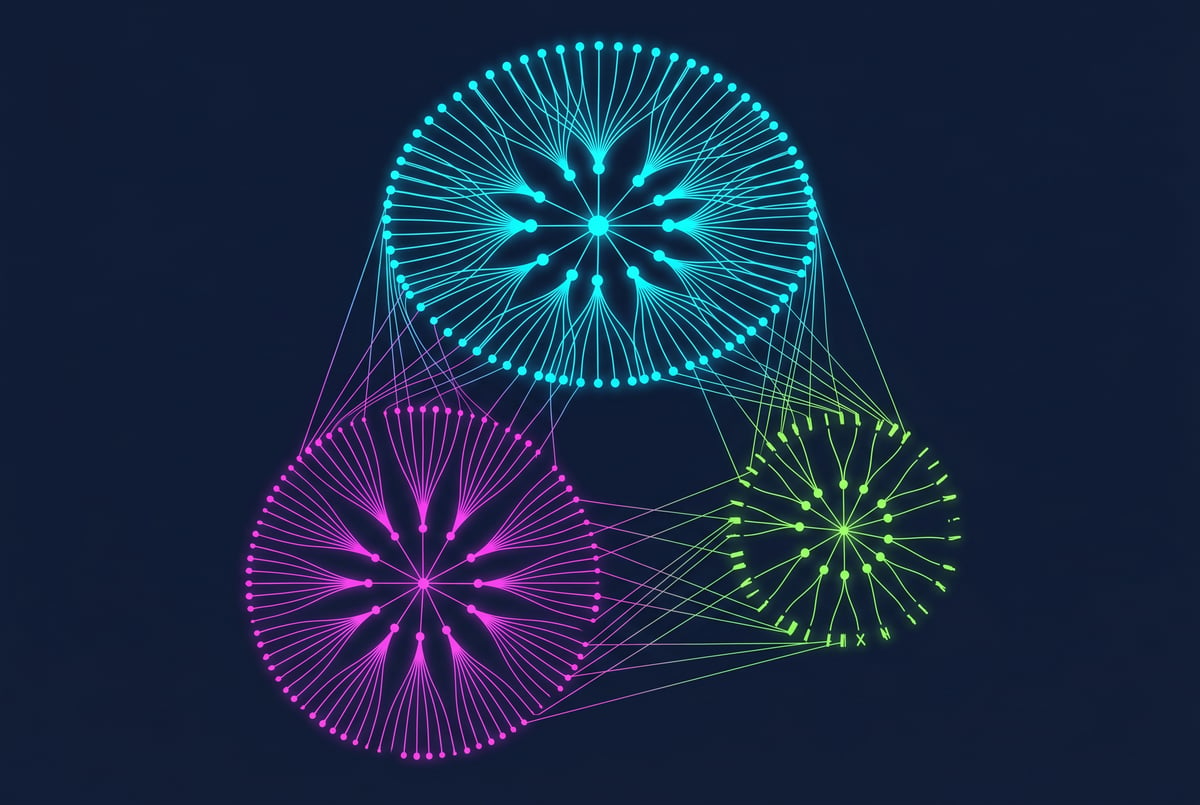
OpenAI has spent the last few years expanding its model lineup aggressively — from GPT-3.5 to GPT-4, then GPT-4o, o1, o3, and beyond. With GPT-5.6, the company is taking a more structured approach: instead of releasing a single model and calling it done, they’re releasing three distinct variants under one version umbrella.
Those three variants are called Sol, Terra, and Luna. Each is designed for a different use case, priced differently, and targets a different type of user. If you’ve been confused about what GPT-5.6 actually is — and which version applies to you — this guide breaks it down clearly.
What GPT-5.6 Actually Is
GPT-5.6 is not a single model. It’s a family of models built on a shared architecture but tuned for different performance and cost profiles. Think of it like a product line rather than a product.
This naming convention reflects a broader shift in how OpenAI is positioning its models. Rather than making users choose between “smart” and “fast” as abstract categories, GPT-5.6 gives each tier a distinct identity — one that signals what it’s optimized for.
The three tiers are:
- Sol — The high-capability variant, built for complex reasoning, nuanced generation, and demanding enterprise tasks.
- Terra — The balanced variant, designed for everyday production use where you need good output without extreme latency or cost.
- Luna — The lightweight variant, optimized for speed and cost-efficiency, ideal for high-volume, lower-stakes applications.
Built like a system. Not vibe-coded.
Remy manages the project — every layer architected, not stitched together at the last second.

Each of these sits within the GPT-5.6 family and can be accessed through OpenAI’s API, with different pricing structures and access tiers depending on your plan.
Why OpenAI Is Using a Three-Tier System
This isn’t the first time AI labs have used tiered model families. Anthropic does it with Claude (Haiku, Sonnet, Opus), and Google does something similar with Gemini (Flash, Pro, Ultra). OpenAI’s previous approach with GPT-4o and GPT-4o mini was an early version of this — but the three-tier system in GPT-5.6 formalizes the strategy more explicitly.
The core rationale is practical: not every task needs the same horsepower.
Asking a model to analyze a dense legal contract is a fundamentally different task than summarizing a product description or auto-completing a sentence. Running your most expensive, most capable model on every request is wasteful and expensive. A tiered system lets developers and organizations match the model to the task.
There’s also a business angle. By offering multiple tiers, OpenAI can serve a wider range of customers — from startups watching API costs closely to enterprises that need the best possible output regardless of price.
GPT-5.6 Sol: The High-Capability Tier
Sol is the most capable variant in the GPT-5.6 family. It’s designed for tasks where quality, depth, and reasoning accuracy are the priority — not speed.
What Sol Is Optimized For
- Long-context reasoning across complex documents
- Multi-step problem solving (code generation, research synthesis, advanced math)
- Nuanced creative writing and content that requires strong coherence across length
- Enterprise-grade analysis tasks where a single wrong output has real consequences
Sol isn’t built for real-time conversational applications where milliseconds matter. It’s built for situations where you’d rather wait a few seconds and get the right answer.
Who Should Use Sol
Sol is the right choice for:
- Legal, medical, or financial professionals using AI-assisted analysis
- Developers building applications that require high-accuracy outputs
- Research workflows where reasoning quality is non-negotiable
- Organizations running complex agentic workflows that require sound judgment across many steps
Pricing for Sol reflects its capability. It’s the most expensive of the three tiers per token, and access may initially be limited to certain OpenAI API tiers.
GPT-5.6 Terra: The Balanced Tier
Terra sits in the middle of the lineup. It’s the workhorse — capable enough for the vast majority of real-world applications, but faster and cheaper than Sol.
What Terra Is Optimized For
- General-purpose text generation and summarization
- Customer support automation and chatbot applications
- Content workflows: drafting, editing, rewriting
- Moderate-complexity reasoning tasks that don’t require deep multi-step inference
- Most standard API integrations where you need solid performance at reasonable cost
Terra is likely where most developers and product teams will land by default. It hits the sweet spot between output quality and operating cost — the tier that makes sense when you’re building something at scale and need a model that performs well without burning through API credits.
Who Should Use Terra
- SaaS products building AI-powered features for end users
- Marketing and content teams using AI to accelerate production
- Operations teams automating workflows with moderate complexity
- Developers who want a capable default without tuning for extreme performance or extreme efficiency
GPT-5.6 Luna: The Lightweight Tier
Everyone else built a construction worker.
We built the contractor.
One file at a time.
UI, API, database, deploy.
Luna is the speed-first, cost-first option. It’s designed for applications where you’re making a lot of requests and need responses fast — and where the tasks themselves are relatively simple.
What Luna Is Optimized For
- High-volume, low-latency applications (think autocomplete, quick classifications, tagging)
- Real-time features where response time directly affects user experience
- Background processing tasks that run at scale
- Applications where cost-per-token matters significantly (e.g., consumer apps with millions of users)
Luna trades some of the reasoning depth of Sol or Terra for speed and efficiency. For many use cases, that’s the right trade.
Who Should Use Luna
- Consumer app developers with high traffic volume
- Teams running background classification or extraction jobs at scale
- Applications where the AI task is well-defined and doesn’t require deep reasoning
- Use cases where API costs need to stay predictable and low
Pricing and Access: What Each Tier Costs
OpenAI hasn’t released a permanent, fixed pricing sheet for all three GPT-5.6 tiers as of this writing, but the structure follows the same pattern OpenAI has used with prior model families.
Here’s what to expect:
| Tier | Relative Cost | Latency | Best For |
|---|---|---|---|
| Sol | Highest | Slower | Complex reasoning, enterprise analysis |
| Terra | Mid-range | Moderate | General production use, content workflows |
| Luna | Lowest | Fastest | High-volume, latency-sensitive applications |
Access to Sol is expected to roll out first to users on higher-tier API plans and enterprise agreements. Terra and Luna are expected to be broadly available through standard API access.
For up-to-date pricing, check OpenAI’s official pricing page directly — rates can change as models move out of preview.
ChatGPT vs. API Access
The three-tier system is primarily relevant to API users and developers. For standard ChatGPT subscribers, access will likely depend on your subscription plan — with higher plans unlocking Sol and standard plans defaulting to Terra or Luna for most requests. OpenAI has historically handled this by automatically routing conversations to the appropriate model based on plan tier.
FAQ
What is GPT-5.6?
GPT-5.6 is OpenAI’s multi-tier model family, consisting of three variants — Sol, Terra, and Luna — each optimized for a different performance and cost profile. Rather than a single model, it’s a structured lineup designed to match different capability levels to different use cases.
What are the three tiers of GPT-5.6?
The three tiers are Sol (high-capability, for complex reasoning), Terra (balanced, for general production use), and Luna (lightweight, for high-volume, latency-sensitive applications). Each tier has different pricing and is suited to different workloads.
How is GPT-5.6 different from GPT-4o?
GPT-4o and GPT-4o mini represented an early two-tier approach. GPT-5.6 extends this into a formalized three-tier system with more clearly defined use cases and distinct model identities. GPT-5.6’s base architecture is also more capable than GPT-4o, with improvements across reasoning, instruction following, and context handling.
Who gets access to GPT-5.6 first?
Access to the Sol tier — the most capable variant — is expected to roll out first to enterprise API customers and higher-tier subscribers. Terra and Luna are expected to become broadly available through standard API access. ChatGPT subscribers will likely see tiered access based on their plan level.
Which GPT-5.6 tier should I use for my application?
- ✕a coding agent
- ✕no-code
- ✕vibe coding
- ✕a faster Cursor
The one that tells the coding agents what to build.
It depends on your task complexity and cost tolerance. Use Sol for tasks that require deep reasoning, long-context analysis, or high-stakes output quality. Use Terra for most production workflows where you need solid, general-purpose performance. Use Luna for high-volume applications where speed and cost efficiency are the priority.
Is GPT-5.6 available now?
As of this writing, GPT-5.6 is in the process of rolling out to API users. Availability varies by tier and account type. Check OpenAI’s developer documentation and model availability page for the most current information on access timelines.
Key Takeaways
- GPT-5.6 is a three-tier model family, not a single model — Sol, Terra, and Luna serve different capability and cost profiles.
- Sol is for complex, high-stakes reasoning tasks. Terra is the balanced default for most production use. Luna is for fast, high-volume, cost-sensitive workloads.
- Pricing scales with capability — Sol costs the most per token, Luna the least.
- Access is rolling out gradually, with enterprise and high-tier API customers getting priority access to Sol.
The broader pattern here is worth watching. The shift toward named, distinct model tiers within a single version family is how AI labs are making their lineups more legible for developers and buyers. Understanding which tier fits which task — and building workflows that use each appropriately — is quickly becoming a core skill for anyone building AI-powered products.