What Is Brain Emulation? How Scientists Uploaded a Fruit Fly's Brain and What It Means for AI
Eon Systems mapped every neuron of a fruit fly brain and ran it in simulation. Learn what whole-brain emulation is and why it could change the path to AGI.
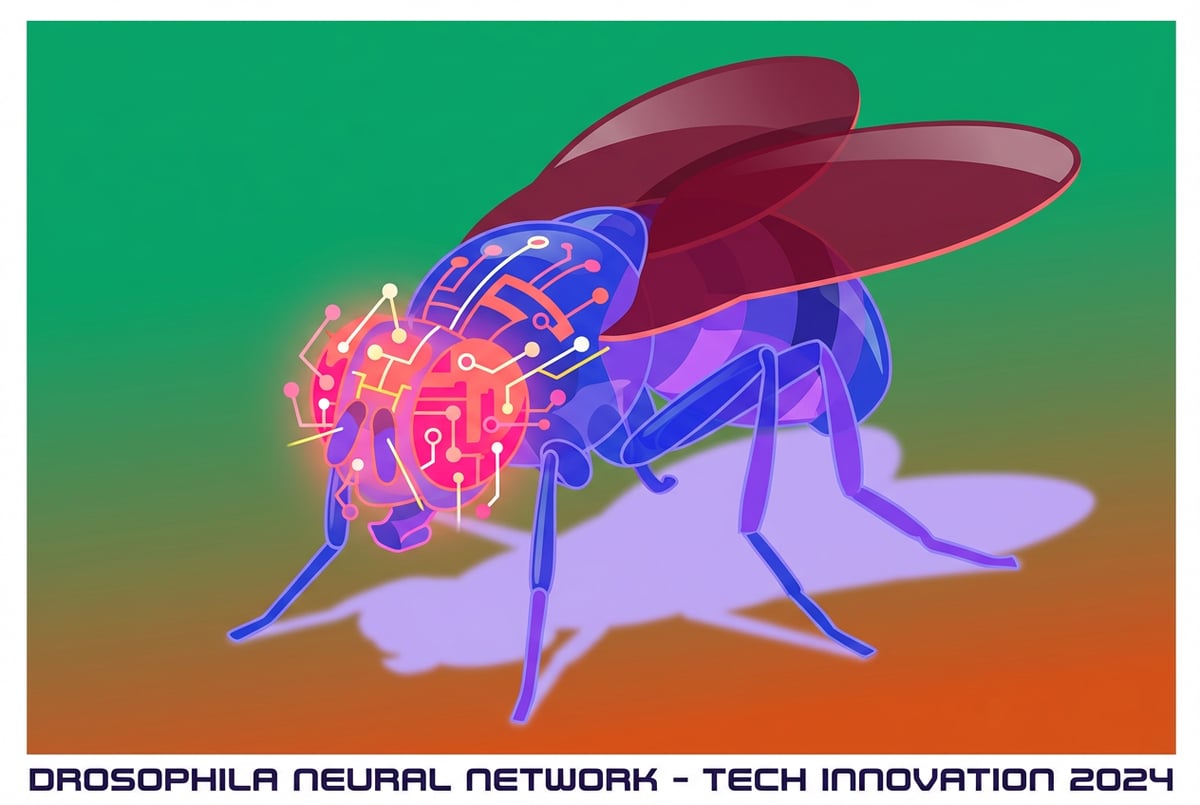
The fruit fly has roughly 130,000 neurons. That’s about 660,000 times fewer than a human brain. And yet, those neurons support navigation, learning, aggression, and social behavior. For decades, neuroscientists have used Drosophila melanogaster as a model organism precisely because its brain sits at a useful middle ground — complex enough to produce real behavior, small enough to study in full.
Eon Systems just ran that brain in a computer.
Using the complete structural map of an adult fruit fly brain — every neuron, every synaptic connection — Eon Systems built and executed the most detailed brain emulation ever attempted. Not a simplified model, not a statistical approximation, but a working simulation of actual biological neural circuitry at nanoscale resolution.
This is the kind of milestone that tends to get covered as a curiosity but matters as something closer to an inflection point. The path to artificial general intelligence has always involved a fork: engineer intelligence from scratch, or reverse-engineer it from biology. Eon Systems just demonstrated that the second path is no longer purely theoretical.
Here’s what brain emulation actually means, how this specific project worked, and what it implies for AI.
What Whole-Brain Emulation Actually Is
Brain emulation — also called whole-brain emulation, or WBE — is the process of building a computational model of a brain that accurately replicates its structure and function at the level of individual cells and their connections. The goal isn’t a system that acts like a brain in some abstract sense. It’s a system that is the brain computationally — every neuron accounted for, every connection represented, every dynamic property modeled.
This is a narrow and demanding definition, and it matters to hold onto it, because the term gets used loosely.
Emulation, Simulation, and Inspiration
Three concepts are often blurred when people talk about AI and the brain:
- Brain-inspired AI: Systems that loosely mimic biological concepts — layers, weights, activation functions — without attempting to replicate actual brain structure. Modern large language models and deep neural networks fall here.
- Brain simulation: Computational models of brain activity at some level of abstraction, often targeting specific regions or circuits. May not attempt neuron-by-neuron fidelity.
- Brain emulation: A faithful, neuron-by-neuron, synapse-by-synapse reproduction of an actual brain, with accurate dynamics. The aim is that the simulation produces the same computations as the original organism.
Eon Systems’ fruit fly project is the third category. The question it’s answering isn’t “can we build something that behaves a bit like a fly?” but “can we build a computational system that performs the same neural computations a fly’s brain actually performs?”
Three Problems That Have to Be Solved First
For any whole-brain emulation to work, you need to solve three distinct technical problems:
- Structural mapping: Build a complete “wiring diagram” — called a connectome — showing every neuron and synapse in the brain. This requires imaging at nanometer resolution.
- Functional modeling: Characterize how each neuron type actually behaves. How it integrates inputs, when it fires, what chemical signals it sends and receives.
- Computational execution: Run the resulting model at sufficient speed to produce meaningful outputs. This requires hardware and software infrastructure that can handle the scale.
The field has been bottlenecked on problem one for decades. Connectome mapping at the scale of insect brains requires petabytes of imaging data and months of processing just to reconstruct the tissue. What changed recently — and what made this project possible — was a convergence of advances in electron microscopy, machine learning-based image segmentation, and large-scale distributed computing.
A Short History of Connectome Science
The concept of mapping a complete brain has been around since the 1970s, but the first completed connectome wasn’t achieved until 1986. John White and colleagues at the MRC Laboratory of Molecular Biology published the full nervous system map of Caenorhabditis elegans — a soil-dwelling nematode with exactly 302 neurons.
That map became the basis for the OpenWorm project, which used the C. elegans connectome to build a working simulation that was uploaded to a simple robot. The robot navigated obstacles and responded to stimuli using the worm’s neural wiring — no hand-coded instructions.
The fruit fly brain is roughly 430 times more complex than C. elegans in neuron count, and the synaptic complexity scales even faster. Getting from the worm to the fly required solving problems that simply didn’t exist at the scale of 302 neurons.
Why the Fruit Fly Brain?
Drosophila melanogaster has been a core tool of biology for over a century. Thomas Hunt Morgan used it to establish the chromosomal theory of inheritance. More recently, neuroscientists have turned to it because it occupies a specific and useful position: complex enough to produce genuine behavior, but small enough to image completely.
What 130,000 Neurons Can Actually Do
The adult fruit fly brain contains approximately 130,000 neurons and around 50 million synaptic connections. That might sound modest, but consider the behaviors those neurons support:
- Navigation: Fruit flies orient to visual landmarks and navigate structured environments using a sophisticated spatial representation system.
- Learning and memory: They learn to avoid stimuli associated with punishment and retain that association for hours. With repetition, they can form long-term memories lasting days.
- Social behavior: They recognize rivals, compete for food and mates, and modulate aggression based on prior experience.
- Multisensory integration: They simultaneously process visual, olfactory, gustatory, and mechanosensory information, integrating it into coherent behavioral decisions.
These aren’t simple reflexes. They require coordinated computation across specialized circuits — something that looks, functionally, like cognition at a small scale. That’s exactly the property researchers need when validating an emulation. If the simulation doesn’t show appropriate responses to simulated stimuli, it’s wrong. The fly’s behavioral repertoire becomes a test suite.
The FlyWire Connectome
The structural foundation for Eon Systems’ simulation comes from the FlyWire Consortium — an international collaboration anchored at Princeton University whose results were published in Nature in October 2023.
The FlyWire project produced the first complete connectome of an adult Drosophila melanogaster brain. The process required:
- Serial section electron microscopy: The fly brain was cut into nanometer-thin slices — over 20 million of them — each imaged at nanoscale resolution.
- Machine learning segmentation: Neural networks automatically identified neuron boundaries in the raw images, separating individual cells from surrounding tissue.
- Proofreading: Automated systems flagged reconstruction errors; human annotators corrected them. This step alone required enormous distributed effort.
- Synapse identification: Every connection between neurons was located, typed (excitatory or inhibitory), and catalogued.
The result: a verified map of approximately 130,000 neurons and 50 million synaptic connections, the largest complete connectome in existence. The raw dataset runs into petabytes. The FlyWire connectome is publicly available, enabling research groups around the world to build on it.
This is what Eon Systems had to work with: not a toy model, but a real map of a real brain, verified at nanometer resolution. The challenge was then turning that map into something that runs.
How Eon Systems Built the Simulation
A connectome tells you what connects to what. A working brain emulation also needs to know what happens when signals move through those connections. The structural map is a starting point, not a complete recipe.
Neuron Models: Matching Biology
Each of the 130,000 neurons in the fly brain isn’t a simple switch. It integrates signals over time, produces outputs based on complex electrochemical dynamics, and behaves differently based on its type. There are hundreds of distinct neuron types in Drosophila, each with different membrane properties, neurotransmitter profiles, and physical geometries.
- ✕a coding agent
- ✕no-code
- ✕vibe coding
- ✕a faster Cursor
The one that tells the coding agents what to build.

Eon Systems used conductance-based neuron models — mathematical equations derived from the biophysics of real neurons that replicate how voltage changes inside a cell as ions flow across its membrane. These are the most biologically accurate neuron models available. They’re also computationally expensive.
For simpler simulations, researchers use “integrate-and-fire” models that approximate neuronal behavior with much less computation. Conductance-based models require solving a system of differential equations for each neuron at every time step. At 130,000 neurons with millisecond resolution, the numbers add up fast.
The model parameters for each neuron — the specific constants that determine how quickly it responds, how long its signals last, what threshold triggers it to fire — were set based on Drosophila neuron type data from decades of electrophysiology research.
Handling 50 Million Synapses in Real Time
Synaptic connections aren’t passive wires. Each one has dynamic properties: it can be excitatory or inhibitory, fast or slow, and its effective strength changes based on recent activity through processes called short-term synaptic plasticity. Representing all of this at scale requires a simulation architecture designed from scratch for the problem.
Eon Systems’ approach involved:
- GPU cluster distribution: Partitioning the neural network so that densely connected subregions run on the same compute nodes, minimizing the costly cross-node communication that would otherwise dominate runtime.
- Sparse matrix operations: The fly connectome, despite having 50 million synapses, is actually quite sparse — most neurons aren’t connected to most other neurons. Specialized sparse linear algebra routines exploit this structure to reduce computation dramatically.
- Millisecond time steps: The simulation advances in one-millisecond increments, matching the temporal scale at which biological neurons operate. This resolution is necessary to capture the timing-dependent aspects of neural computation.
Running the full simulation at anything approaching real time required hardware that would have been impractical less than a decade ago. The combination of modern GPU compute, mature simulation software, and the availability of a complete connectome made it feasible for the first time.
Validating That It Works
Building the simulation is one challenge. Showing it’s actually doing what a fly brain does is harder.
Validation in brain emulation means checking whether the simulation’s outputs match real biological data. For the fly, this means presenting the simulation with artificial inputs — patterns of light corresponding to what a fly’s photoreceptors would receive, or chemical signals corresponding to specific odors — and measuring whether the resulting neural activity matches what you’d see in a living fly’s brain.
Eon Systems used real neurophysiology recordings as ground truth: calcium imaging and electrophysiology data from real Drosophila brains under controlled conditions. The simulation needed to match:
- Which neurons activate in response to specific stimuli
- The timing and sequence of neural firing patterns
- Coordinated activity across brain regions
No simulation perfectly replicates biology on the first pass. Validation is iterative — discrepancies reveal where the model’s assumptions are wrong, which drives model refinement, which improves the match. The current simulation represents a high but imperfect degree of biological fidelity, with ongoing work to improve it.
How This Differs From Current AI Systems


The most common question when brain emulation comes up is some version of: “isn’t this just another neural network?” It isn’t — and the distinction matters for understanding what brain emulation offers that statistical AI doesn’t.
Structure vs. Training
Modern AI systems learn their structure through training. A large language model starts with randomized weights and adjusts billions of parameters based on exposure to data. The internal organization that results is emergent and largely opaque. We can probe it from the outside, but we can’t fully explain why specific inputs produce specific outputs.
A brain emulation starts with structure derived from biology — a specific wiring diagram from a real organism, shaped by evolution over hundreds of millions of years. The organization isn’t learned from scratch; it reflects whatever solution biology converged on for the problem of surviving and navigating the world.
This is more than a philosophical difference. The fruit fly brain does several things that current AI systems do poorly:
- Energy efficiency: The fly brain operates on roughly 10 microwatts of power. A GPU cluster running a modern language model consumes thousands of watts for comparable cognitive tasks. Biology is dramatically more efficient per computation, and we don’t fully understand why.
- Sample efficiency: A fruit fly learns a new association — “this odor predicts punishment” — in a handful of trials. Training a reinforcement learning agent to a comparable level of behavioral adaptation typically requires millions of interaction steps.
- Robustness: Biological brains handle noise, missing data, and novel conditions in ways artificial systems often can’t. A fly can navigate with partial antenna damage, in unfamiliar environments, under variable lighting.
Understanding why biological circuits have these properties is one of the core scientific motivations for brain emulation.
The Consciousness Question (Briefly)
Whenever brain emulation comes up, consciousness comes up. Does a simulated fruit fly brain experience anything?
The honest answer is we don’t know. But for this specific system, it’s probably not the most urgent concern. Drosophila shows no clear evidence of the kind of subjective experience we typically associate with consciousness. Its nervous system is roughly 65 million years removed from vertebrate brain structures most associated with awareness. And the scientific value of this work doesn’t depend on the answer — it depends on whether the simulation correctly models the computations the real brain performs.
The consciousness question becomes more pressing as this technology progresses toward mammalian brains. It’s a real question that needs frameworks in advance. But for a fruit fly, it’s secondary.
What This Means for the Path to AGI
Brain emulation has long been discussed as an alternative route to artificial general intelligence — separate from the scaling approach that has dominated recent AI progress. The fruit fly milestone changes the practical standing of that alternative.
Two Different Roads
The dominant paradigm in AI today is scaling: larger models, more data, more compute. This approach has produced systems that can write code, pass bar exams, and generate photorealistic images. It has also produced increasingly visible limitations — inconsistent reasoning, brittleness under distribution shift, enormous energy requirements, and a fundamental opacity about how outputs are generated.

Whole-brain emulation proposes a different path: instead of engineering intelligence from first principles, extract it from biology. Map a brain that already does what you want, model its dynamics, and run it.
The argument for this approach:
- Evolution solved the hard problems first: Biological brains are intelligent, energy-efficient, and robust. We don’t have to figure out what an intelligent system should look like architecturally — we can look at one.
- Built-in interpretability: A brain emulation gives you a working system and a transparent structural description of how it works. You can intervene on specific circuits, test mechanistic hypotheses, and trace computations through specific neurons.
- Clear scaling path: You can work up the complexity ladder — fly, bee, mouse, human — and build understanding at each step. The roadmap has intermediate milestones.
The argument against:
- Scale is a massive unsolved problem: The human brain has 86 billion neurons. The fruit fly has 130,000. The gap is roughly 660,000-fold in neuron count, and synaptic complexity scales much faster than that.
- Fidelity requirements may not transfer: What works for a fly simulation may not generalize. Biology uses mechanisms that are important for function but slow or expensive to recreate computationally.
- Current AI is moving fast: If language model scaling continues to produce useful results, the WBE path may remain important for science but less central to practical AI development.
Why the Fruit Fly Milestone Specifically Matters
The fruit fly simulation matters less as a direct path to AGI and more as proof that whole-brain emulation works at meaningful scale. Before this, the most complex complete brain emulation on record was C. elegans — 302 neurons. The fly represents a jump of more than two orders of magnitude in complexity.
Critically, this also establishes a workflow — a reproducible pipeline from biological brain to working simulation. That pipeline can be applied to other organisms. The fly is a proof of concept; the techniques that made it possible are the actual contribution.
A working fly brain simulation is also immediately useful as a neuroscience tool. It lets researchers run experiments that can’t be done in living animals:
- Silence specific neuron types to see what behavior they support
- Run thousands of identical experiments with slight variations to get statistical power impossible in biological research
- Test circuit-level hypotheses faster than any wet lab experiment could
Every one of those experiments generates knowledge about how biological intelligence works. That knowledge flows directly into AI research.
The Connectome-to-Compute Pipeline
One concrete contribution of this work is a reproducible pipeline:
- Acquire and preserve a brain specimen
- Cut it into nanometer-thin slices and image each one using electron microscopy
- Reconstruct neurons and synapses using ML-based segmentation
- Proofread and verify the resulting connectome
- Assign neuron model parameters from known neurophysiology
- Implement and distribute the simulation across compute infrastructure
- Validate against real biological recordings
Each step is actively improving. Faster imaging methods are reducing scan times. Better segmentation models are reducing manual proofreading. More powerful simulation frameworks are cutting compute requirements. What took years for the fly may take months for the next target.
The Roadmap: From Fly to Human
Understanding where brain emulation goes from here requires confronting the scale gap honestly — while also recognizing how quickly the underlying technology is moving.
The Numbers
The complexity gap between organisms is large:
| Organism | Neurons | Synapses | Status |
|---|---|---|---|
| C. elegans (worm) | 302 | ~7,000 | Fully mapped and simulated |
| Drosophila (fruit fly) | ~130,000 | ~50 million | Mapped; simulated by Eon Systems |
| Larval zebrafish | ~100,000 | ~100 million | Partially mapped |
| Mouse | ~71 million | ~100 billion | Partial connectomes only |
| Human | ~86 billion | ~100 trillion | Cubic-millimeter fragments only |
The jump from fly to mouse is roughly 550-fold in neurons. From mouse to human is another 1,200-fold. These aren’t small engineering challenges.
The Imaging Bottleneck
Mapping the fruit fly brain required years of electron microscopy work, even with heavy automation. Imaging a mouse brain at the same resolution would take decades with current methods. A human brain would require technology that doesn’t yet exist.
Progress is happening on multiple fronts. Google Research, in partnership with Howard Hughes Medical Institute’s Janelia Research Campus, recently mapped a cubic millimeter of human cortex — a volume containing roughly 57,000 neurons and 150 million synaptic connections. It’s a tiny fraction of the full brain, but the techniques to do it are being refined continuously.
Emerging approaches — including X-ray holographic nanotomography, expansion microscopy, and improved AI-based segmentation — are each reducing the time-to-connectome. What took decades for the fly may take years for the mouse. The imaging problem is hard but it’s moving.
The Compute Challenge
Even if you could fully image and reconstruct a human brain, running the simulation would require computational resources well beyond current capacity.
Rough estimates suggest that simulating one second of human brain activity at biologically realistic resolution would require somewhere between 10^18 and 10^24 floating-point operations. Today’s fastest supercomputers sit at the lower end of that range — and that’s before accounting for memory bandwidth, storage, and latency constraints.
Compute, however, is the parameter that has historically moved fastest. If imaging and reconstruction can reach the human brain within 20 to 30 years — a plausible if optimistic timeline — the compute may be available by then too.
The Intermediate Steps
Researchers don’t need to jump from fly to human. There’s a natural progression:
- Honeybee (~1 million neurons): Complex spatial navigation, abstract number concepts, and social communication far beyond what the fly can do
- Larval zebrafish (~100,000 neurons in a transparent organism ideal for optical imaging): A vertebrate brain in a tractable package
- Mouse cortical column: A functional unit of mammalian cortex that can be isolated and modeled
- Primate cortex: The closest analog to human brain structure in accessible organisms
Each stage provides insights into how more complex intelligence works, and generates the tools needed for the next. The fly simulation isn’t the endpoint — it’s the evidence that the approach works and the template for what comes next.
The Broader Implications: Ethics, Science, and AI Safety
The Eon Systems milestone isn’t just a technical event. It opens questions that neuroscience, philosophy, and AI policy will need to take seriously — even if many of those questions aren’t urgent for a fruit fly simulation.
Accelerating Neuroscience
Remy is new. The platform isn't.
Remy is the latest expression of years of platform work. Not a hastily wrapped LLM.
The most immediate impact is scientific. A working brain emulation is a tool unlike anything neuroscience has had before.
Currently, studying the fly brain means painstaking experiments: precise genetic interventions, careful measurements, large statistical samples across many individual animals. Each experiment can take weeks. A simulation allows:
- Unlimited, repeatable experiments: Run any experimental protocol thousands of times with precise controls
- Impossible interventions: Silence specific neuron types, modify connection strengths, test conditions that can’t be created in a living animal
- Direct access to internal state: Observe the activity of every single neuron simultaneously — something no imaging technology can do in a living brain
This accelerates the pace of mechanistic neuroscience by an order of magnitude. And mechanistic understanding of biological intelligence flows directly into AI research.
Drug Discovery and Neurological Applications
An accurate brain simulation is also potentially valuable for pharmacology. If you can simulate a fly brain accurately enough, you can model how compounds affecting specific neurotransmitter systems change neural dynamics — without running a live animal study.
For the fly, this is limited in its direct relevance to human disease. But as the technology moves toward mammalian brains, the distance from simulation to drug target shrinks considerably. A sufficiently accurate mouse cortical circuit simulation could serve as a testing ground for compounds targeting neurological conditions.
AI Safety and Interpretability
Brain emulation has an underappreciated relationship to AI safety.
One of the hardest problems in current AI safety work is interpretability — understanding why an AI system produces specific outputs, and being able to predict and control its behavior. Large language models have billions of parameters organized through training in ways that are difficult to audit.
A brain emulation, by contrast, has a known structure. You can trace a computation through specific neurons. You can intervene on a specific circuit and see what changes. The system is mechanistically transparent in a way that trained neural networks fundamentally aren’t.
This doesn’t make brain emulation safe by default — an emulated brain could have goals or failure modes just as a biological brain does. But the transparency is a genuine advantage from a safety research perspective.
The Ethical Questions That Need Frameworks Now
The more complex the brain being emulated, the more seriously we need to take certain questions. For fruit fly emulations, these are largely theoretical. For future mammalian brain emulations, they won’t be.
Key questions the field will need to answer:
- Moral status: Does a sufficiently accurate simulation of a brain with complex behavior have any moral status? What if it’s showing responses that look like distress?
- Identity: If a human brain were emulated, what is the relationship between the simulation and the person it was derived from?
- Ownership: Who owns a brain simulation? The subject? The organization that created it? What rights does either party have?
- Operational ethics: Should a sufficiently complex brain simulation be allowed to run indefinitely? Under what conditions can it be modified or terminated?
Having frameworks in place before the technology is mature is better than scrambling once it arrives.
One coffee. One working app.
You bring the idea. Remy manages the project.
Where AI Platforms Fit Into This Picture
The kind of research Eon Systems is doing — integrating petabyte-scale datasets, running compute-intensive simulations, validating results against biological recordings — happens within a broader ecosystem of tools, infrastructure, and workflows. And the organizations doing this work have the same operational needs as any large research or technical team: processing information, coordinating distributed contributors, managing outputs.
This is where AI workflow platforms become relevant, even if they’re operating at a very different level of abstraction.
What Teams Are Building Now
While brain emulation works on understanding intelligence from the cellular level up, platforms like MindStudio make it practical to deploy AI-powered workflows right now — without waiting for neuroscience to solve the hard problems.
Research-adjacent organizations are already using MindStudio to automate the parts of complex technical work that don’t require domain expertise:
- Building agents that monitor arXiv for new connectome or brain simulation papers and deliver structured summaries each morning
- Automating the intake and routing of experimental data from lab instruments into shared databases
- Generating structured reports from raw simulation validation results for cross-team review
- Coordinating documentation and communication across distributed teams working on different components of a large project
These aren’t hypothetical. Teams at major organizations — including those working in AI research infrastructure — use MindStudio to build custom AI workflows in hours rather than weeks, without requiring engineering resources. The platform connects to 1,000+ tools out of the box and lets anyone build agents that reason across multiple steps, not just trigger simple tasks.
The deeper connection between Eon Systems-style work and platforms like MindStudio is this: as we learn more about how biological intelligence works, we’re simultaneously building better tools to help people and AI systems work together more effectively. The science and the tooling are advancing in parallel, and both matter.
You can try MindStudio free at mindstudio.ai. The average agent takes less than an hour to build — and you don’t need to understand connectome science to start.
Frequently Asked Questions About Brain Emulation
What is brain emulation?
Brain emulation, also called whole-brain emulation (WBE), is the process of creating a detailed computational model of a brain that replicates its structure and function at the level of individual neurons and synapses. Unlike brain-inspired AI — which loosely mimics biological concepts — brain emulation aims to reproduce a specific brain’s actual wiring and dynamics. The goal is a simulation faithful enough that it performs the same computations as the original organism, not just similar-looking outputs.
What is a connectome and why does it matter for brain emulation?
Seven tools to build an app. Or just Remy.
Editor, preview, AI agents, deploy — all in one tab. Nothing to install.
A connectome is a complete map of every neuron and synaptic connection in a nervous system. It’s the structural blueprint that brain emulation starts from. Without a connectome, you can’t build a neuron-by-neuron simulation — you’d have to approximate the wiring based on statistical averages, which would undermine the fidelity of the whole project. The FlyWire Consortium’s 2023 Drosophila connectome — mapping ~130,000 neurons and ~50 million synapses — is what made Eon Systems’ simulation possible.
Has any brain been fully simulated before?
The first fully simulated nervous system was C. elegans, a nematode worm with 302 neurons, achieved by the OpenWorm project. The worm’s complete neural wiring was run in simulation and uploaded to a simple robot, which navigated its environment using the worm’s actual neural code. Eon Systems’ fruit fly simulation represents more than a 400-fold increase in neuron count and a roughly 7,000-fold increase in synaptic connections — a qualitatively different level of complexity.
What does this mean for artificial general intelligence (AGI)?
The fruit fly simulation doesn’t directly produce AGI, but it validates that whole-brain emulation works at meaningful scale. More importantly, it establishes a reproducible pipeline — from biological brain to working simulation — that can be applied to progressively more complex organisms. The scientific insights from running these simulations (about neural efficiency, circuit organization, and how intelligence emerges from biology) inform AI research. The simulation also demonstrates a potential path to more interpretable AI systems, where structure is derived from biology rather than gradient descent.
How long until we can simulate a human brain?
The human brain contains roughly 86 billion neurons and around 100 trillion synaptic connections — about 660,000 times more neurons than the fruit fly. Imaging a full human brain at nanoscale resolution would require advances in microscopy, computing, and storage that don’t yet exist. Most researchers put complete human brain emulation at 20 to 50 years away, assuming current rates of progress in imaging and compute continue. More tractable near-term targets include the mouse cortical column and larval zebrafish — intermediate steps with real scientific value.
Is a simulated brain conscious?
This is genuinely contested across neuroscience and philosophy, and the honest answer is that we don’t know. Most researchers would not claim that an accurate simulation of a brain is automatically conscious — the relationship between physical processes and subjective experience is one of the deepest open questions in science. For the fruit fly specifically, the question is mostly theoretical: Drosophila shows no clear evidence of subjective experience in the way we typically mean it, and the scientific value of the simulation doesn’t depend on the answer. The question becomes more pressing as the technology advances toward mammalian brains.
How is brain emulation different from ChatGPT or other AI?
Current language models and AI systems learn their structure through training — they start without any useful organization and adjust parameters based on exposure to data. The internal structure is emergent and largely opaque. A brain emulation starts with structure derived from biology: a specific, verified wiring diagram from a real organism, shaped by evolution. It also uses biologically accurate neuron models rather than statistical approximations. The two approaches can potentially complement each other — AI training methods could help fill gaps in biological knowledge, while brain emulation could provide architectural insights for AI design.
Key Takeaways
- Brain emulation means building a neuron-by-neuron, synapse-by-synapse computational model of an actual brain — not a loose analogy, but a structural and functional copy.
- Eon Systems’ fruit fly simulation is the most complex whole-brain emulation ever completed, built on the FlyWire connectome’s map of ~130,000 neurons and ~50 million synaptic connections.
- The pipeline is now established: from imaging to reconstruction to simulation to biological validation — and it can be applied to progressively more complex organisms.
- Brain emulation offers properties current AI lacks: structural transparency, energy efficiency inherited from biology, sample efficiency, and a clear mechanistic account of how outputs are produced.
- Human-scale emulation remains decades away, but the fruit fly milestone moves WBE from theoretical to technically proven — changing the seriousness with which the field deserves to be treated alongside statistical AI approaches.
Plans first. Then code.
Remy writes the spec, manages the build, and ships the app.
The science of intelligence is advancing from multiple directions at once. Understanding it at the level of individual neurons is a long project. Putting AI to work in the meantime doesn’t have to be. MindStudio is free to start, and most workflows take less than an hour to build — no code required.