AI Setup Porn: The Pattern Killing Builder Productivity
AI setup porn is the new productivity trap: configuring agent frameworks for hours while shipping nothing. Here's the pattern and where it comes from.

The Productivity Trap Nobody Talks About
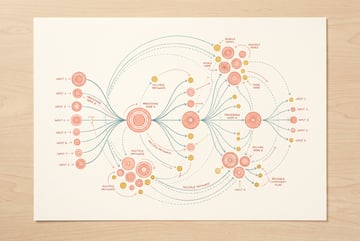
You’ve spent the weekend setting up a multi-agent framework. You’ve installed LangChain, configured CrewAI, written YAML files, built a vector store, connected your tools, and drawn flowcharts of how your agents will orchestrate each other.
Monday comes. You have nothing to show anyone.
This is AI “setup porn” — and it’s quietly killing productivity for thousands of people who think they’re building with AI.
The term might be blunt, but it captures something real. Setup porn is the act of spending hours (or days) configuring complex AI infrastructure, watching tutorials, fine-tuning agent prompts, and obsessing over architecture decisions — while producing zero actual output. It feels like progress. It isn’t.
This post breaks down what AI setup porn actually is, why agent frameworks make it so easy to fall into, how to recognize it in your own work, and what to do instead.
What “Setup Porn” Actually Means
The phrase “setup porn” predates AI. It originally came from productivity communities — the people who spent more time buying notebooks and organizing their task managers than doing real work. The act of setting up became the substitute for the thing it was meant to enable.
AI tools have created a new, more intense version of this trap. The complexity is higher, the rabbit holes are deeper, and the whole thing looks extremely technical and impressive from the outside.
Here’s the core pattern:
- You want to automate something (a research task, a content pipeline, a customer support flow)
- Instead of finding the simplest tool that works, you start building infrastructure
- The infrastructure requires configuration, which requires learning, which requires more configuration
- Hours pass. You’re still in setup mode.
- The original task never gets done
One coffee. One working app.
You bring the idea. Remy manages the project.

The key feature of setup porn is that the setup becomes the project. The actual goal — shipping something useful, automating a real task, saving time — gets indefinitely deferred.
Why Agent Frameworks Make This Worse
Not all AI tools are equally prone to this trap. Simple tools — a chatbot builder, a form-to-email automation — have natural forcing functions. You either get the output or you don’t. There’s little to obsess over.
Agent frameworks are different. They’re genuinely complex. And that complexity, while sometimes necessary, creates enormous surface area for setup porn to take hold.
The Architecture Problem
Frameworks like LangChain, AutoGen, CrewAI, and LlamaIndex were built for flexibility. They can do a lot. But “can do a lot” means there are hundreds of configuration choices to make before you produce anything.
- Which model should handle which sub-task?
- Should you use one agent or three?
- Which memory backend makes sense here?
- Should tools be sequential or parallel?
- What’s the right chunking strategy for the vector store?
None of these questions have objectively correct answers for a beginner project. But they all feel important. So people research them. And research leads to more research.
The Tutorial Loop
There’s a massive ecosystem of content built around complex agent frameworks. YouTube tutorials, GitHub repos, blog posts, newsletters, Discord servers. All of it is fascinating, detailed, and technically impressive.
The problem is that consuming this content feels indistinguishable from productive work. You’re learning. You’re getting ideas. You’re “research and development.”
But if none of it produces output, it’s just procrastination with better branding.
The “Just One More Thing” Trap
Agent frameworks are modular by design. You can always add one more capability. One more integration. One more layer of reasoning.
This creates an endless optimization loop. Your agent works — sort of — but you want it to handle edge cases better, so you rebuild part of it. Then you realize a different model would be more accurate, so you swap that out. Then you want to add a memory layer.
Each individual change seems reasonable. In aggregate, they mean you never stop building and never start using.
How to Tell If You’re Stuck in It
Some time spent on setup is legitimate. Learning a new tool takes time. Configuring infrastructure for a real project is real work.
The problem is when setup becomes its own reward — when you’re doing it because it feels productive, not because it’s producing anything.
Here are the signs:
You can’t describe what the output is. If someone asks “what are you building?” and the honest answer is “an agent that orchestrates other agents,” that’s a red flag. Real projects have outputs. What does yours produce?
The project keeps expanding before you’ve shipped version one. You started with a simple research automation. Now it involves a vector database, tool use, multi-agent collaboration, and a custom UI. None of it is done. None of it has been tested on a real task.
Your measure of progress is lines of code or tool counts, not useful output. “I have five integrations set up” is not progress if none of them are being used.
Everyone else built a construction worker.
We built the contractor.
One file at a time.
UI, API, database, deploy.
You’ve spent more time in documentation than testing. Documentation reading is part of learning, but at some point you have to run the thing and see if it works.
You’ve restarted from scratch more than once. Each restart usually comes with a new framework, a new model, a new architecture. The real reason is usually avoidance.
You’re more excited about explaining the system than using it. Setup porn often comes with a strong desire to describe the architecture to other people. The complexity feels impressive. But impressive ≠ useful.
The Psychology Behind It
Setup porn isn’t laziness. That’s the frustrating part. The people most prone to it are often ambitious, technically curious, and genuinely motivated to build useful things.
The trap works because it exploits real human psychology.
It Reduces Uncertainty
Starting to use a tool exposes it to failure. Your agent will produce bad outputs. Your workflow won’t handle edge cases. Your architecture will have flaws you didn’t anticipate.
Setup mode delays that exposure. As long as you’re still configuring, you can maintain the belief that your system will work perfectly — once it’s done.
It Creates a Sense of Mastery
Learning a complex framework gives you genuine expertise. You understand how things work. That mastery feels valuable. And in some ways it is.
But expertise at a tool is not the same as using it to produce value. The two feel similar from the inside, especially when the learning curve is steep.
Complexity Signals Credibility
This one is underappreciated. Complex systems look more serious, more professional, more “enterprise-grade” than simple ones.
A simple prompt → output workflow can seem naive. A multi-agent system with memory, tool use, and custom orchestration logic looks like something a serious AI developer built.
Except that the simple workflow might be the one that actually solves the problem. Complexity is often a liability, not an asset — especially for first versions.
It’s Low-Stakes in the Short Term
Setting up a system has no immediate consequences if you don’t finish. You can always keep going tomorrow. There’s no deadline, no customer waiting, no failure mode.
Using a system exposes it to the real world. That’s scarier. Setup mode protects you from that moment.
What to Actually Do Instead
The antidote to setup porn is almost embarrassingly simple: start from the output, not the infrastructure.
Start With the Deliverable
Before you touch any framework, write down what you need to produce. Not what the system will do — what it will deliver.
- “A weekly competitive intelligence report”
- “Draft outreach emails for these 50 leads”
- “Categorized and tagged support tickets”
If you can’t describe the deliverable, you shouldn’t be in setup mode. You should be thinking harder about what you actually need.
Build the Simplest Thing That Produces That Output
What’s the minimum setup required to produce the deliverable once? Not reliably, not scalably, not elegantly. Just once.
Often this is much simpler than people expect. A single prompt in a basic workflow. One LLM call with a clear system prompt. A simple form-to-AI-to-output pipeline.
Get it working. Use it on one real task. Then decide whether to improve it.
Treat Complexity as Debt
- ✕a coding agent
- ✕no-code
- ✕vibe coding
- ✕a faster Cursor
The one that tells the coding agents what to build.
Every piece of configuration you add — another agent, another tool, another integration layer — is technical debt you’re taking on before you know if the project is worth it.
Add complexity only when the simple version has failed at a specific task in a documented way. Not because you imagine it might fail.
Set a Time Box
Give yourself a fixed amount of time to get from zero to a working output. Two hours. Four hours. By end of day.
This is the most effective hack. A deadline forces you to make tradeoffs. You’ll drop the unnecessary parts and focus on what actually matters.
Separate Learning From Building
If you want to learn a complex framework, that’s legitimate. Set aside time specifically for learning — and treat it as learning, not as building.
Don’t let a learning session become a building session that never produces anything. They’re different activities.
The Real Cost of Setup Porn
It’s worth being direct about what this trap actually costs.
The obvious cost is time. Hours spent configuring systems that never ship, never automate anything, never help anyone.
But there’s a less obvious cost: it trains you to avoid the moment of truth.
Every time you extend setup mode to delay using a system, you’re reinforcing the pattern. You get better at building scaffolding and worse at shipping. Your tolerance for early, imperfect output goes down.
Over time, this creates a kind of learned helplessness with AI tools. You’ve built a lot. You’ve shipped nothing. The tools feel hard and unrewarding. You wonder if they’re worth it at all.
The problem isn’t the tools. It’s the habit of infinite setup before first use.
FAQ
What is AI setup porn?
AI setup porn is the pattern of spending excessive time configuring agent frameworks, researching tools, and building infrastructure — without producing any actual output. The “setup” becomes the activity itself, substituting for the real work it was meant to support. The term draws from a broader productivity concept about over-investing in tools and systems instead of doing the thing the tools are meant to help with.
Why do agent frameworks specifically cause this problem?
Agent frameworks like LangChain, CrewAI, and AutoGen are powerful and flexible, but that flexibility creates hundreds of configuration decisions before you produce anything. Combined with a large ecosystem of tutorials and documentation, they make it easy to spend days in “learning and setup mode” without ever running a real task. The complexity also creates a natural loop — you can always add one more capability or optimization before considering the project ready.
How is setup porn different from legitimate research and planning?
Legitimate research and planning produces a clear path to output. You spend time understanding a tool so you can use it on a specific task. Setup porn is open-ended — there’s no defined deliverable, no time limit, and no clear stopping point. A good test: can you describe exactly what output your setup will produce, and have you set a deadline for producing it? If not, you’re likely in setup mode.
What’s the fastest way to break out of the setup porn cycle?
Built like a system. Not vibe-coded.
Remy manages the project — every layer architected, not stitched together at the last second.
The most effective approach is to define the deliverable first, then build the simplest thing that produces it — with a fixed time limit. Treat any configuration beyond the minimum as debt that needs to be justified by a real failure in a simpler version. The goal is to get output into the real world as quickly as possible, then iterate based on what actually doesn’t work.
Are complex agent frameworks ever actually necessary?
Yes — for specific, well-defined problems at sufficient scale or complexity. If you need sophisticated multi-step reasoning, custom memory management, or fine-grained control over agent behavior that simpler tools can’t provide, frameworks are the right tool. The key word is “necessary.” The decision to use a complex framework should be made because a simpler tool demonstrably failed, not as the default starting point.
How do I know if my AI project is genuinely complex or if I’m overcomplicating it?
Ask: could this be solved with a single, well-crafted prompt plus basic automation? Often the answer is yes. A good mental test is to try the simplest possible version first — a basic prompt workflow, a one-step automation. If that version fails at the task in a specific, repeatable way, you have a real reason to add complexity. If you never try the simple version, you don’t know whether the complexity was needed.
Key Takeaways
- Setup porn is the trap of treating infrastructure configuration as productive work, while deferring the actual output indefinitely.
- Agent frameworks are particularly prone to this because of their flexibility, complexity, and rich tutorial ecosystems.
- The signs include expanding scope before shipping version one, measuring progress in tool counts rather than outputs, and restarting from scratch repeatedly.
- The psychology is real — setup mode reduces uncertainty, delays failure, and creates a sense of mastery that feels like progress.
- The fix is simple but requires discipline: define the deliverable first, build the minimum to produce it, set a time limit, and treat complexity as debt.
- Platforms like MindStudio are designed to shrink the gap between “idea for an agent” and “working output” — reducing the surface area for setup porn to take hold.
The best AI automation isn’t the most complex one. It’s the one that ships.