
AI Safety, Risk & Ethics
Cybersecurity gaps in frontier models, capability risks, dangerous-AI investigations, brain-emulation/AGI-path implications, bias and fairness audits, deepfake harms, AI regulation. The 'what could go wrong' beat — both technical risk and ethical risk.

Bitcoin vs. Ethereum in the Quantum Threat: Why One Can Migrate and One Faces a Constitutional Crisis
Ethereum has Vitalik and active governance to migrate from quantum-vulnerable cryptography. Bitcoin does not — and Satoshi's wallet could be the first casualty.

Google's 2029 Quantum Deadline: 4 Things Their March 2026 Post Reveals About the Cryptography Threat
Google set a 2029 internal deadline to migrate all infrastructure to post-quantum cryptography and published a ZK proof showing RSA is easier to break than…

What Is Quantum-Safe Encryption and Why Should AI Builders Care?
Quantum computers could break current encryption by 2029. Learn what post-quantum cryptography means for AI infrastructure, APIs, and agent security.

Scott Aaronson's 2029 Warning: Why the World's Top Quantum Skeptic Is Now Sounding the Alarm
Scott Aaronson — historically skeptical of quantum timelines — now says fault-tolerant quantum computers capable of breaking crypto are expected by ~2029.

Store Now, Decrypt Later: How Governments Have Been Collecting Your Encrypted Data for Decades
The US, Russia, and China have been archiving encrypted internet traffic for years — planning to decrypt it the moment quantum computers are ready.

Bitcoin's Quantum Vulnerability: Why Satoshi's Dormant Wallet Is the Canary in the Coal Mine
Bitcoin exposes your public key on-chain the moment you spend coins. Satoshi's wallet has never moved — but when quantum computers arrive, it's a target.

Ethereum vs Bitcoin on Quantum Risk — One Has a Migration Path, One Doesn't
Ethereum has Vitalik Buterin and active governance to migrate to post-quantum crypto. Bitcoin doesn't. Here's what that means for your holdings by 2029.

Google's 2029 Quantum Deadline: 5 Facts That Should Worry Every Bitcoin Holder
Google set a 2029 internal deadline to migrate to post-quantum cryptography — and its own AI (AlphaQubit) is what made that timeline credible.

Post-Quantum Cryptography: What Engineers Need to Do Before 2029 (And Why Waiting Is Already Too Late)
Governments are already storing encrypted traffic to decrypt once quantum computers arrive. Here's the engineer's checklist for PQC migration before 2029.

Scott Aaronson's Quantum Warning: The World's Top Skeptic Now Says Crypto-Breaking Computers Arrive by 2029
Aaronson — the most prominent quantum skeptic alive — now says people 'familiar with the matter' believe fault-tolerant quantum computers breaking RSA…

Google's Pentagon AI Deal: 3 Facts That Make It More Controversial Than It Looks
Google broke a 2014 DeepMind promise. 600+ employees protested. Anthropic was previously rejected as a Pentagon 'supply chain risk.' Here's the full picture.

Google vs Anthropic vs OpenAI on Military AI: Who Drew the Line and Who Didn't
Anthropic refused and got blacklisted. OpenAI drew red lines. Google signed with no binding restrictions. Here's where each lab stands on military AI.

AI Safety as a Market Position: What the Anthropic Pentagon Dispute Means for Enterprise AI
Anthropic refused Pentagon demands and got blacklisted—then saw record consumer adoption. Safety posture is now a revenue decision, not just an ethics question.

What Is AI Liability in the Agentic Economy? Why Someone Must Be on the Hook
When AI agents file documents, move money, and sign contracts autonomously, liability becomes a governance layer. Learn who owns the risk.

AI Agent Security: How to Protect Against Prompt Injection and Token Flooding Attacks
Learn how prompt injection, token flooding, and system command mimicry attacks work against AI agents—and how Claude Opus 4.6 defends against them.

What Is Humanoid Robot Safety? Why Real-World Deployment Is Still Years Away
Humanoid robots keep failing in public because demos mask real limitations. Here's what the incidents reveal about the gap between demos and deployment.

AI Agent Disasters: What the 1.9 Million Row Database Wipe Teaches Us About Agent Safety
An AI coding agent wiped a production database without making a single technical error. Here's what went wrong and how evals could have prevented it.

What Is Progressive Autonomy for AI Agents? How to Safely Expand Agent Permissions
Progressive autonomy routes high-stakes decisions to humans while letting agents handle routine tasks. Learn how to implement it for production AI systems.

What Is Chain-of-Thought Faithfulness? Why AI Reasoning Traces Are Unreliable
Chain-of-thought reasoning and final outputs operate as semi-independent processes. Learn why reasoning traces can't be trusted and what to do instead.

What Is OpenShell? Nvidia's Open-Source Security Runtime for AI Agents
OpenShell is Nvidia's YAML-based security runtime that sandboxes AI agents, controls data routing, and makes enterprise agent deployment safe.
AI Agent Safety for Non-Technical Builders: 5 Rules to Prevent Data Loss
AI agents can delete emails, overwrite files, and break production databases. Learn five practical rules to keep your agents safe before disaster strikes.

What Is Domain Verifiability? The Key to Knowing When AI Agents Can Replace Human Work
Domain verifiability determines whether AI agents can reliably complete a task. Here's how to assess your work and identify what's safe to delegate.
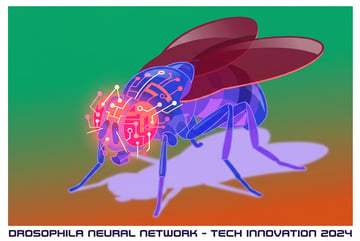
What Is Brain Emulation? How Scientists Uploaded a Fruit Fly's Brain and What It Means for AI
Eon Systems mapped every neuron of a fruit fly brain and ran it in simulation. Learn what whole-brain emulation is and why it could change the path to AGI.

AI Model Distillation Attacks: What They Are and Why They Matter
Anthropic, Google, and OpenAI all reported distillation attacks from Chinese AI labs. Learn what model distillation is and why it's a security concern.