
AI Cost & Token Optimization
Cutting your AI bill — free model routing through Open Router, running models locally to offload work, token-saving Claude Code commands, opus-plan-mode tricks.

How to Build an AI Subscription Audit Agent That Runs Monthly Without a Server
Use Claude Co-work cloud tasks to automatically audit recurring subscriptions, flag price increases, and email a monthly report. No server required.

GPT-5.6 vs Claude Fable 5: Cost Per Task Is the Real Comparison That Matters
GPT-5.6 scores one point below Fable 5 on intelligence benchmarks but costs 2.75x less per task. Here's how to think about model selection for agentic work.

AI Model Pricing in 2026: GPT-5.6, Grok 4.5, Muse Spark, and Claude Fable 5 Compared
Compare the real cost per task across GPT-5.6 Sol, Grok 4.5, Meta Muse Spark 1.1, and Claude Fable 5 to find the best value for your AI workflows.

How to Use GPT-5.6 Sol as an Orchestrator with Cheaper Sub-Agent Models
GPT-5.6 Sol excels at planning and orchestration. Learn how to pair it with Luna or Terra sub-agents to cut costs while keeping output quality high.

Plan with Fable 5, Build with Sonnet: The Model Routing Pattern That Cuts AI Costs
Use Claude Fable 5 for planning and architecture, then switch to Sonnet for implementation. This routing pattern cuts token costs without sacrificing quality.

How to Reduce Claude Fable 5 Token Costs: 8 Settings to Change Right Now
Fable 5 now bills at API rates. Learn which settings to disable—MCP servers, auto-memory, Claude.md bloat—to cut token costs without losing quality.

How to Use Grok 4.5 as a Cheaper Sub-Agent in Multi-Model AI Workflows
Grok 4.5 matches GPT-5.5 on coding benchmarks at $2 per million input tokens. Learn how to route tasks to it from a smarter orchestrator model.

Token Efficiency vs Raw Intelligence: Why GPT-5.6 Beats Claude Fable 5 on Cost-Per-Result
GPT-5.6 Sol uses half the tokens of Claude Fable 5 and costs 3x less. Here's why token efficiency often matters more than benchmark scores for real workflows.

How to Use Claude Fable 5 as an Orchestrator Without Burning Your Token Budget
Use Claude Fable 5 for planning and review while delegating execution to Opus or Sonnet sub-agents—cutting costs by 10x with no quality loss.

What Is Context Rot in AI Agents and How Does Auto-Compact Fix It?
Context rot degrades AI agent quality at 70-80% context fill. Learn how to set Claude Code's auto-compact threshold to prevent it before it starts.

What Is the 'Fable Mode' Skill? How to Make Cheaper Models Think Like Frontier AI
The Fable Mode skill extracts Claude Fable 5's reasoning habits and injects them into cheaper models like Opus. Here's how it works and how to build it.

How to Use Model Routing to Cut AI Agent Costs by 60%
Learn how to route tasks to cheaper models like Sonnet and Haiku instead of always using frontier models, without sacrificing output quality.

AI Model Routing: How to Cut Costs 60% by Matching Tasks to the Right Model
Learn how to route AI tasks to the right model tier—frontier for planning, cheaper for execution—and cut your AI bill by up to 60%.

How to Build an AI Workflow That Converts Text Prompts to Images to Cut Token Costs
Discover how rendering text as compressed images exploits Claude's vision billing to reduce input token costs by 30–60% in agentic workflows.
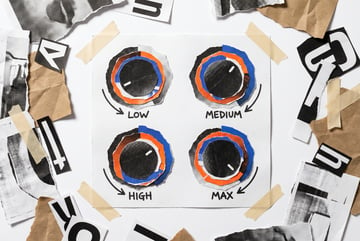
How to Use Effort Levels in Claude to Get Better Results Without Overspending
Claude's effort levels—low, medium, high, max—dramatically affect cost and quality. Learn when each level helps and when max effort actually hurts.

What Is the 'Fable Mode' Skill? How to Make Cheaper AI Models Think Like Frontier Models
The Fable Mode skill injects Claude Fable 5's reasoning habits into cheaper models like Opus, using five gates: scope, evidence, attack, verify, report.
AI Model Routing: When to Use Frontier Models vs Cheap Models in Your Agent Stack
Frontier models excel at imagining new tasks; cheap models execute known ones. Learn how to route intelligently and where each model tier creates real value.

What Is Semantic Compression? How to Cut AI Token Costs by 75% Without Losing Quality
Semantic compression rewrites prompts and system files to maximum information density. Learn how to reduce token usage by 75% with zero quality loss.

Token Reduction Strategies for AI Agents: 8 Techniques That Cut Costs by 50% or More
Semantic compression, RTK, logs to SQLite, and capped thinking budgets can cut AI agent token costs by 50–99% with near-zero quality loss. Here's how.

AI Model Pricing Explained: Why Claude Sonnet 5 Can Cost More Than Opus in Agents
Claude Sonnet 5 is cheaper per token but uses more tokens in agentic workflows. Learn how to calculate real AI model costs for your use case.

Open-Weight vs Closed AI Models: Why GLM 5.2 Changes the Cost Equation for Agents
Open-weight models like GLM 5.2 are closing the gap with frontier AI. Here's what that means for your agent stack and token budget.

Claude Sonnet 5 Token Efficiency Problem: Why It Can Cost More Than Opus 4.8 in Agents
Claude Sonnet 5 uses 30% more tokens than other models due to its agentic design. Learn when it costs more than Opus and how to manage usage.

Claude Sonnet 5 Token Efficiency Problem: Why It Can Cost More Than Opus 4.8
Claude Sonnet 5 uses 30% more tokens than previous models. Learn why this happens and how to manage costs in agentic AI workflows.

What Is DeepSpark? DeepSeek's Speculative Decoding Method That Makes Every LLM Faster
DeepSpark is DeepSeek's open-source speculative decoding system delivering 50–400% faster inference without retraining. Here's how it works.