
Claude Articles
Browse 778 articles about Claude.

AI Model Pricing Explained: Why Claude Sonnet 5 Can Cost More Than Opus in Agents
Claude Sonnet 5 is cheaper per token but uses more tokens in agentic workflows. Learn how to calculate real AI model costs for your use case.
How to Use Claude Fable 5 Without Triggering the Opus 4.8 Safety Fallback
Claude Fable 5 silently routes certain requests to Opus 4.8. Learn which prompts trigger the fallback and how to avoid it in your agent workflows.

Claude Fable 5 Effort Levels Explained: When to Use Low, Medium, High, and Max
Claude Fable 5 has five effort levels that control cost and reasoning depth. Learn which to use for routine tasks vs complex agentic workflows.

How to Prompt Claude Fable 5 for Maximum Output Quality: 6 Rules from Anthropic
Anthropic's own documentation reveals six prompting rules for Claude Fable 5—including effort levels, negative prompting, and avoiding Opus fallback.

Claude Code /goal vs /routines vs /loop: Which Autonomous Scheduling Method Should You Use?
Claude Code offers three ways to run agents autonomously: /goal for completion conditions, /loop for intervals, and /routines for cloud-based cron jobs.

Claude Sonnet 5 Token Efficiency Problem: Why It Can Cost More Than Opus 4.8 in Agents
Claude Sonnet 5 uses 30% more tokens than other models due to its agentic design. Learn when it costs more than Opus and how to manage usage.

How to Prompt Claude Fable 5 Like an Anthropic Engineer: 6 Rules That Actually Work
Anthropic's own best practices for Claude Fable 5 include giving context, negative prompting, effort levels, and avoiding reasoning requests that trigger Opus.

What Is an AI Second Brain Knowledge Base? How to Build One with Claude Code
An AI second brain stores your knowledge so agents can search it by meaning. Learn how to build one with Claude Code using automated hourly processing.

Claude Sonnet 5 Token Efficiency Problem: Why It Can Cost More Than Opus 4.8
Claude Sonnet 5 uses 30% more tokens than previous models. Learn why this happens and how to manage costs in agentic AI workflows.

Claude Sonnet 5 vs Opus 4.8: Which Model Should You Use for Agentic Work?
Claude Sonnet 5 is cheaper but uses more tokens than Opus 4.8. Here's how to choose the right model for your agentic workflows and budget.

How to Use the STORM Research Method in Your AI Agent Workflows
Stanford's STORM method uses 5 expert perspectives to produce 25% more organized research. Learn how to implement it as a Claude Code skill.

What Is Claude Sonnet 5? Anthropic's Most Agentic Sonnet Model Explained
Claude Sonnet 5 is Anthropic's most agentic Sonnet yet. Learn how it compares to Opus 4.8, its pricing, and when to use it in your AI workflows.

What Is Claude Tag? Anthropic's Slack-Native AI Agent for Enterprise Teams
Claude Tag lets teams bring Claude into Slack channels with scoped permissions and memory. Here's what it means for enterprise AI workflows.

How to Build a Brand Context Folder That Makes Every AI Output Sound Like You
A brand context folder with voice profile, visual identity, and positioning files gives every Claude session consistent, on-brand outputs from the start.

How to Use Claude Code's /goal Command with Routines for Fully Autonomous Scheduled Workflows
Combining /goal with Claude Code routines lets you set finish conditions and run recurring tasks on a cron schedule without ever sitting at your terminal.
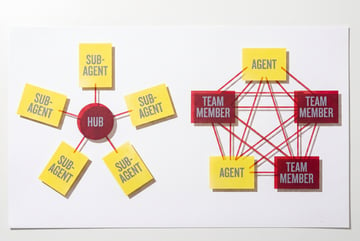
Sub-Agents vs Agent Teams in Claude Code: What's the Difference and When to Use Each
Sub-agents report to one session but can't talk to each other. Agent teams can debate and collaborate. Learn which architecture fits your workflow.
Claude Code Auto Mode, /goal, and /routines: How to Run Agents Without You
Learn how to combine Claude Code's auto mode, /goal command, and routines to build AI workflows that run scheduled tasks without human supervision.

How to Build an AI Second Brain Knowledge Base with Claude Code
Learn how to build an AI second brain using Claude Code with voice profiles, visual identity files, and positioning docs that power every agent session.

How to Use the /goal Command in Claude Code for Fully Autonomous Workflows
The /goal command in Claude Code keeps agents running until a measurable condition is met. Learn how to set goals, exit criteria, and combine with sub-agents.

Claude Tag for Slack: How Anthropic's Native Agent Changes Enterprise Workflows
Claude Tag lets teams tag Claude in Slack like a teammate. Learn how it works, what it can do, and why Andrej Karpathy called it a new AI paradigm.