
Automation Articles
Browse 949 articles about Automation.

AI Agent Evaluators and Verifiers: How to Stop Agents from Grading Their Own Work
Learn why AI agents shouldn't evaluate their own output and how to build separate evaluator and verifier components that catch errors before they ship.

AI Agent Observability: How to Monitor Agents Running for Hours Without Babysitting
Discover how to add observability to long-running AI agents so you can catch failures, track costs, and fix issues before users notice.

How to Use AI Agents for High-Stakes Paperwork: Insurance, Taxes, and Healthcare
Learn how to apply a 9-part agent skeleton to organize messy documents into structured case files for insurance appeals, tax prep, and healthcare claims.
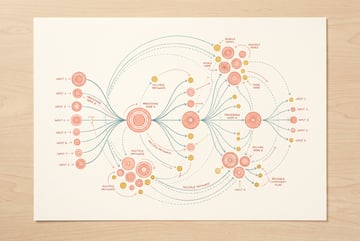
How to Build an AI Flywheel: Reusing Agent Primitives Across Email, Insurance, and Taxes
Learn how to build reusable agent primitives—ingestion, normalization, citations, and gates—that make every new AI workflow faster and cheaper to build.

What Is the Gate Pattern for AI Agents? Why Agents Should Prepare, Not Submit
The gate pattern stops AI agents before they submit, pay, or sign. Learn why this design principle is essential for high-trust agentic workflows.

How to Build an AI Operating System for Your Business Using LLM Wikis
Learn how to ingest YouTube videos, meeting transcripts, and documents into an LLM wiki that makes every AI agent smarter and more context-aware.
How to Build a Long-Running AI Agent: 7 Components You Need
Learn the 7 essential components for building autonomous AI agents that run for hours without drifting, stopping early, or going off the rails.
What Is the Outer Loop Pattern for AI Agents? How to Keep Agents Running Until Done
The outer loop pattern wraps AI agents in a control mechanism that checks progress, compares against goals, and restarts agents that stop too early.

What Is the Dark Factory Approach to AI Coding? How to Ship Code Without Human Bottlenecks
The dark factory is a fully autonomous AI coding pipeline that takes a spec and ships production code. Learn what it takes to build one reliably.

How to Build a Brand Context Folder for AI Agents: Voice Profile, Visual Identity, and Positioning
Stop getting generic AI outputs. Build a brand context folder with voice profile, design tokens, and positioning files that every agent session inherits.
Claude Code /goal vs /routines vs /loop: Which Autonomous Scheduling Method Should You Use?
Claude Code offers three ways to run agents autonomously: /goal for completion conditions, /loop for intervals, and /routines for cloud-based cron jobs.

How to Build an OKF Knowledge Bundle: Share Your AI Knowledge Base with Any Agent
Google's Open Knowledge Format lets you package knowledge bases as shareable bundles. Learn how to build one and import it into your second brain.
How to Use GLM 5.2 for Agentic Workflows: Agent Harness, Chrome Extensions, and Game Clones
GLM 5.2 excels at coding agents, Chrome extensions, and long-context tasks at a fraction of frontier model costs. Here's how to use it effectively.
The AI Context War: Why Siri, Claude Tag, and Codex Are Solving the Same Problem
Apple, Anthropic, and OpenAI are all racing to connect AI to your real-world context. Here's why context access matters more than model intelligence.

What Is an AI Second Brain Knowledge Base? How to Build One with Claude Code
An AI second brain stores your knowledge so agents can search it by meaning. Learn how to build one with Claude Code using automated hourly processing.

Claude Sonnet 5 Token Efficiency Problem: Why It Can Cost More Than Opus 4.8
Claude Sonnet 5 uses 30% more tokens than previous models. Learn why this happens and how to manage costs in agentic AI workflows.

Claude Sonnet 5 vs Opus 4.8: Which Model Should You Use for Agentic Work?
Claude Sonnet 5 is cheaper but uses more tokens than Opus 4.8. Here's how to choose the right model for your agentic workflows and budget.

Multi-Perspective AI Research: How Sub-Agents Beat Single-Prompt Deep Research
Using 5 expert sub-agents for research produces better results than 100+ parallel agents. Here's the architecture and why it works for AI workflows.

How to Use the STORM Research Method in Your AI Agent Workflows
Stanford's STORM method uses 5 expert perspectives to produce 25% more organized research. Learn how to implement it as a Claude Code skill.

What Is Claude Tag? Anthropic's Slack-Native AI Agent for Enterprise Teams
Claude Tag lets teams bring Claude into Slack channels with scoped permissions and memory. Here's what it means for enterprise AI workflows.