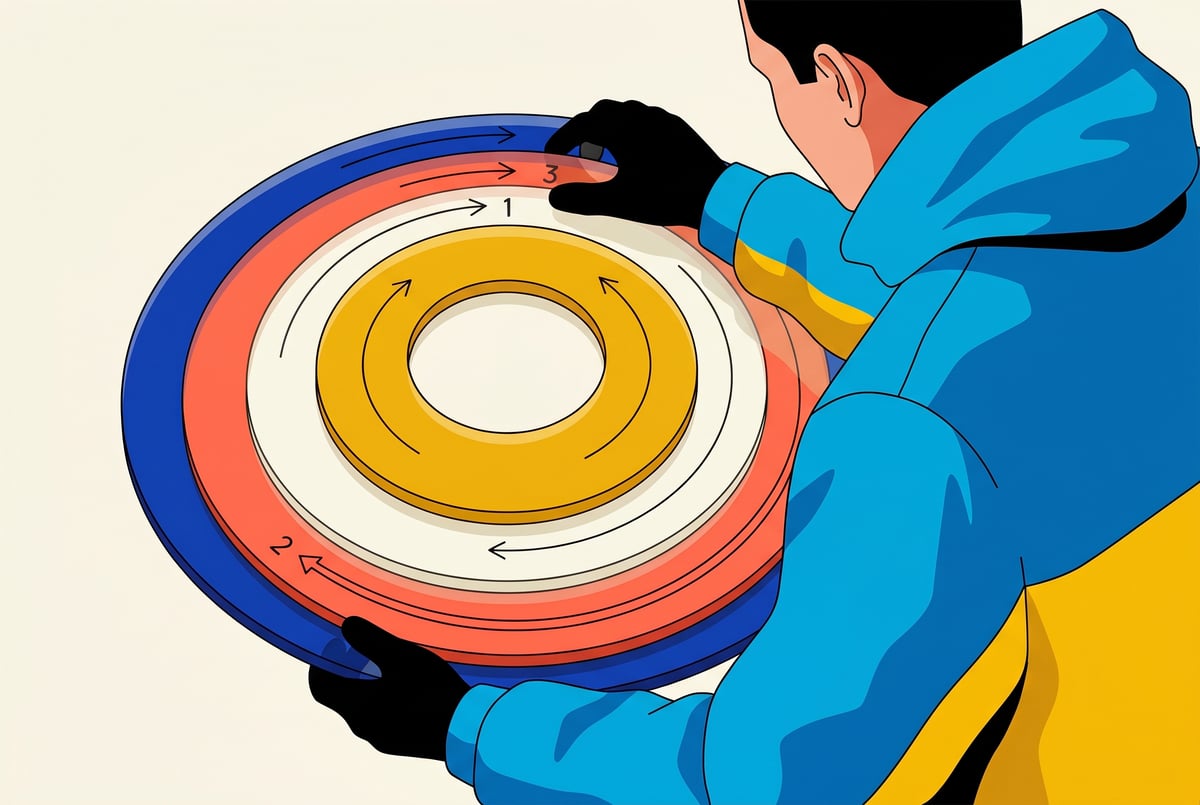
What Is the Slot Machine Method for Claude Code? Why Restarting Beats Correcting
When Claude makes a mistake, arguing makes it worse. The slot machine method says to rewind and re-run instead. Here's why it works and how to do it.

When Claude Goes Wrong, Stop Arguing With It
You’re using Claude Code to build something. It generates a function, but it’s structured in a way that won’t work. You explain the problem. Claude apologizes and tries again — but the new version still carries the same flawed assumption. You explain again. Now you’re three exchanges deep, the code is worse, and the model seems more confused than when you started.
This is one of the most frustrating patterns in working with Claude, and it has a name: the slot machine method offers the counterintuitive fix. Instead of correcting Claude mid-conversation, you rewind and re-run.
Understanding why this works requires a quick look at how large language models handle context — and why the “just tell it what was wrong” instinct almost always backfires.
How Claude Actually Processes a Conversation
Claude doesn’t think the way a human does when you correct it. There’s no persistent memory being updated, no model being retrained in real time. What Claude has is a context window — a running transcript of everything said so far, which it uses to predict the next response.
When you send a message, Claude reads the entire conversation history and generates a reply based on all of it. That means every mistake Claude makes becomes permanent context. Every wrong assumption it stated is now part of the input it’s using to generate the next output.
This matters a lot for how you should respond to errors.

Why Errors Compound in Long Conversations
If Claude writes a function with a flawed architecture and you say “that approach won’t work because X,” Claude now has to generate a response that:
- Acknowledges it made a mistake
- Reconciles its previous output (which is still in the context) with your correction
- Produces something new that accounts for both
This is genuinely hard. The model is trying to generate output that fits coherently with a context that contains a contradiction — its original (wrong) answer and your correction. The result is often a patched version that inherits the original problem, or a response that addresses your specific note but introduces a new issue elsewhere.
The error isn’t just in the code Claude wrote. It’s baked into the conversation state.
What the Slot Machine Method Actually Is
The slot machine method treats each Claude conversation — or each agentic task run — as a probabilistic event. Like pulling a slot machine lever, any given run has some probability of producing a good output and some probability of producing a bad one.
The key insight: if you don’t like the result, you don’t “fix” the slot machine mid-pull. You reset and pull again.
In practice, this means:
- Don’t correct errors inline when the error is structural or involves a wrong assumption
- Rewind to a checkpoint — either the start of the conversation or the last point where Claude was on track
- Re-run from there, sometimes with a slightly modified prompt to steer away from the failure mode
The name comes from the intuition that you’re sampling from a distribution. Each run is a draw. If the draw is bad, the right move is a new draw — not trying to bend the bad draw into a good one.
Correcting vs. Rewinding: The Core Distinction
There’s a useful distinction between two types of problems:
Surface errors — Claude misunderstood a variable name, used the wrong syntax, added an extra loop. These are fixable inline. A quick correction in the same conversation usually works because the underlying direction is right.
Directional errors — Claude took a wrong approach entirely. It chose the wrong algorithm, misunderstood what you were building, or committed to a design pattern that won’t scale. These are the errors where inline correction fails.
For directional errors, the conversation context is the problem. Every token Claude generated after it went wrong is now pulling the next response in the wrong direction. Correcting inline means fighting the entire weight of that accumulated context.
Rewinding removes that weight entirely.
Why Arguing With Claude Makes Things Worse
There’s a documented tendency in large language models to be sycophantic — to agree with users even when the user is wrong, or to produce outputs that sound like they’re addressing a concern without actually doing so. Research from Anthropic on sycophancy in AI systems has explored this pattern in depth.

When you tell Claude its output was wrong, you’re not just giving it new information. You’re applying pressure. The model is now in a state where it needs to produce something that satisfies you and is consistent with the conversation so far. When those two things are in tension, models often prioritize the former — producing something that sounds like it addressed your concern, even if it didn’t really fix the problem.
This is why you get that experience of Claude saying “you’re right, let me fix that” and then producing something that’s wrong in a slightly different way.
The Politeness Trap
There’s also a more subtle issue. When Claude makes a mistake and you explain the problem conversationally — “I think the issue is that this function is running synchronously when it needs to be async” — Claude treats that as a cue to respond to your explanation, not just to fix the code.
So it might generate a response that correctly discusses async patterns, explains why your point is valid, and then produces code that still has problems — because the code generation is now downstream of a conversational response that’s about the explanation, not the implementation.
Rewinding removes this entirely. You’re not asking Claude to respond to a conversation. You’re starting fresh with a better prompt.
How to Apply the Slot Machine Method in Claude Code
Here’s how this works in practice, whether you’re using Claude Code directly or through an agentic workflow.
Step 1: Recognize the Error Type
Before you do anything, categorize the error. Ask yourself: is Claude doing the right thing imprecisely, or is it doing the wrong thing?
- Wrong variable name? Fix inline.
- Wrong function called? Fix inline.
- Wrong architecture for what you’re building? Rewind.
- Misunderstood the core requirement? Rewind.
When in doubt, rewind. The cost of a rewind is low. The cost of spending five exchanges in a broken conversation is high.
Step 2: Find Your Last Good Checkpoint
In Claude Code, you can often scroll back to identify where things went wrong. Your checkpoint is the last message before Claude started going in the wrong direction.
Sometimes this is the very first message — Claude started wrong from the beginning. Sometimes it’s three or four exchanges in, and Claude was right up until a specific turn.
Step 3: Edit or Reconstruct the Prompt
Don’t just re-run the same prompt. If Claude got it wrong, there’s something in how you framed the task that allowed the failure mode. Before you re-run, think about what to change.
Common adjustments:
- Add a constraint — “Do not use [pattern Claude defaulted to]. Instead, use [correct approach].”
- Clarify the context — Provide more information about what this code needs to do or fit into.
- Reframe the task — Sometimes the structure of the prompt matters more than the content. Ask for an outline before code, or ask Claude to explain its approach before implementing it.
Step 4: Re-run and Evaluate Fast
Pull the lever again. Evaluate quickly. If it’s good, keep going. If it’s bad again, adjust and re-run. Treat it as iteration, not failure.
Most good outputs from Claude don’t require many attempts when the prompt is well-constructed. If you’re pulling the lever ten times and still not getting what you need, the prompt needs more work — or the task needs to be broken into smaller pieces.
Step 5: Use Checkpoints Proactively

Once you’re getting good results, build the habit of saving checkpoints. In longer agentic sessions, if Claude produces something solid, note where you are in the conversation. If something goes wrong later, you have a clear place to rewind to rather than hunting for it.
Why This Works: The Context Window Explanation
The deeper reason the slot machine method works is straightforward once you understand context windows.
LLMs generate text token by token, each token conditioned on everything before it. The context window is the model’s entire working memory for a conversation. Unlike human memory, it doesn’t fade — every prior message has exactly as much influence on the next token as everything else in the window.
When Claude generates a wrong answer, that answer now occupies part of the context window. Every subsequent token is generated with that wrong answer as part of the input. You can add new text (your correction) to push against it, but you can’t remove what’s already there.
Rewinding is the equivalent of clearing the context and starting fresh. The model isn’t fighting its own prior output anymore. It’s generating from a cleaner state.
This is why, counterintuitively, a clean rewind often produces a correct answer faster than multiple inline corrections — even if the rewind takes a bit of extra time.
Where MindStudio Fits Into This Workflow
If you’re building agentic workflows on top of Claude Code — using it to power autonomous tasks rather than just one-off code generation — the slot machine method becomes even more important, and more complex to manage manually.
This is one area where MindStudio’s Agent Skills Plugin is genuinely useful. If Claude Code is your reasoning layer, the plugin (@mindstudio-ai/agent) lets it call typed capabilities — agent.searchGoogle(), agent.runWorkflow(), agent.generateImage() — as simple method calls, handling the infrastructure layer (retries, rate limiting, auth) automatically.
But the more relevant angle here is how MindStudio handles multi-step agent design. When you build an AI agent in MindStudio, you’re explicitly defining stages and checkpoints in the workflow. Each stage has a clear input and expected output. If a stage fails, the architecture makes it straightforward to identify exactly where to rewind and re-run — instead of trying to recover mid-flow.
For Claude-powered agents specifically, this maps directly to the slot machine method. Each workflow stage is a checkpoint. A bad output means you rewind to the last good stage and re-run with adjusted instructions — not add correction logic to the middle of a broken run.
You can try MindStudio free at mindstudio.ai.
Common Mistakes When Applying This Method
Correcting Too Late
The biggest mistake is waiting too long to rewind. The further Claude goes in the wrong direction, the more context is contaminated. If you catch an error early and still try to correct inline, you’re more likely to succeed. If you’re five exchanges in and things are clearly broken, rewinding earlier would have been faster.
Develop the instinct to rewind sooner. When something feels off, don’t wait to see if Claude self-corrects.
Rewinding Without Changing the Prompt
Plans first. Then code.
Remy writes the spec, manages the build, and ships the app.

Rewinding to the same prompt that produced the bad output is just rolling the dice again without changing the odds. Analyze what allowed the failure mode and adjust the prompt accordingly.
This doesn’t need to be a major rewrite. Sometimes a single sentence — “Do not use X” or “Make sure to handle Y” — is enough to shift the probability toward a good output.
Treating Every Error as Directional
Not every error needs a rewind. Inline corrections work fine for surface-level mistakes. Over-applying the slot machine method means you’ll spend more time restarting conversations than you need to. Part of the skill is correctly categorizing errors.
Skipping the Checkpoint Habit
In longer sessions, failing to note checkpoints means that when something goes wrong, you have to hunt through the conversation to find where it was last working. Build the habit of recognizing “this output is solid” moments and treating them as checkpoints — even if just mentally.
FAQ
What is the slot machine method for Claude?
The slot machine method is an approach to working with Claude (or other LLMs) where, instead of correcting errors inline within a conversation, you rewind to a checkpoint and re-run the prompt. The name reflects the probabilistic nature of LLM outputs — each run is a draw, and if you don’t like the draw, you reset and draw again rather than trying to fix the bad result mid-run.
Why does correcting Claude mid-conversation often make things worse?
When Claude generates an incorrect output, that output becomes part of the conversation context. Every subsequent response is generated with the error still present in the context window. Correcting inline doesn’t remove the bad output — it adds your correction alongside it, leaving Claude to reconcile a contradiction. This often produces patched outputs that address the surface note but inherit the original problem. Rewinding removes the bad context entirely.
When should you rewind vs. correct inline?
Rewind when the error is directional — Claude chose the wrong approach, misunderstood a core requirement, or made a wrong assumption that shaped everything after it. Correct inline when the error is a surface mistake — wrong syntax, wrong variable name, a minor logic slip. The difference is whether the underlying direction is still right.
How do you apply the slot machine method in Claude Code specifically?
In Claude Code, you scroll back to identify the last message before Claude went wrong, edit or reconstruct the prompt to address the failure mode, and re-run from that point. The key step is adjusting the prompt before re-running — adding constraints, clarifying context, or reframing the task — so you’re not just rolling the same dice again.
Does this work for agentic workflows, not just one-off code generation?
Yes, and it’s especially valuable for agentic workflows. Multi-step agents have natural checkpoints between stages. If a stage fails, rewinding to the last successful stage and re-running (with adjusted instructions) is cleaner than trying to recover mid-flow. Workflow tools that make checkpoints explicit — like MindStudio’s visual agent builder — make this pattern easier to implement systematically.
How many times should you re-run before changing your approach?
There’s no fixed number, but if you’re re-running the same prompt more than two or three times without improvement, the prompt needs more significant changes. Persistent failures often point to a task that needs to be broken into smaller pieces, a missing piece of context, or a framing that’s leading Claude toward a consistently wrong direction.
Key Takeaways
- When Claude makes a directional error, inline correction usually makes things worse — the error becomes permanent context that pulls subsequent outputs in the wrong direction.
- The slot machine method treats each conversation run as a probabilistic draw: if the result is bad, rewind and draw again instead of trying to fix the bad draw.
- The distinction between surface errors (fix inline) and directional errors (rewind) is the core skill to develop.
- Always adjust your prompt before re-running — rewinding to the same prompt just repeats the same draw.
- Build a checkpoint habit in longer sessions so you always know where to rewind to.
- For agentic workflows, this pattern maps directly to stage-based architecture where each stage is a rewindable checkpoint.
If you’re building Claude-powered agents and want infrastructure that makes this kind of structured, checkpoint-aware workflow easier to manage, MindStudio is worth exploring — it’s free to start, and the visual workflow builder makes the rewind-and-rerun pattern much easier to apply systematically.