Can You Run Qwen3.8-2.4T-A95B Locally? Hardware Requirements Explained
What it actually takes to self-host Qwen3.8-2.4T-A95B, a 2.4-trillion-parameter MoE model, including VRAM, quantization, and vLLM setup.
Can you actually run Qwen3.8-2.4T-A95B on your own hardware?
Technically yes, practically no, unless “your own hardware” means a multi-node GPU cluster. Qwen3.8-2.4T-A95B is a 2.4-trillion-parameter mixture-of-experts (MoE) model with 95 billion parameters active per token. Even at aggressive quantization, the full weight set doesn’t fit on a single consumer GPU or even a single high-end workstation. It’s built for serving infrastructure using vLLM or SGLang, not for a laptop or a single RTX card.
TL;DR
- The total parameter count is 2.4 trillion, but only about 95 billion parameters activate per forward pass thanks to the model’s mixture-of-experts routing across 512 experts.
- Storing the full weights requires terabytes of memory, not gigabytes, which puts this model firmly outside consumer hardware territory and into multi-GPU server territory.
- Active-parameter compute cost resembles a dense ~95B model, so inference speed per token is closer to a large dense model than to something you’d expect from a “2.4T” label.
- vLLM and SGLang are the supported serving stacks, both built for tensor and expert parallelism across multiple GPUs or nodes.
- Context length runs up to 262,144 tokens natively, extensible to just over one million, which adds substantial additional memory overhead for the KV cache on top of the weights.
- Quantization helps but doesn’t solve the fundamental problem, since even 4-bit compression of a 2.4T-parameter model still lands in the hundreds of gigabytes.
- This model is designed for API access via Qwen Cloud for most users, with self-hosting realistically reserved for organizations with server-grade GPU clusters.
Other agents start typing. Remy starts asking.
Scoping, trade-offs, edge cases — the real work. Before a line of code.

What is the MoE architecture behind Qwen3.8, and why does it matter for hardware?
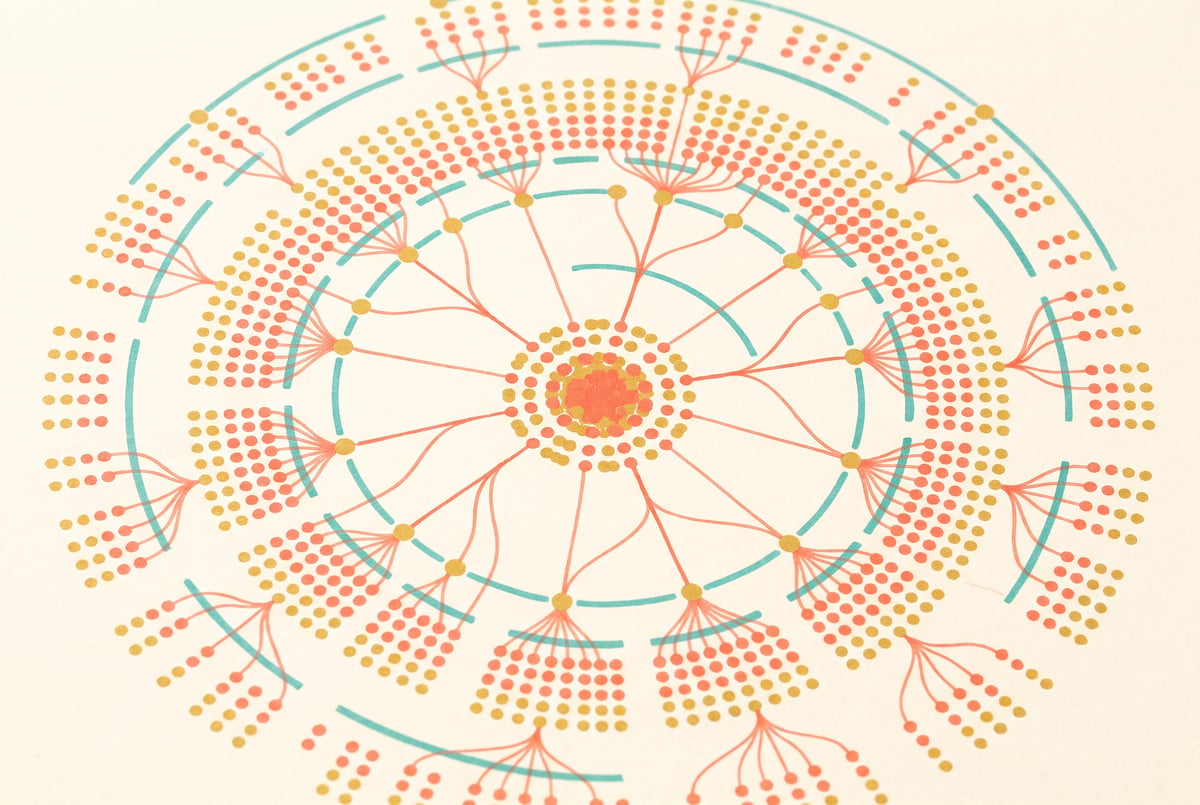
Qwen3.8-2.4T-A95B uses a mixture-of-experts design with 512 total experts, of which 10 routed experts plus 1 shared expert activate per token. That’s the “A95B” in the name: 95 billion active parameters out of the 2.4 trillion total. The architecture interleaves Gated DeltaNet (a linear attention mechanism) with full Gated Attention layers across 92 layers, following a repeating pattern of three DeltaNet+MoE blocks followed by one Gated Attention+MoE block, repeated 23 times.
The practical hardware implication is a split personality. Compute cost per token tracks the active parameter count, roughly 95B, which is manageable on modern accelerators. But memory footprint tracks the total parameter count, 2.4T, because every expert has to sit somewhere in memory (VRAM, host RAM, or fast storage) ready to be routed to. You cannot page experts in from disk fast enough for interactive inference, so in practice all 2.4T parameters need to live in GPU memory, or be sharded across many GPUs, for the model to serve at usable speed.
This is the standard MoE tradeoff: cheaper compute, more expensive memory. It’s why MoE models scale total parameter counts so far past what dense models reach, while keeping inference latency closer to a much smaller dense model.
How much VRAM does Qwen3.8-2.4T-A95B actually need?
The model card doesn’t publish an official VRAM figure, but the math is straightforward from the parameter count. At FP16/BF16 (2 bytes per parameter), 2.4 trillion parameters require roughly 4.8 terabytes of memory just for weights, before accounting for KV cache, activations, or the multi-token prediction (MTP) head. Even at aggressive INT4 quantization (roughly 0.5 bytes per parameter with overhead), you’re still looking at somewhere in the 600 gigabyte to 1 terabyte range for weights alone.
No single GPU on the market holds that much memory. Even an 8-GPU server with 80GB cards per GPU (640GB total) would be tight or insufficient depending on quantization scheme and KV cache needs, especially at longer context lengths. Realistic self-hosted deployments of a model this size involve multiple multi-GPU nodes, with tensor parallelism and expert parallelism splitting the 512 experts across devices, which is exactly what vLLM and SGLang are built to coordinate.
Context length compounds the problem. Qwen3.8 natively supports 262,144 tokens and can be extended to just over one million. KV cache memory scales with context length, batch size, and the number of attention heads. The model’s Gated Attention uses 64 query heads and 4 key/value heads at a head dimension of 256, a grouped-query-style ratio that reduces KV cache size relative to full multi-head attention, but at million-token context lengths the cache still adds meaningfully to the memory budget on top of the weights.
Is vLLM or SGLang the right way to serve this model?
Plans first. Then code.
Remy writes the spec, manages the build, and ships the app.
Yes, and the model card explicitly calls out compatibility with vLLM, SGLang, and TokenSpeed as the intended serving paths. Both vLLM and SGLang support the parallelism strategies (tensor parallel, pipeline parallel, and expert parallel) that MoE models at this scale require. Running Qwen3.8-2.4T-A95B through raw Transformers on a single machine is not a realistic path; these serving frameworks handle expert routing efficiently, batch requests, and manage the KV cache across distributed memory.
For teams with existing multi-GPU infrastructure, vLLM’s expert-parallel support in particular is the more direct route: it distributes the 512 experts across GPUs so that any single device only holds a fraction of the total weight, while routing token computations to the correct device on the fly. SGLang offers similar capability with its own scheduling and caching optimizations, and the model card lists it as an equally valid target.
Either way, deploying this model means standing up and tuning a distributed inference cluster, not downloading a checkpoint and running a script.
Is self-hosting Qwen3.8-2.4T-A95B worth it compared to the API?
For most developers, no. The model card points to Qwen Cloud’s hosted offering, Qwen3.8-Max, as the intended access path for anyone without server-grade infrastructure. Qwen3.8-Max is built on the same 2.4T-A95B architecture but adds vision input, non-thinking mode support, a default 1M-token context window, and built-in tools, all without the buyer needing to provision any hardware.
Self-hosting makes sense in a narrow set of cases: organizations that already operate multi-node GPU clusters, have strict data residency or privacy requirements that rule out third-party APIs, or need to run heavy customization (fine-tuning, custom routing, offline batch inference) that a hosted API doesn’t support. For everyone else, the hardware and operational cost of standing up an expert-parallel vLLM or SGLang deployment for a 2.4T-parameter model outweighs the benefit versus calling an API.
If self-hosting is the goal, budgeting starts with a realistic inventory: how many GPUs, how much aggregate VRAM across the cluster, what interconnect bandwidth exists between nodes (this matters a lot for expert-parallel routing), and what quantization format is acceptable for the target quality bar. None of that is a weekend project.
Frequently Asked Questions
How many active parameters does Qwen3.8-2.4T-A95B use per token?
It activates about 95 billion parameters per token, drawn from 10 routed experts plus 1 shared expert out of 512 total experts, even though the full model has 2.4 trillion parameters stored.
Can Qwen3.8-2.4T-A95B run on a single consumer GPU?
No. The total weight size, even quantized, far exceeds the memory available on any single consumer or prosumer GPU. It requires a multi-GPU or multi-node server setup with tensor and expert parallelism.
Does quantization make local deployment feasible?
Quantization reduces memory needs but doesn’t change the order of magnitude. A 4-bit quantized version of a 2.4-trillion-parameter model still likely needs several hundred gigabytes to around a terabyte of accessible memory, which still requires a multi-GPU cluster.
What’s the maximum context length Qwen3.8-2.4T-A95B supports?
It natively supports up to 262,144 tokens and can be extended to roughly 1,010,000 tokens, though longer contexts significantly increase KV cache memory requirements during serving.
What’s the easiest way to use Qwen3.8 without hosting it yourself?
The Qwen Cloud API offers Qwen3.8-Max, a hosted version of the same architecture with additional features like vision input and a 1M-token default context, removing the need for any local or self-managed infrastructure.