Process Knowledge Has a Half-Life. Encode It Before It Decays.
The hard-won understanding of how your processes actually work degrades the moment it isn't captured. The org that encodes it while it's fresh compounds; the rest keep relearning.
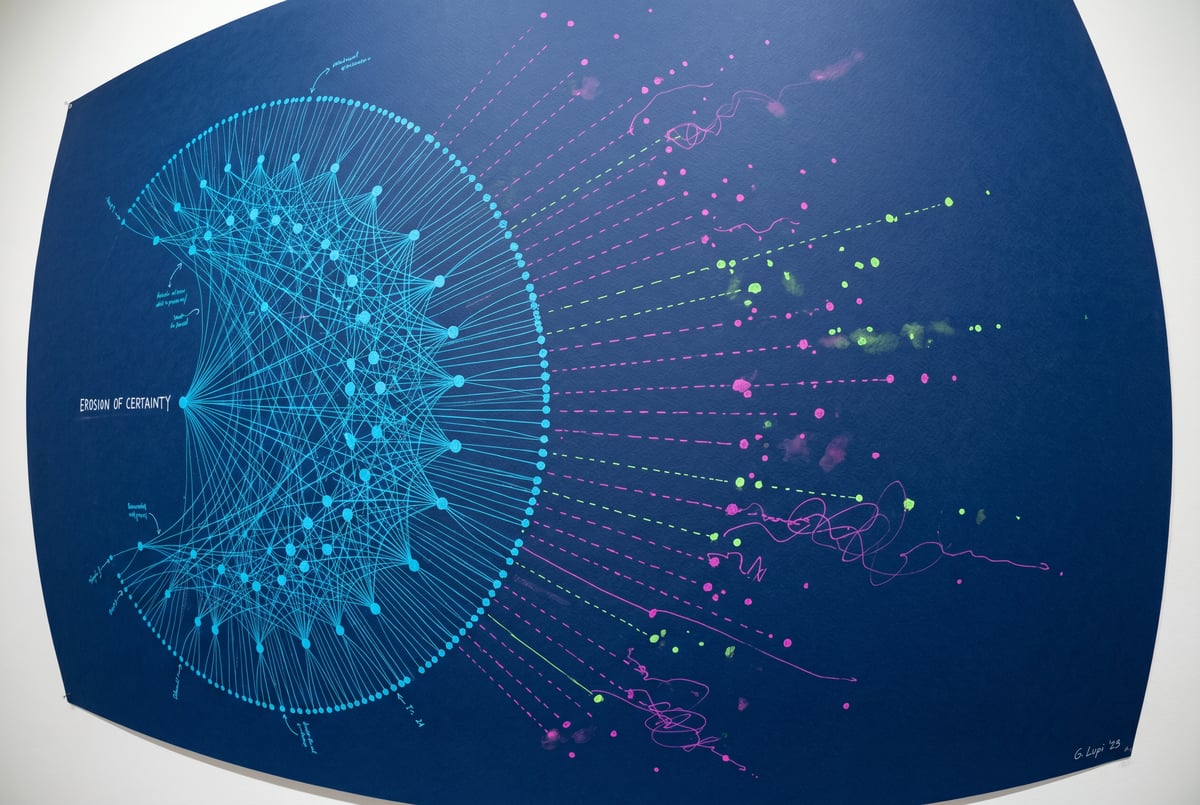
Process knowledge has a half-life. The precise understanding of how a workflow actually runs (which step breaks, which exception recurs, why the obvious approach fails) is sharpest the moment someone lives through it, and it degrades from there. People leave and take it with them. Details blur. The reasoning behind a decision fades until all that’s left is the decision. An organization is only as capable as the process knowledge it can act on, and most of that knowledge is decaying right now, sitting in people’s heads and in documents nobody trusts. The org that captures it in working software while it’s fresh compounds its understanding; the org that lets it decay spends the next year relearning what it already knew.
This isn’t a documentation problem. Documentation is what you reach for because the knowledge is decaying, and documentation decays too. The durable asset is process knowledge encoded as something that runs.
TL;DR
- The understanding of how a process actually works is sharpest the moment someone lives through it and degrades from there, through turnover, forgetting, and the slow drift between what a team does and what it remembers doing.
- This is institutional knowledge decay, and it’s expensive: in one survey of 1,001 employees, workers lost roughly five hours a week waiting on colleagues who held knowledge no one else had, plus about six more recreating work that already existed.
- Wikis and docs don’t stop the decay. They rot in lockstep with the process they describe, because prose has no way to stay in sync with reality and people quietly stop trusting it.
- The real cost isn’t lost time; it’s that an org without durable process knowledge keeps relearning what it already figured out, paying the discovery cost again every time someone leaves or a tool changes.
- The fix is to capture process knowledge as a spec that compiles to working software: a plain-language plan that is both the human-readable record of how the process works and the thing the software is built from.
- When the spec is the source of truth, the record can’t silently drift from reality, because changing the process means editing the plan and recompiling. The documentation and the software are the same artifact.
- The org that encodes understanding while it’s fresh turns a depreciating asset into a compounding one: every process captured stays captured, survives the people who built it, and improves instead of fading.
Remy doesn't build the plumbing. It inherits it.
Other agents wire up auth, databases, models, and integrations from scratch every time you ask them to build something.
Remy ships with all of it from MindStudio — so every cycle goes into the app you actually want.

What is process knowledge and why does it decay?
Process knowledge is the hard-won understanding of how work actually gets done: not the official flowchart, but the real one. It’s knowing that the month-end close has a hole when a vendor invoices in two currencies, that a particular customer segment always trips the same onboarding step, that the “standard” approval path has three unwritten exceptions. It lives in the heads of the people who run the process, and it’s the most valuable thing an operating team owns.
It decays for ordinary reasons. People leave, and the most experienced ones leave at the worst times. Memory fades: the analyst who could explain every edge case in January is fuzzy by July. And processes drift. The way a team works in practice diverges from how anyone last described it, until the description and the reality are two different things. The decay is invisible until it isn’t. Nothing breaks the day someone forgets why a rule exists; it breaks six months later, when a new hire removes the rule because no one could explain it, and the exception it was guarding against comes roaring back.
How much does institutional knowledge decay actually cost?
It costs more than most leaders measure, because the cost is diffuse. In a survey of 1,001 employees, workers reported spending an average of about five hours every week waiting to reach the specific people who held knowledge they needed, and nearly six more recreating work that already existed somewhere they couldn’t find (Panopto). That’s not a line item anyone tracks. It’s friction smeared across every team, every week.
But the recurring tax is worse than the weekly one. When process knowledge decays, an org doesn’t just lose time; it loses the ability to build on what it knew. Every departure resets a workflow’s understanding partway to zero, and every tool migration strands the reasoning that shaped the old setup. The company pays the discovery cost again and again: the same edge cases rediscovered, the same workarounds reinvented, the same lessons relearned by whoever’s holding the process this year. An org that retains its process knowledge compounds. An org that lets it decay runs on a treadmill, working hard, learning constantly, ending each year where it started because the learning didn’t stick to anything durable.
Why don’t wikis and documentation solve this?
Because documentation is a snapshot, and the process is a film. The instant someone writes down how a workflow runs, the description starts drifting from reality. Every process tweak, tool change, and reorg makes some fraction of the docs quietly wrong. Prose has no mechanism to stay in sync with the thing it describes. Nobody gets paged when a wiki page goes stale.
- ✕a coding agent
- ✕no-code
- ✕vibe coding
- ✕a faster Cursor
The one that tells the coding agents what to build.
And staleness compounds into distrust. The first time an engineer or analyst follows a doc and it’s wrong, they stop trusting all the docs. They go back to asking the person, which routes the org’s knowledge straight back into the heads it was supposed to escape, and turns the people who know things into human help desks. The wiki becomes a graveyard of half-true pages nobody reads and nobody updates (DEV Community).
The deeper issue is that a document and the system it describes are two separate artifacts that have to be kept in agreement by hand, and hand-maintained agreement always loses. The record of how a process works and the software that runs it drift apart, and reconciling them is a job nobody owns.
Why doesn’t the engineering backlog capture knowledge in time?
Because the backlog delays capture until the knowledge is already stale. The conventional way to turn process understanding into durable software is to file a request: the person who holds the knowledge describes it to a product manager, who writes a spec, which becomes a ticket, which waits in a queue, which an engineer eventually builds. By the time the tool ships, the situation has moved. Worse, the understanding has been relayed through three people who didn’t live the process, losing detail at every handoff. The gap between noticing a problem and having a tool for it is where most of the knowledge leaks out.
Handing everyone an AI coding assistant doesn’t fix the capture problem either. Tools like Cursor, Claude Code, and GitHub Copilot make engineers faster at writing code, which is genuinely useful, but they operate at the code layer and assume engineering skill. They speed up the people already in the queue; they don’t let the finance lead or the ops manager who holds the knowledge encode it directly. Point a coding agent at a non-engineer and the barrier hasn’t moved, it’s just relocated to “now learn to operate a code editor.” The knowledge still has to travel to an engineer, and it decays in transit.
So the org gets faster builds and the same lossy capture. The understanding that was sharp the day it was lived arrives at the codebase blurred and secondhand, if it arrives at all.
Knowledge in heads vs. knowledge as a spec
The difference between an org that loses its process knowledge and one that keeps it isn’t effort or discipline. It’s where the knowledge lives and whether that place can decay. Compare the forms directly.
| Knowledge in heads & docs | Knowledge encoded as a living spec | |
|---|---|---|
| Where it lives | People’s memory; prose nobody syncs | A plain-language plan that compiles to running software |
| When someone leaves | Walks out the door with them | Stays—it’s encoded in something that runs |
| As the process drifts | The record silently goes stale | Editing the plan and recompiling keeps them in sync |
| Trust over time | Erodes after the first wrong page | Holds, because the record is the software |
| Onboarding a successor | Reconstruct the reasoning from scratch | Read the plan; it’s how the system actually works |
| The asset’s trajectory | Depreciates—relearned every cycle | Compounds—captured once, improved over time |
The right-hand column isn’t a better wiki. It’s a different kind of artifact: a single record that is simultaneously the human-readable explanation of how the process works and the source the working software is built from. Because they’re the same thing, they can’t drift apart.
One coffee. One working app.
You bring the idea. Remy manages the project.
How does an org encode process knowledge before it decays?
By making capture cheap and immediate, and by making the captured form the source of truth rather than a description that sits beside it. Two conditions have to hold. First, the person who holds the knowledge has to be able to encode it themselves, while it’s fresh, not relay it through a queue that blurs and delays it. Second, the encoded form has to be the software, so it can’t fall out of sync the way a doc does.
That second condition is the one most approaches miss. A spec written once and handed off goes stale the same way a wiki does. The capture only stays durable if updating the process means updating the spec, and updating the spec means the software changes too, so the record is continuously forced back into agreement with reality by the act of using it. When both hold, process knowledge stops being a depreciating asset: the understanding the org fought to acquire gets written down at the moment it’s sharpest, in a form that survives the person who wrote it and improves as the process improves.
What makes this capture cheap and durable
Everything above describes what an org needs to stop its process knowledge from decaying: capture by the person who holds it, while it’s fresh, in a form that is the software and therefore can’t drift from reality. The question is what makes that practical instead of aspirational. For most of computing history it wasn’t, because turning a plain-language description of a process into real, working software still required engineers, which put you right back in the queue where the knowledge goes stale.
That’s the constraint a new category of AI tool removes. A product agent lets someone describe a process in plain language and get back a real, deployed full-stack app (backend, database, authentication, frontend, and deployment) rather than a prototype or a mockup. Today the most advanced one is Remy. You describe how the process works; it drafts a plain-language plan; you read and refine that plan in plain language; and it compiles into a working app with real server-side auth, real data, and a live URL. A typical full-stack build runs $100–$500 in AI tokens at provider rates. The thing it changes is exactly the capture problem.
Other agents start typing. Remy starts asking.
Scoping, trade-offs, edge cases — the real work. Before a line of code.
The reason this stops the decay is that the spec is the source of truth. The plain-language plan isn’t documentation sitting beside the software; it’s the artifact the software is compiled from. So the record of how a process works and the system that runs it are the same thing, and they can’t drift apart. When the process changes, you don’t file a ticket against a codebase and hope the docs get updated; you edit the plan and recompile. Unlike coding agents like Cursor or Claude Code, which edit code inside a project an engineer already owns, a product agent operates at the product layer: the person who holds the process knowledge captures it directly, while it’s fresh, and what they capture stays current by construction. The hard-won understanding becomes a living record instead of a fading memory.
For the deeper mechanics, see what spec-driven development is and what a product agent is. For how this collapses the gap from problem to tool in days, and the broader operating-model picture in what the winning org looks like, follow the cluster.
FAQ
What is process knowledge? Process knowledge is the practical understanding of how work actually gets done: the real workflow, including its edge cases, exceptions, and the reasoning behind each step, as opposed to the official diagram. It lives in the heads of the people who run a process and is the most valuable thing an operating team owns.
Why does institutional knowledge decay? It decays for three ordinary reasons: people leave and take their understanding with them, memory of why decisions were made fades over time, and the actual process drifts away from how anyone last described it. None of these are dramatic events, which is why the decay is usually invisible until something breaks.
What does knowledge decay cost an organization? The visible cost is time: one survey of 1,001 employees found workers losing roughly five hours a week waiting on colleagues who held unique knowledge, plus nearly six more recreating existing work (Panopto). The larger cost is recurring—an org without durable process knowledge keeps relearning the same lessons every time someone leaves or a tool changes.
Why don’t wikis and documentation prevent knowledge decay? Because a document is a snapshot and the process is always moving, so prose drifts out of date with no mechanism to stay in sync. Once people hit one wrong page, they stop trusting the docs entirely and go back to asking people, which routes the knowledge straight back into the heads it was meant to escape.
What does “the spec is the source of truth” mean here? It means the plain-language plan describing how a process works is the same artifact the software is compiled from—not a separate document kept beside the code. Because they’re one thing, the record and the running system can’t silently drift apart; changing the process means editing the plan and recompiling.
How do you capture process knowledge before it decays? Let the person who holds it encode it themselves, in plain language, while it’s fresh—and make that encoded plan the source the software is built from, so it can’t fall out of sync. A product agent makes this practical by compiling a described process into a real full-stack app, turning the capture into a living record rather than a snapshot.
The bottom line
Remy is new. The platform isn't.
Remy is the latest expression of years of platform work. Not a hastily wrapped LLM.
The organizations that compound in the AI era won’t be the ones with the most documentation. They’ll be the ones whose process knowledge survives the people who hold it. That knowledge is sharpest the moment it’s lived and decays from there, and wikis, docs, the engineering backlog, and the chat assistant that sits beside the work without capturing it all let it go stale before it’s ever durably captured. Encode it while it’s fresh, as a spec that compiles to working software, and the record can’t drift from reality, because the record is the software. The asset stops depreciating and starts compounding.
If you want to see what capturing process knowledge in working software looks like in practice, explore Remy →.