Poke vs. Clicky vs. Cluey vs. Co-work — Which Consumer Agent Comes Closest to Actually Proactive?
Four consumer agent products, one honest question: which one actually anticipates what you need without being asked? Here's the teardown.
Four Consumer Agents, One Honest Question
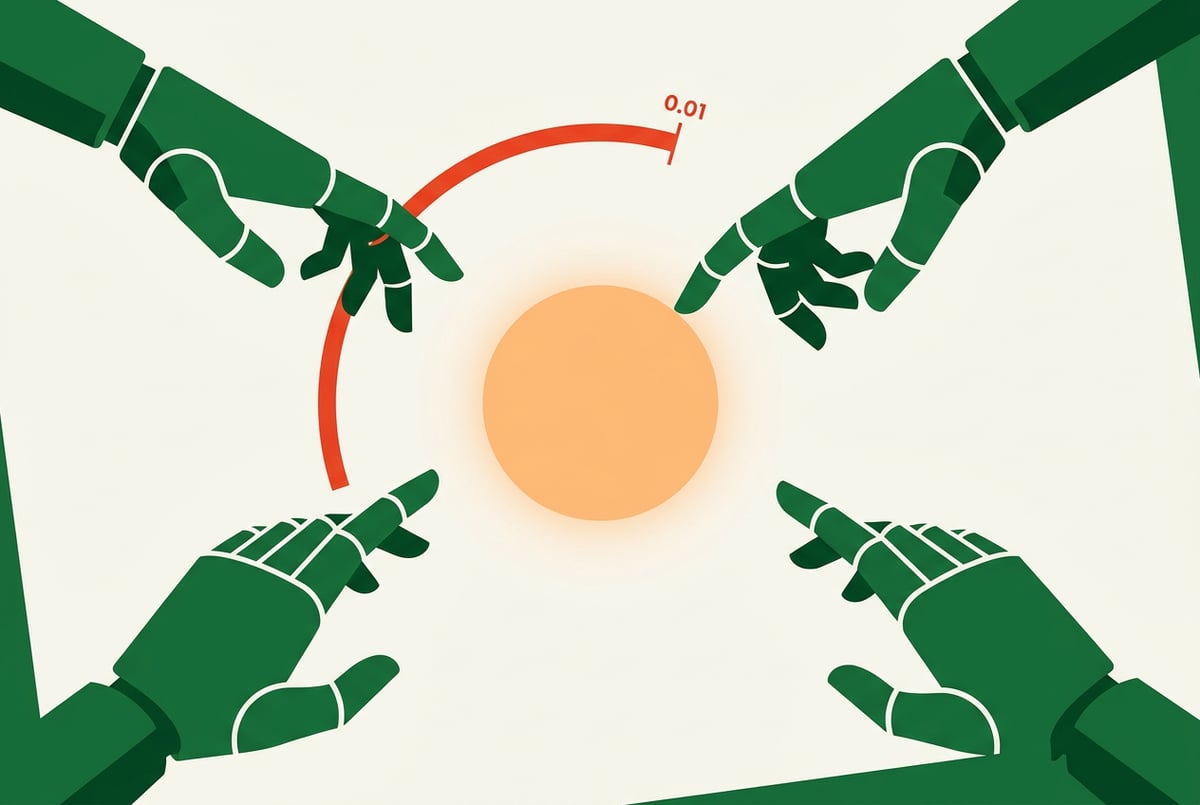
Poke, Clicky.so, Cluey, and Co-work all claim some version of the same thing: they’ll help you without you having to manage them. None of them fully deliver. The question worth asking isn’t which one is best — it’s which one comes closest to the thing that actually matters, and whether the gap is closeable.
This is a product teardown: Poke vs. Clicky.so vs. Cluey vs. Co-work — where each falls short of the anticipation gap, and what that gap actually costs you in daily use.
The anticipation gap is the distance between an agent that waits for you to remember it exists and an agent that notices the situation before you do. It’s not a model capability problem. The models are capable enough. The problem is that most consumer agents don’t have the intuition to know when to show up, when to ask, and when to shut up. That’s a product problem, and it’s the hardest kind.
What Proactive Actually Means (And Why the Bar Is Higher Than You Think)
Before the teardown, the criteria. “Proactive” gets thrown around loosely. Here’s what it actually requires.
Everyone else built a construction worker.
We built the contractor.
One file at a time.
UI, API, database, deploy.

Salience. The agent has to know what matters to you right now, not just what’s on your calendar. Your calendar is full of things that aren’t real. Your inbox is full of things that don’t need action. An agent that treats all data as equally real will interrupt you about meetings you’ve already mentally canceled and ignore the school email with the Friday deadline.
Restraint. An agent that surfaces everything is just a louder inbox. The product that wins will know when to stay quiet. Most current agents fail here by over-notifying, which trains users to ignore them, which defeats the entire purpose.
Contextual memory. The Hawaii example is the clearest illustration of why this is hard. Two people say the same thing — “I want to get in shape for Hawaii” — and mean completely different things. One wants five HIIT sessions a week and a meal plan. The other saw a TikTok and is half-serious. An agent that can’t read the difference between those two users will either exhaust one of them or underwhelm the other. Same words, different humans, different correct responses.
Trust ladder position. There’s a five-rung ladder here: (1) read, (2) suggest, (3) draft, (4) act with confirmation, (5) autonomous. Most consumer agents are stuck between rungs one and two. The ones that try to jump to five without earning it break trust in ways that are hard to recover from — because users are risk-averse, and one bad autonomous action is enough to make someone uninstall.
Load reduction, not load transfer. The test is simple: does using this agent give you back time and attention, or does it create a new thing to manage? If it’s the latter, it’s not an assistant. It’s a new inbox.
Poke: The Right Bet, Not Quite There
Poke’s thesis is that messaging is the right interface for a proactive agent. That’s a defensible position. Messaging has almost no cognitive overhead. People already live in iMessage and SMS and Telegram. The interface doesn’t feel like software — it feels like a conversation. If you’re going to have an agent that surfaces things without being asked, a message thread is a plausible place for it to appear.
Poke connects to your email, calendar, and search. It nudges you about upcoming events and unread emails. It’s trying to be proactive.
The problem is salience. Poke doesn’t yet know what matters to you. It can see your calendar, but it can’t tell the difference between a meeting you’re dreading and one you’ve already mentally rescheduled. It can see your email, but it can’t distinguish the urgent from the noise. The result is nudges that feel arbitrary — technically accurate, contextually off.
There’s also a structural constraint. Poke’s messaging rails run through Apple, Meta, and SMS infrastructure that Poke doesn’t control. That limits what it can do and when. The product is betting that models will get better fast enough to make the personalization layer work before the platform constraints become a ceiling.
That bet might pay off. The vision is coherent. But right now, Poke is a proactive agent in posture only. It’s still reactive in practice — it surfaces things, but not the right things, and not at the right moments.
Clicky.so: Best UX, Reactive by Design
Seven tools to build an app. Or just Remy.
Editor, preview, AI agents, deploy — all in one tab. Nothing to install.
Clicky.so is the most enjoyable agent to use in this group. The interaction model is genuinely clever: you talk to it, a small cursor-based agent appears in the corner of your screen, and it does the task. You can spin up ten of them in thirty seconds. It’s built on Codex-style computer use primitives, and the UX makes that feel approachable rather than technical.
The problem is that Clicky is reactive by design. You have to remember it exists. You have to decide what to ask. You have to invoke it. That’s the reactive ceiling — the agent waits for you to show up, rather than showing up when you need it.
That’s not a fatal flaw for what Clicky is today. As a tool for getting things done when you remember to use it, it’s good. The cursor metaphor is smart — it tracks where your attention is, which is at least adjacent to anticipation. You can imagine a version of Clicky that watches what you’re doing and offers to help before you ask. That version doesn’t exist yet.
One practical note: running multiple Clicky agents simultaneously drains your battery fast. Laptops aren’t built for the compute load that real agent parallelism requires. That’s a hardware problem, not a Clicky problem, but it’s a real constraint on the experience.
Clicky is Mac-only, which further limits its consumer reach. For the users it does reach, it’s the smoothest experience in this comparison. It’s just not proactive.
Cluey: Presence Without Anticipation
Cluey started with a provocative framing — invisible AI assistance during interviews and high-stakes conversations — and that framing was both its best marketing and its biggest liability. The demand underneath it is real. Visible AI use is socially costly. People want help without the judgment. That’s a legitimate product insight.
The execution has two specific problems.
First, the answers feel canned. If you’re in an interview and Cluey surfaces a response, you need that response to sound like you — calibrated to your depth, your vocabulary, your level of confidence on the topic. If it sounds generic, you’re worse off than if you’d answered yourself, because the mismatch between your normal register and the AI-generated response is exactly what interviewers are trained to notice. The pause, then the suddenly polished answer, then the return to normal — that’s the tell.
Second, it’s slow. In a live conversation, latency isn’t an inconvenience. It’s a disqualifier. If the answer arrives after the moment has passed, it’s useless.
Cluey’s larger problem is that it’s trying to enhance you in real time without knowing you well enough to do it. That’s the anticipation gap in a different form. It can see the conversation, but it can’t model you — your knowledge, your gaps, your style. Until it can do that, it’s surfacing generic help at the wrong speed.
Co-work and Chronicle: The Closest Thing to Real Proactivity
Co-work is the outlier in this group, and it’s the most interesting case.
Co-work takes what made Claude Code valuable — multi-step work toward an outcome — and points it at non-technical knowledge work. That’s a reasonable extension. But what makes it worth examining here is Chronicle, the memory feature that Codex launched alongside it.
Other agents ship a demo. Remy ships an app.
Real backend. Real database. Real auth. Real plumbing. Remy has it all.
Chronicle tracks your work sessions. It knows what you’ve been doing. And it proactively suggests what to do next. That’s not reactive. That’s the agent noticing the situation and surfacing a proposal before you ask.
The concrete example: Chronicle observed a morning of process-heavy work and suggested SOP writing. The user hadn’t thought to ask. The agent drafted it. The result was 80-85% of a first draft — not perfect, but genuinely useful, and not something the user would have thought to assign. That’s the anticipation gap closing, at least partially.
Chronicle is the clearest signal in any of these products that proactive consumer agents are achievable with current technology. The memory piece is doing real work. The agent isn’t just waiting — it’s watching, inferring, and proposing.
The limitation is scope. Chronicle works well for knowledge work with some structure — the kind of work where sessions have observable patterns. Consumer life is messier. The flight delay, the school email, the tense Slack thread — those don’t have the same clean signal that a morning of process documentation does. But the pattern is right, and it’s the most promising thing in this comparison.
Where Each One Sits on the Trust Ladder
To be concrete about it:
Poke is at rung 2 — it suggests, sometimes. The suggestions aren’t reliable enough to feel like anticipation. It reads your data (rung 1) and occasionally surfaces something (rung 2), but the salience problem keeps it from feeling proactive.
Clicky.so is at rung 1 to 2, depending on the task. It reads your screen when you invoke it, and it can take action (rung 4) when you direct it. But you have to direct it. Without invocation, it does nothing. That’s reactive.
Cluey is attempting rung 2 — surfacing suggestions in real time — but the latency and generic quality of those suggestions mean it doesn’t reliably clear even that bar. In practice, it often feels like rung 1 with a delay.
Co-work with Chronicle is the only one that’s genuinely touching rung 2 in a way that feels earned. It suggests based on observed behavior, not just on data it was given. That’s a meaningful distinction.
None of them are at rung 3 (draft without being asked), rung 4 (act with confirmation), or rung 5 (autonomous) in a way that’s reliable enough to trust with real decisions. Stripe’s agent wallets exist — agents can make purchases on behalf of users — but no consumer product in this group is close to deploying that capability responsibly.
Which One to Use, and When
If you want the best day-to-day UX for getting tasks done when you remember to ask: Clicky.so. It’s smooth, fast, and the cursor metaphor is genuinely good. Accept that it’s a tool, not an assistant.
If you want to experiment with messaging-based proactivity and can tolerate inconsistency: Poke. The vision is coherent. The execution isn’t there yet, but it’s the right bet on interface. Worth revisiting in six months.
Remy doesn't write the code. It manages the agents who do.
Remy runs the project. The specialists do the work. You work with the PM, not the implementers.
If you’re doing knowledge work with observable session patterns and want an agent that occasionally surprises you with useful suggestions: Co-work with Chronicle. It’s the only product here that’s actually closing the anticipation gap, even if only in a narrow domain. For anyone building agent-assisted workflows, platforms like MindStudio offer a way to compose this kind of memory-and-suggestion loop across 200+ models and 1,000+ integrations without writing the orchestration from scratch — which is relevant if you want to extend what Chronicle does into your own toolchain.
If you’re preparing for high-stakes interviews and want real-time help: Cluey is the only product designed for that use case, but go in with low expectations on speed and personalization. It’s better than nothing in a pinch. It’s not a reliable edge.
The Honest Assessment
The anticipation gap is real, and none of these products have crossed it for general consumer use. Chronicle comes closest, in a specific domain, for a specific kind of user. That’s meaningful progress, but it’s not the thing everyone actually wants — the agent that notices the flight delay before you do, that sees the school email and handles the next step, that drafts the careful reply to the tense work thread without being asked.
That product doesn’t exist yet. The models are capable enough to build it. The infrastructure is getting there — Symphony moved agent coordination to issue trackers as source of truth, AWS has managed agents with identities and production controls, and the tooling for building on top of these primitives is maturing fast. If you’re thinking about building something in this space, the spec-driven approach that tools like Remy take — where you write annotated markdown and compile it into a full-stack application — is worth understanding as a model for how agent behavior can be made precise and reproducible rather than vague and prompt-dependent.
The consumer proactive agent is a product problem, not a model problem. The breakthrough will come from someone who figures out when to show up, when to ask, and when to stay quiet. That’s harder than it sounds, and none of the four products here have solved it.
But Chronicle is the most interesting clue. Watch what happens when memory gets better. That’s where this goes.
For more on the open-source agent landscape that’s pushing this category forward, the OpenClaw breakdown and the Paperclip vs. OpenClaw comparison are worth reading alongside this. And if the Hermes Agent’s approach to building skills from experience sounds relevant to what Chronicle is doing with memory, that comparison is here.