
Shared Skills Repos: How Multi-Agent Teams Avoid AI Merge Conflicts
Why teams should store AI skills and project knowledge in a shared repo instead of letting each person build their own agent setup from scratch.
What is a shared skills repository for AI agents?
A shared skills repository is a central, structured place where a team stores its data, decisions, and reusable instructions (“skills”) so that any AI agent, regardless of which person or which underlying model is running it, can find consistent context and act on it the same way. Instead of each team member building a personal AI setup with its own prompts and shortcuts, the team treats its knowledge work like a code repository: versioned, organized by topic, and readable by any agent that needs it.
TL;DR
- Repeated instructions are a structure problem, not a model problem. If an agent forgets a decision you made yesterday, the fix is usually better-organized context, not a smarter model.
- Treating knowledge work like code (decisions, examples, and instructions stored in files an agent can traverse) gives AI systems the same kind of structure that makes them good at coding tasks in the first place.
- Personal, homebrewed skills create inconsistency. When every team member writes their own skill for the same task, you get slightly different outputs depending on who ran the agent, which undermines consistency and brand standards.
- Centralizing skills next to the data means a proposal template, a PRD format, or a brand-voice guide only has to be written once and every agent pulls from the same source.
- Role-based permissions matter even without enterprise-grade guardrails. Writing down which roles can edit what, even in a simple file, prevents accidental overwrites and keeps accountability clear.
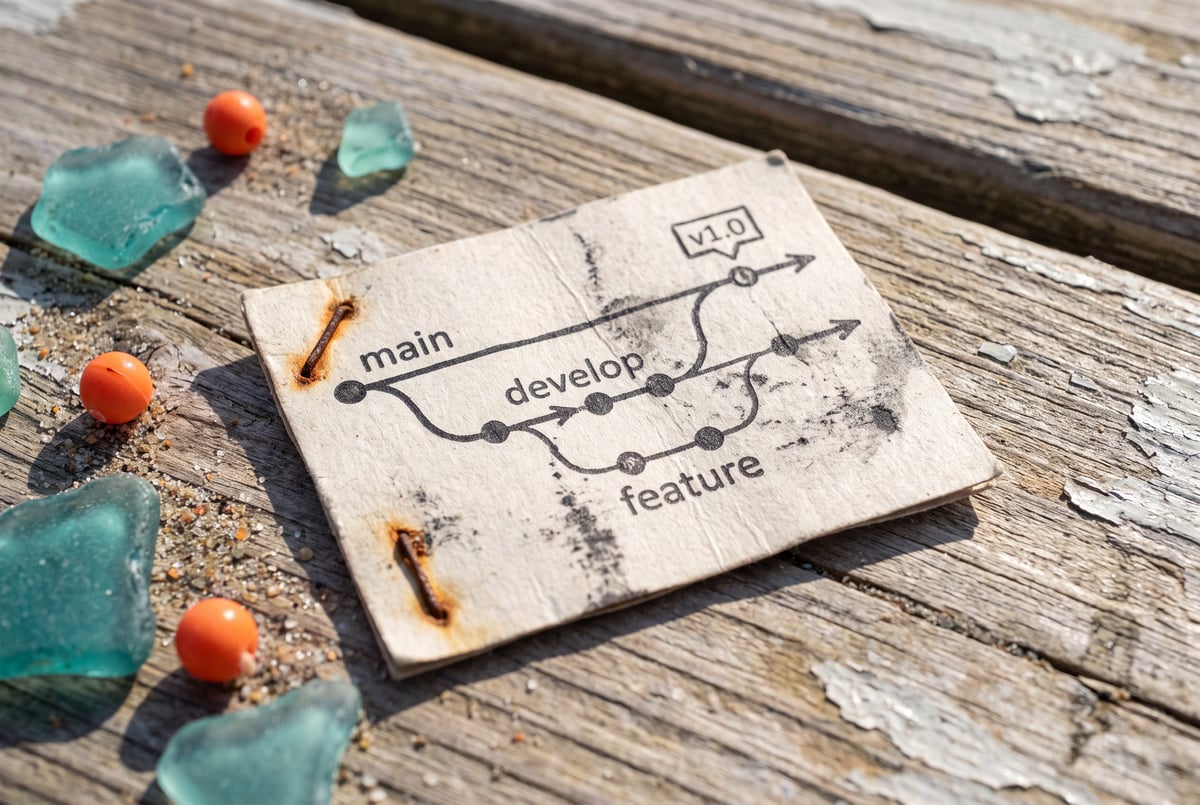
- Multi-agent collisions resemble merge conflicts in code. Teams that assign agents to separate “folders” or scopes of work avoid the race conditions that come from letting multiple agents edit the same material unsupervised.
- Humans stay accountable for the output. A repo-based system frees people to focus on reviewing and owning the final deliverable instead of micromanaging how the agent got there.

Why do AI agents keep needing the same instructions repeated?
This happens because most context lives in someone’s head, not in a place the agent can reliably access. An AI agent that ran all night or across a long, multi-step project often comes back having made reasonable-sounding choices that don’t match what the user actually wanted, simply because the instructions it had access to were incomplete, outdated, or ambiguous. The fix isn’t to re-explain the same thing to a new session. It’s to make sure decisions, examples, and evolving instructions get written down somewhere the next agent run can pick them up automatically.
This is the same approach AI labs reportedly use internally to onboard new employees: pointing them at the accumulated history of decisions and context in tools like Claude or Codex so they can “catch up” on a project by reading the record, rather than requiring someone to brief them from scratch. Agents benefit from the same kind of record. A project that only exists as a one-time snapshot of someone’s opinion forces every new agent run to start cold. A project where decisions are logged as they evolve lets agents pick up where the last run left off.
How is this different from each person having their own AI setup?
The core difference is where the knowledge lives. An individual setup puts data, skills, and preferences inside one person’s personal files, prompts, or custom instructions. A shared repository puts that same material in a common location structured around the problem the team is solving, not around any one person’s habits.
This distinction matters once more than one person, or more than one agent, is working on related material. If a contractor’s agent drafts a new proposal using an old example as a template, and the price changed since that example was written, the new draft can look polished while quietly carrying a stale number. That’s a versioning error, the same kind of mistake that source control in software engineering exists to prevent. Treating non-technical work (proposals, decks, PRDs) with the same discipline, one canonical source of truth, versioned and labeled, prevents these errors from reaching a client.
It also changes how skills should be written. A skill built for one person’s workflow is shaped by that person’s idiosyncrasies. A skill built for the repo is shaped by the task itself: how this team writes a PRD, how this team formats a client proposal, how this team applies its brand voice. Any agent, using any model, can pick up that skill and apply it consistently, because the skill was designed around the shared problem rather than around one person’s preferences.
Why do personal, homebrewed skills cause problems at scale?
- Name
- Maria Alvarez
- Date of birth
- SSN
- Diagnosis
- Balance due
- $412.80
Because they fragment consistency. When everyone on a team writes their own version of a similar skill, instead of using one shared standard, you end up with multiple slightly different approaches to the same kind of output. Each person’s agent might reference different source files, apply different formatting conventions, or make different assumptions about priorities. Untangling that later, once the team has scaled, takes real effort.
The alternative is putting the “recipe” for a task (how to use the data correctly, how to apply brand guidelines, how to structure a given deliverable) directly into the shared knowledge base, rather than depending on individual judgment to replicate it correctly every time. This doesn’t require banning personal experimentation entirely, but it does mean the team’s core, repeatable workflows should live in one place that every agent can reach.
How do roles and permissions fit into this model?
Once a repository becomes the central object that multiple agents and people touch, it becomes important to define who, or which agent, is allowed to change what. In more sophisticated enterprise environments, this gets hardened with identity and permission systems that technically restrict what an agent can do. That kind of infrastructure is a real and growing category, but it isn’t accessible to every team.
A simpler, more accessible version still gets a team most of the way there: documenting inside the repo itself what a given role (a PM’s agent, an engineer’s agent, a contractor’s agent) is expected to do and not do. This doesn’t replace proper guardrails and identity systems where a team can afford them, but it prevents casual overwrites and makes clear who is accountable for a given change, which matters as soon as more than one person’s agent has access to the same material.
How do teams avoid “merge conflicts” between multiple agents?
The risk looks a lot like the classic software problem of multiple people editing the same file at once. When agents are allowed to work on the same material without structure, swarming on a task without clear boundaries, collisions and race conditions follow: one agent’s edit gets overwritten by another, or two agents duplicate work because neither knows what the other already did.
The better approach borrows directly from software engineering’s separation of concerns. Instead of letting agents swarm over shared material, a team breaks the work into distinct scopes, a page, a folder, a topic, so each agent operates on a bounded piece of the repo. It’s the knowledge-work equivalent of forking parts of a codebase into separate work trees. An agent trained on the skills stored in the repo can recognize whose scope it’s in and avoid stepping on someone else’s active work.
Is this approach worth setting up for a smaller team?
It scales down reasonably well. The core practice, putting decisions, examples, and skills in one structured, central location instead of scattering them across individual setups, doesn’t require enterprise tooling to start. A small team can get meaningful consistency just from agreeing on a shared file structure and writing skills against the team’s actual workflows rather than any one person’s habits. The permissioning and guardrail layer can be added later as the team grows and the cost of mistakes rises.
Frequently Asked Questions
What counts as a “skill” in this context?
Live class · Wed, Dec 2
$40,000+/mo
in SaaS spend the Remy team cut by building its own apps with AI.
We'll show you how.
Bring an idea.
Build it live.
Leave certified.
A skill is a set of instructions describing how to handle a specific kind of task consistently, such as formatting a proposal, writing a PRD, or applying brand guidelines, designed so any agent or model can execute it the same way rather than relying on one person’s personal approach.
Does this require special software or an enterprise platform?
No. The underlying practice is organizational: store data and instructions in a structured, shared location rather than individual setups. Enterprise identity and permission systems can harden this further, but a basic shared repository with documented roles gets a team much of the way there without that investment.
How is this different from just writing good documentation?
Traditional documentation is often static and written for humans to read occasionally. This approach treats the material as something agents actively traverse and act on during every run, which means it needs to be kept current, versioned, and organized the way code is, not just written once and left alone.
What’s the risk of not doing this?
Without a shared structure, agents repeat mistakes, work from outdated information (like an old price in a proposal template), and produce inconsistent results depending on who ran them. Teams also end up with duplicated, slightly different “homebrewed” skills across individuals, which becomes harder to untangle as the team scales.
Who should be accountable when an agent makes a mistake inside this system?
The person who owns the deliverable, not the agent. A shared repository is meant to reduce avoidable errors and free people to focus on reviewing and standing behind the final output, rather than serving as an excuse to say the AI was responsible for what it produced.
