
Microsoft Ignite 2026: Why the Copilot Harness Beats the Models
Microsoft Ignite's models grabbed headlines, but the real story is Copilot Fusion's router and Foundry's harness strategy outshining them.
What did Microsoft actually announce at Ignite 2026?
Microsoft used Ignite 2026 to launch seven new AI models and a set of claims about beating Claude Opus 5.5 at a fraction of the cost. But the best coding result of the week didn’t come from any of those seven models. It came from Copilot Fusion, a routing system that picks and coordinates multiple models rather than being a model itself. Fusion Max scored 71.2% on Terminal Bench 4.1, ahead of both Opus 5.5 and Gemini 5.2, largely by calling out to Anthropic and other third-party models when the task demanded it. The headline models were almost a sideshow. The infrastructure around them, the harness, was the actual product Microsoft spent most of its keynote explaining.
TL;DR
- Copilot Fusion, a router that coordinates multiple models rather than a model on its own, produced Microsoft’s best coding benchmark of the event, beating Opus 5.5 and Gemini 5.2 on Terminal Bench 4.1.
- Out of a roughly two and a half hour keynote, only about 12 minutes covered the new models directly; the rest focused on routing, context management, governance, and tooling.
- Microsoft’s new Decision 1.1 model was announced on stage as beating Google and OpenAI on an independent decision index, without mentioning it’s built on Google’s open-weight Gemma 4 27B model underneath.
- The Foundry Agent Service packages Microsoft’s internal Copilot harness, agent loop, and sandbox as a product, letting developers bring their own tools and knowledge while Microsoft runs the infrastructure.
- Microsoft’s self-authored price comparisons (96% of Opus 5.5 performance at a fraction of the cost) rely on promotional pricing and internal benchmarks, which shift significantly once normal pricing is applied.
- Microsoft’s own coding models are post-trained inside the Copilot harness, meaning they’re tuned to work best inside Microsoft’s ecosystem and aren’t yet positioned for long-horizon, high-difficulty agentic work.
- The event reinforces a broader industry shift: the harness (the agent loop, tools, context, routing, and sandboxing around a model) is becoming a bigger differentiator than the model doing the raw reasoning.
Nothing gets lost.

What is an AI harness and why does it matter here?
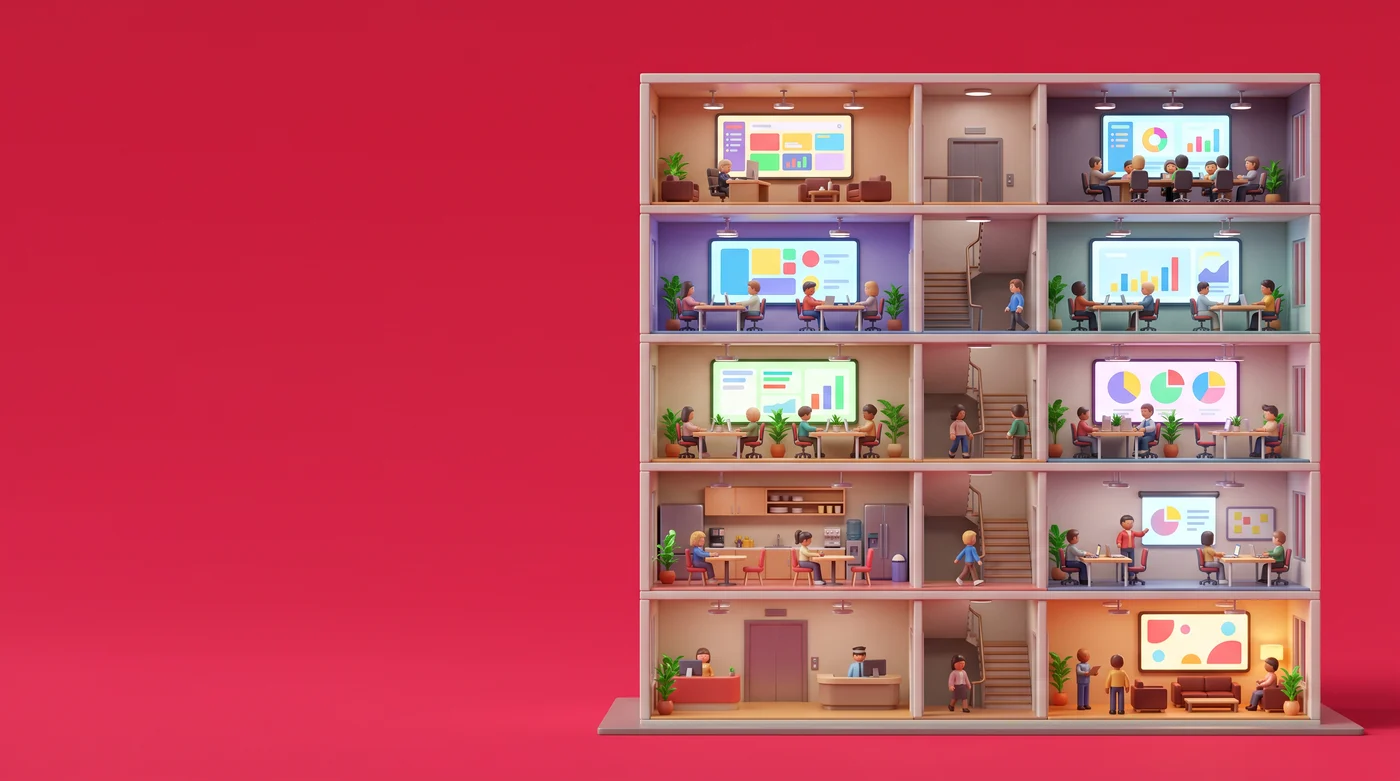
A harness is everything that sits around a language model: the agent loop that decides what step comes next, the tools the model can call, the context it gets fed, the routing logic that picks which model handles which step, and the sandbox the whole thing runs inside. The model supplies the thinking. The harness decides what the model gets to think about and what happens with the output.
GitHub’s own documentation describes the Copilot agent harness as a single shared component sitting underneath the Copilot CLI, the Copilot app, code review features, and other products across GitHub and Microsoft. That’s a telling architectural choice: one harness, many surfaces. Satya Nadella reinforced this framing directly in his keynote, calling Copilot “the new operating system for work” and describing other apps as plugins to it. That’s not a marketing throwaway. It’s a statement about where Microsoft believes the value sits in an AI product stack, and it’s not primarily in the model weights.
How much of Ignite was actually about models versus harness?
Very little, proportionally. Of a roughly two and a half hour keynote, only about 12 minutes focused on the new models themselves. The rest covered routing, context handling, governance, and the tooling layered around models. Copilot now auto routes every request to what Microsoft calls the right “mode, model, and effort,” and Microsoft Foundry includes a model router pitched as up to 65% cheaper than sending every request straight to a frontier model.
One demo illustrated the philosophy clearly: an airline-support agent wasn’t accurate enough, and the fix wasn’t a better model. Microsoft’s Foundry optimizer rewrote the system prompt and the tool descriptions, tuning the harness instead of swapping the underlying intelligence. That’s effectively the same self-improving loop approach that smaller research groups, including News Research (who Microsoft partnered with around this event), have been refining for a while: rewrite skills and prompts to get more out of the same model rather than chasing a bigger one.
Microsoft also introduced “Microsoft IQ,” pitched as giving agents only the context they need rather than flooding the context window. That’s standard context engineering with a product name attached. Nadella said as much directly in the keynote, describing Microsoft’s performance gains as coming from “tuning the product, the harness, the tools, and the model system all as one optimization.” That’s the harness thesis stated outright by the person running the company.
Where do Microsoft’s new models actually fit?
Mostly in the cheap, high-volume slots. Microsoft was fairly upfront on stage that the new models are not yet tuned for harder problems or long-horizon agentic work, which is exactly where the expensive tokens get spent. That shows up directly in Fusion’s own tier structure: GitHub added MAI Code 2 to Fusion’s standard tier, but the model that topped Terminal Bench in Fusion’s top “Max” tier was Anthropic’s Claude Sonnet 5.5, not a Microsoft model.
Build an enterprise app with Dmitry Shapiro. Leave certified.
Microsoft’s own documentation on its earlier coding model also states it was post-trained inside GitHub Copilot, meaning the model was shaped specifically to fit that harness. It’s currently only available inside Copilot itself, and as of the event wasn’t listed on Open Router, with only loose mentions that it might arrive there later. The model and the harness are being built together, which is efficient for Microsoft but worth noting if you’re evaluating portability.
Do Microsoft’s benchmark claims against Opus and GPT hold up?
Partially, with caveats. Microsoft claimed 96% of Claude Opus 5.5’s performance at 5% of the cost, but that 5% figure reflects a 50% promotional rate. Even accounting for that, hitting 96% of Opus-level performance at roughly 10% of standard cost would still be a notable result. The comparison against GPT 6.1 also shifts once promotional pricing is normalized, moving from a claimed 40% cost figure to closer to 80% once the discount is removed, which is a much less dramatic story. It’s also worth flagging that these are Microsoft’s own internal Evals platform results, not independently verified third-party benchmarks, so real-world performance for Copilot users doing actual coding work is the only way to confirm them.
Why does the Decision 1.1 model matter, and what’s the Google connection?
Satya Nadella announced Microsoft Decision 1.1 on stage and highlighted that it beats both Google and OpenAI on the decision index, a claim that does check out on independent sites like Artificial Analysis, where it does score above Google’s own Gemini decision models. What wasn’t mentioned on stage, on Microsoft’s seven-models page, or in the Open Router listing is what the model is actually built on. Buried in Microsoft’s developer blog, under a section titled “how we built Microsoft Decision 1.1,” is a line stating the model is based on Google’s Gemma 4 27B.
This isn’t new behavior for Microsoft. Its earlier Decision 1 model was reportedly built on Alibaba’s Qwen 3.5 9B. None of this is improper. Gemma 4 is released under Apache 2.0, and building on top of permissively licensed open models is exactly what that license is for. But there’s something notable about a company announcing a model that “beats Google” without mentioning the model is fine-tuned from Google’s own open weights, especially from a company that was once a significant contributor to the open-model ecosystem itself.
Is the Foundry Agent Service worth paying attention to?
If the harness is genuinely the valuable layer, then selling access to that harness is the obvious next move, and that’s what Microsoft Foundry Agent Service is. Nadella described it directly: “the same harness we used to power Copilot and GitHub Copilot is available to you.” Per Microsoft’s own description, the service runs the agent loop and the sandbox, while developers bring their own knowledge, procedures, and tools. In practice, that’s a managed, somewhat locked-down version of Microsoft’s internal agent system, with Microsoft’s sandbox, Microsoft’s approved tool integrations, and access to Microsoft-approved models. For teams that want Copilot-grade infrastructure without building an agent loop from scratch, it’s a reasonable pitch. For teams wary of ecosystem lock-in, it’s worth noting that everything portable (your evals, your prompts, your tool definitions) still depends on running inside Microsoft’s loop.
What should builders take away from this?
What you'll learn · Dec 2
- 01How enterprises really build with AI
- 02What full-stack means and why it's critical for business software
- 03Prompting that holds up in production
- 04Build and deploy your own app, live
The harness, not the model, is becoming the layer worth owning. Benchmarks increasingly measure a harness using a model, or in Fusion’s case, a harness orchestrating a suite of models, rather than a model’s raw capability in isolation. Your own evals, context pipelines, and routing logic are the assets that survive a model swap; models themselves are turning over every few months, and a well-built harness can move from one model, or one router, to the next with minimal disruption. The caution worth flagging is that tuning your entire system to a harness you don’t control carries risk. Microsoft’s own coding models are post-trained specifically inside the Copilot harness, which works well for Microsoft but could create friction for anyone who later wants to leave that ecosystem. For teams that want durable control, running an open-weight model inside a harness you actually own is looking like the more defensible long-term position.
Frequently Asked Questions
What is Copilot Fusion?
Copilot Fusion is Microsoft’s routing system that coordinates multiple AI models, including third-party models like Anthropic’s Claude, rather than being a single model itself. It selects which model handles which part of a task.
Did Microsoft’s own models win the Ignite benchmarks?
No. The top-performing result on Terminal Bench 4.1 came from Copilot Fusion’s top tier, which used Anthropic’s Claude Sonnet 5.5, not one of Microsoft’s seven newly announced models.
Is Microsoft Decision 1.1 really built on Google’s technology?
Yes. According to Microsoft’s own developer blog, Decision 1.1 is based on Google’s openly licensed Gemma 4 27B model, fine-tuned and calibrated by Microsoft. This wasn’t mentioned during the on-stage announcement.
What is the Microsoft Foundry Agent Service?
It’s a managed version of the same agent harness that powers Copilot and GitHub Copilot, letting developers build custom agents using Microsoft’s agent loop, sandbox, and approved tools and models.
Does this mean the underlying AI model doesn’t matter anymore?
Not entirely. The model still supplies the core reasoning capability, but Ignite’s announcements suggest that routing, context management, tooling, and evals around the model are increasingly where performance and cost gains actually come from.