Mac Studio M5 Ultra vs DGX Spark: Which Wins for Local AI?
Comparing the upcoming Mac Studio M5 Ultra 512GB to Nvidia's DGX Spark on bandwidth, prefill speed, and price for local AI inference.
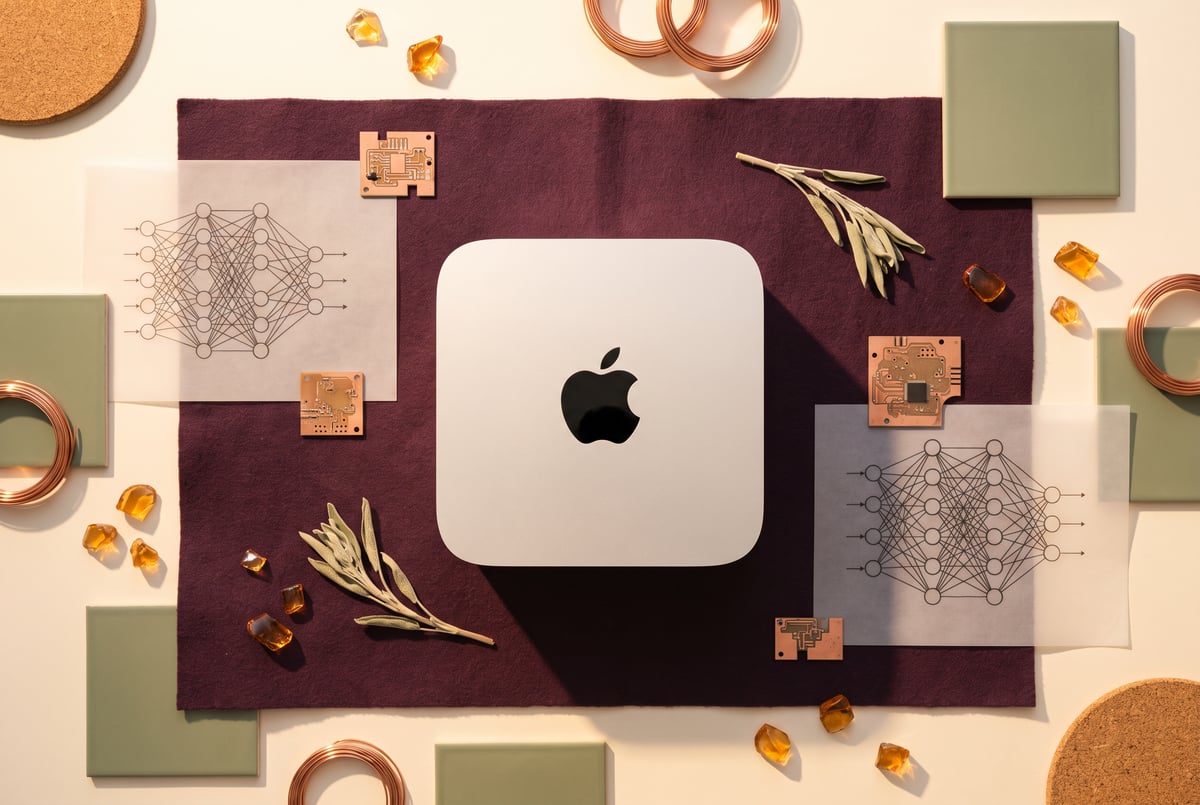
The core question: does the Mac Studio M5 Ultra beat the DGX Spark for local AI?
For a single unit at 128GB, the DGX Spark holds its own. But once you need 512GB of unified memory to run large local models, the Mac Studio M5 Ultra looks like the far more sensible buy. A single M5 Ultra with 512GB and roughly 1.2TB/s of memory bandwidth can match the capacity of four networked DGX Spark units, without the added cost of interconnect hardware or the latency penalty that comes from sharding a model across multiple machines.
TL;DR
- The Mac Studio M5 Ultra is expected to ship with 512GB of unified memory and around 1.2TB/s of bandwidth, a spec combination that’s very hard to match at any price in a single box.
- Estimates suggest the M5 Ultra could deliver roughly double the prefill performance of a single DGX Spark, with text generation speeds fast enough to outpace a RTX 4090 in some scenarios.
- Reaching 512GB of capacity on DGX Spark hardware means networking four separate units together, which adds cost (pushing the total toward $20,000) and introduces sharding overhead that slows things down.
- Apple’s prompt processing has historically been the weak point of its silicon, so any real gains there matter more than the text generation numbers alone.
- Buying 512GB of capacity doesn’t guarantee you can use it well, since huge modern models (already crossing three trillion parameters) will still need to be quantized to fit and run at usable speeds.
- The real competition for both machines isn’t just each other. It’s also multi-GPU rigs and other unified-memory boxes entering the market with similar bandwidth figures.
- Buying decisions for local AI hardware should be driven by actual economic value generated, not just specs, since a hobbyist and a business user have very different breakeven points.
What are the actual hardware differences?
The headline numbers driving this comparison are memory capacity and bandwidth. The Mac Studio M5 Ultra is expected at 512GB of unified memory, with an effective bandwidth around 1.2TB/s. The DGX Spark, by contrast, tops out at 128GB per unit. To reach 512GB total capacity on DGX hardware, you need four separate Spark units connected together, along with the networking gear to tie them into a single addressable pool.
That networking requirement changes the math substantially. Four DGX Sparks plus the interconnect hardware needed to combine them push the total cost into the same ballpark as a single high-end Mac Studio configuration, somewhere around $20,000. And sharding a model across four physically separate machines over a network isn’t free. Even with good interconnects, you take a performance hit compared to running the same model on one machine with unified memory. It won’t be catastrophic, but it’s a real and consistent tax on throughput.
How does prefill and text generation speed compare?
Prefill (the initial processing of your prompt before the model starts generating) has been a persistent weak spot for Apple Silicon. Nvidia’s GPUs have generally handled prompt processing faster thanks to raw compute throughput. Based on the specs, the M5 Ultra is expected to roughly double DGX Spark’s prefill performance, and that would be a notable shift if it holds up in real-world testing, since it would mean Apple has meaningfully closed a gap that used to favor Nvidia hardware outright.
Text generation is where the Mac Studio’s bandwidth advantage should show up even more clearly. Text gen speed is highly dependent on memory bandwidth, and at roughly 1.2TB/s, the M5 Ultra should sustain strong token-per-second output across a long context window. The expectation is that this text generation speed could exceed what you’d get out of a single RTX 4090, which is a notable claim given the 4090 remains a benchmark GPU for a lot of local inference setups.
Is 512GB of memory actually necessary?
Not always, and this is worth taking seriously before spending Apple-tier prices on a maxed-out configuration. Modern frontier open models are already crossing three trillion parameters, meaning even a 512GB machine won’t run the largest models at full precision. You’ll be running quantized versions instead, and quantization has real tradeoffs.
Lower-bit quantization (like Q4) has gotten remarkably good for a lot of everyday tasks, good enough that for the bulk of typical use cases, the difference versus full precision is barely noticeable. But for edge cases, the kind of narrow, precise, “needle in a haystack” queries where every bit of precision matters, full precision (FP16) still meaningfully outperforms quantized versions. That’s a real cost of going wide (512GB, quantized) versus staying in a smaller, full-precision sweet spot.
Built like a system. Not vibe-coded.
Remy manages the project — every layer architected, not stitched together at the last second.

For a lot of capable open models today, a range in the 128GB to roughly 190GB territory is enough to run full-precision or near-full-precision versions comfortably, with strong context window support. That means the jump to 512GB matters most if you specifically want to run the largest quantized models, not if you want the best precision on mid-sized models. It’s a genuinely different use case, and buyers should be honest about which one they actually have.
What does this mean for GPU and used-hardware pricing?
One underappreciated ripple effect of a genuinely compelling all-in-one box is what it could do to secondary GPU markets. Multi-GPU rigs built from cards like the RTX 3090 have kept climbing in price on the used market, in some cases nearly doubling from where they sat a few years ago, largely because there hasn’t been a single-box alternative compelling enough to make people liquidate their GPU stacks.
A genuinely strong 512GB unified-memory option changes that calculation for some buyers. If a single Mac Studio can do what previously required a rack of GPUs, some of those GPUs are likely to hit the secondary market, which could ease pricing pressure on cards like the 3090. It’s not guaranteed, but it’s a plausible outcome if the M5 Ultra performs as expected.
Who should actually buy this hardware?
The honest answer depends heavily on what economic or practical value the machine generates for the buyer, not just what it’s capable of on paper. A local AI rig priced anywhere from $1,000 to $100,000 can be justified for the right use case, but treating it purely as a hobby purchase without a budget in mind is where things get financially reckless.
There’s also a real split in buyer mentality. Some people want a plug-in-and-go appliance: no tinkering, no assembly, no risk of something breaking that they’ll have to diagnose themselves. That’s the majority of buyers. Others want to build, tune, and upgrade a rig over time, trading convenience for flexibility and long-term adaptability. All-in-one machines like the Mac Studio or DGX Spark serve the first group well. They’re not built to be upgraded piecemeal the way a custom multi-GPU tower is.
Physical constraints matter too. Not everyone has the space, cooling capacity, or electrical setup to run a power-hungry multi-GPU rig, and for those users, a dense, efficient all-in-one box solves a real problem that has nothing to do with raw benchmark numbers.
Frequently Asked Questions
Is the Mac Studio M5 Ultra faster than the DGX Spark?
Based on expected specs, yes, in both prefill and text generation, with prefill potentially around double the speed of a single DGX Spark unit and text generation potentially exceeding an RTX 4090.
Do I need 512GB of unified memory for local AI?
Only if you’re targeting the largest quantized open models. Many strong open models run well, often at full precision, with far less, somewhere in the 128GB to 190GB range.
Why does reaching 512GB on DGX Spark cost so much?
Because a single DGX Spark unit tops out at 128GB, you need four units networked together to reach 512GB, and the required interconnect hardware adds significant cost, pushing the total near $20,000.
Will quantization hurt model quality on a 512GB machine?
For most everyday tasks, well-tuned quantization (like Q4) performs close to full precision. For precision-sensitive edge cases, full precision (FP16) still noticeably outperforms quantized models.
Could this announcement lower used GPU prices?
One coffee. One working app.
You bring the idea. Remy manages the project.
It’s plausible. A compelling single-box alternative could push some owners of multi-GPU rigs to sell, which could ease upward price pressure on cards like the RTX 3090.