How to Install and Run EGM in Claude Code, Codex, or Cline
A practical guide to installing Google's EGM plugin across Claude Code, Codex, Antigravity, and Cline, plus the full /gm command workflow.
What is EGM and why does it exist?
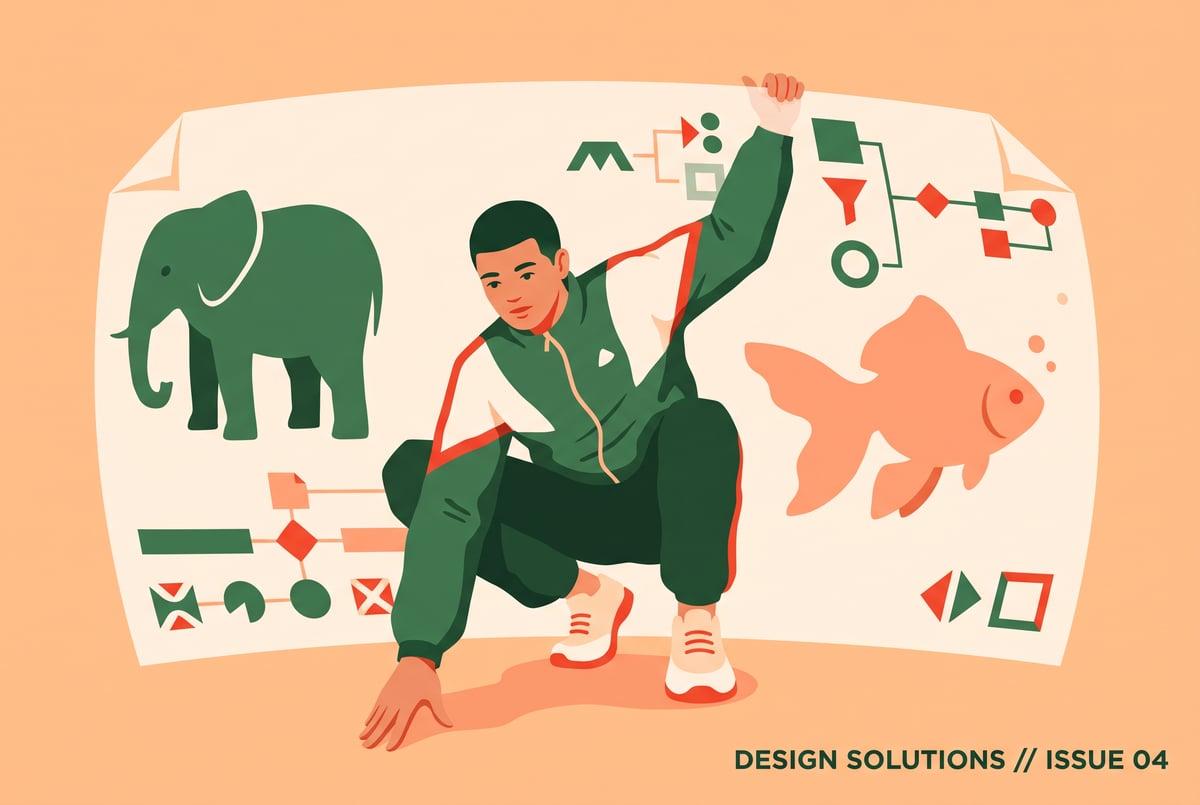
EGM, short for Elephant Goldfish Model, is an open source plugin from Google that makes a coding agent design a feature properly before writing any code. It’s built around an essay by Dave Renson called “Elephants, Goldfish, and the New Golden Age of Software Engineering,” and it splits agent work into two roles. The “elephant” is the agent that has been in the conversation the whole time, holding your requirements and context, and it writes the design document. The “goldfish” is a fresh sub agent with no memory of that conversation. It only sees the design doc and whatever files the doc points to, and its job is to poke holes in it.
The reasoning behind this split is simple. After an hour of back and forth with an agent about a feature, you and the agent share a pile of assumptions that never made it into the actual document. The doc reads fine to both of you because you already know the parts it leaves out. A fresh reader doesn’t have that context, so when a goldfish sub agent asks “what happens when this webhook fails” or “what does this term mean,” it’s catching exactly the kind of gap that would otherwise surface during implementation, usually at the worst time.
A third role sits above both: you. EGM is built so the agents propose and critique, but you approve. The design decisions stay with the human.
Seven tools to build an app. Or just Remy.
Editor, preview, AI agents, deploy — all in one tab. Nothing to install.

How do you install EGM in Claude Code?
Installation goes through Claude Code’s plugin marketplace system. You add the marketplace first, then install the plugin itself:
claude plugin marketplace add google/elephant-goldfish-model
claude plugin install egm@egm
After that, start a new session and the /gm commands become available. One important detail from the project’s own instructions: install the full plugin rather than copying just the skills folder. The skills reference reviewer personas and document standards at runtime, so a partial copy breaks the workflow.
How do you install EGM in Codex or Antigravity?
Codex follows the same two-step pattern as Claude Code, just with the Codex CLI:
codex plugin marketplace add google/elephant-goldfish-model
codex plugin add egm@egm
Antigravity, Google’s own agent, uses its own plugin install command pointed at the GitHub URL (agplugin install plus the repo link). Antigravity is the “home” harness for EGM since it’s a Google product, but the notable part is that Google gave Claude Code and Codex first class install instructions too, including dedicated adapter folders and manifests rather than a bare-bones port.
How does the /gm workflow actually run?
All commands use the /gm prefix and move through four stages: brainstorm, draft, review, and resolve.
Brainstorm. Running /gm egm brainstorm with a feature description (for example, “add webhook delivery to this project”) starts a clarifying conversation, then dispatches six goldfish reviewers in parallel, each reading the idea through a different lens. One plays a contrarian whose job is to ask whether the feature needs to exist at all, or whether an existing library already covers most of it. Another focuses on cost, quota, and token economics. The output is a concept-brief.md file capturing the direction you’ve agreed on.
Draft. Running /gm egm draft turns that brief into a full design document, written section by section with a pause for feedback after each one, rather than dumping the whole document at once.
Review. Running /gm egm review with a path to the draft kicks off a five-stage review: a “zoom out” pass from a skeptical architect looking for unnecessary complexity, a comprehension pass from a naive reader flagging unexplained terms and acronyms, a hostile design critic examining architecture and risk, a second zoom-out pass, and an implementation readiness check from a pragmatic tech lead making sure no real decisions are left for whoever builds it. The review is designed to produce a lot of feedback, and the instructions explicitly tell you to keep what’s useful and discard the rest.
Resolve. Running /gm egm resolve walks you through the review findings so you can decide what to actually change. Once you’re satisfied, you tell the agent to build it.
Two supporting skills round things out: /gm egm bootstrap walks an existing codebase bottom-up, writing README files per folder and rolling them up to give the elephant a map of the project, and /gm egm drift-report compares your design docs against current code to flag where they’ve gone stale, something the project suggests running on a weekly cadence.
Why does fresh sub agent context matter so much?
The review skill has a hard rule: if the harness can’t spin up genuinely fresh sub agents, EGM stops the review rather than faking it in the same context. A review that happens in the same conversation as the elephant isn’t a goldfish review, it’s just more of the same shared assumptions talking to themselves. That’s the reason the Claude Code version ships its own adapters, giving each reviewer read-only tools and an isolated context so it actually starts from zero.
The review personas are also deliberately blunt. Flattery is banned outright. Reviewers are instructed not to call an idea “great” or “brilliant,” to lead with what’s wrong or risky, and to argue the strongest counterposition to whatever’s proposed. Anyone who has had an agent praise an obviously broken plan will recognize why that instruction exists.
How do you run EGM in Cline, and is it worth it?
Cline isn’t on Google’s official install list, so setup is more manual, but it works because Cline now supports SKILL.md files and sub agents, which is all EGM needs under the hood. The skills are plain markdown, and the reviewer personas live as files in an agents folder. Codex’s version of EGM doesn’t even ship named sub agents, it just has a general-purpose sub agent read the relevant persona file first, and Cline can replicate that same pattern directly.
To set it up, clone the full EGM repository (not just the skills folder), point Cline at the skill you want to run, and make sure it spawns genuinely fresh sub agents for each goldfish reviewer. If the reviewers run inside the same chat session, the whole mechanism breaks down.
This pairing matters because goldfish reviews are token-hungry by design. A single review spins up five or six fresh readers, each ingesting the design doc and the reference code from scratch. On a metered or capped plan, running brainstorm, draft, and multiple review rounds on one feature adds up fast. Cline Pass, Cline’s $9.99 per month flat-rate plan offering access to multiple open models (including Kimi K3.1 Pro, MiniMax M3.1 Flash, DeepSeek V4.1 Flash, GLM 5.3, GLM 5.3 Flash, and Qwen3 Max) with generous usage limits, removes the per-token anxiety from a workflow that’s naturally heavy on reads.
It also opens up mixing models by role, which lines up neatly with the elephant/goldfish philosophy: a goldfish that doesn’t share the elephant’s model, not just its context, is even less likely to share its blind spots. A workable split is a careful long-context model (like Kimi K3.1 Pro) as the elephant writing the design doc, a strong code-reading model (like GLM 5.3) for the hostile critic and readiness check, and faster, lighter models (DeepSeek V4.1 Flash or MiniMax M3.1 Flash) for lower-stakes passes like the comprehension review.
Is EGM worth using for every feature?
Remy doesn't build the plumbing. It inherits it.
Other agents wire up auth, databases, models, and integrations from scratch every time you ask them to build something.
Remy ships with all of it from MindStudio — so every cycle goes into the app you actually want.
No, and the project is upfront about that. For a small, clear bug fix, the documented recommendation is to just use your normal workflow. EGM’s own FAQ acknowledges that design and review take real time and may not pay off for small changes, and that spinning up multiple fresh sub agents burns noticeably more tokens than simply telling an agent to implement something directly. It’s aimed at features where real trade-off decisions need to be made before code gets written, not routine maintenance work.
Frequently Asked Questions
What does EGM stand for?
Elephant Goldfish Model, named after the essay that inspired it, referring to an agent with full memory (the elephant) and fresh, context-free review agents (the goldfish).
Which coding agents support EGM?
Google documents first class install support for Claude Code, Codex, and its own Antigravity agent. It also works in Cline, since Cline supports the same skills and sub agent mechanisms EGM relies on, though that setup is more manual.
Do I need Claude or OpenAI models to use EGM?
No. EGM is built from markdown skills and persona files rather than being tied to a specific model, so it runs with any harness that supports sub agents, including setups using open models like Kimi, GLM, or DeepSeek through a provider like Cline.
What happens if my harness can’t create fresh sub agents?
EGM is designed to stop the review process rather than run it in the same context. A review without true isolation isn’t considered a valid goldfish review under the project’s own rules.
Is EGM free to use?
Yes. It’s released as an open source project under the Apache 2.0 license, and Google describes it as not an officially supported Google product, more of an internal team effort that’s been made public.