GPT-5.6 Soul, Terra, and Luna: What the Three Model Tiers Mean for Builders
OpenAI previewed GPT-5.6 in three tiers: Soul for power, Terra for balance, and Luna for speed. Here's what each tier delivers and who should use which.
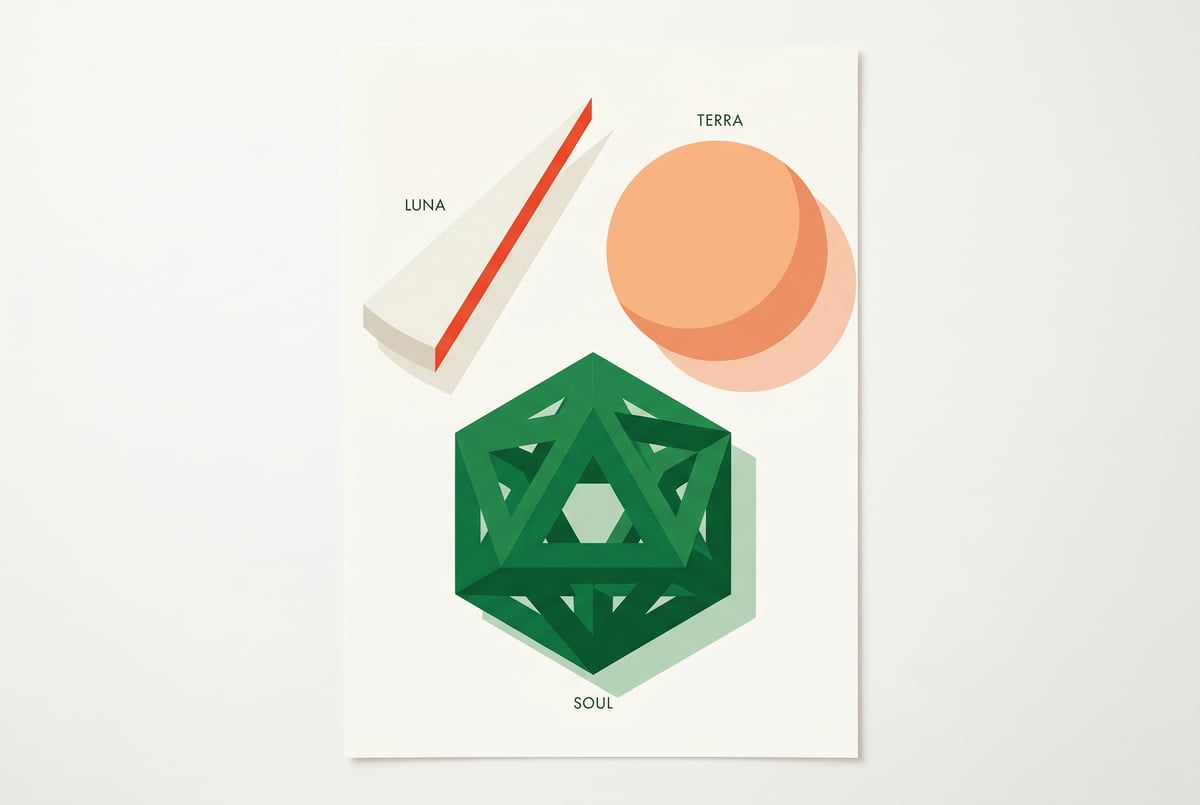
OpenAI’s Three-Tier Strategy, Explained
OpenAI previewed GPT-5.6 with something builders have been waiting for: a clearly structured model lineup. Instead of one monolithic model with a few variants, GPT-5.6 ships across three distinct tiers — Soul, Terra, and Luna — each optimized for a different set of tradeoffs between capability, cost, and latency.
For anyone building AI-powered products, choosing the wrong tier is an easy mistake to make. Use too much model and you pay for capability you don’t need. Use too little and your outputs suffer. The Soul-Terra-Luna framework is OpenAI’s attempt to make that decision more explicit.
This article breaks down what each GPT-5.6 tier actually delivers, where each one fits, and how to think about model selection as part of a broader build strategy.
What GPT-5.6 Actually Is
GPT-5.6 sits within OpenAI’s GPT-5 family — a generation of models designed to push further on reasoning, instruction-following, and multimodal understanding compared to earlier GPT-4-era releases.
The 5.6 designation signals an iteration within that generation: a refinement rather than a ground-up rebuild. These models benefit from updated training data, improved alignment techniques, and architectural tuning that affects how they perform across different task types.
What’s new with this release is the naming convention. Rather than relying on shorthand like “mini” or “turbo” to hint at capability differences, OpenAI gave each tier a distinct identity:
- Soul — the most capable tier, built for tasks that need deep reasoning
- Terra — the balanced tier, optimized for reliable performance at reasonable cost
- Luna — the fastest tier, designed for speed and scale
Other agents ship a demo. Remy ships an app.
Real backend. Real database. Real auth. Real plumbing. Remy has it all.

Each name is meant to signal character, not just position on a spec sheet. That framing matters when you’re explaining model choices to stakeholders who aren’t deeply technical.
Soul: The High-Capability Tier
What Soul Is Optimized For
Soul is GPT-5.6’s flagship tier. It’s the model you reach for when the quality of the output matters more than how fast or how cheaply you get it.
OpenAI designed Soul for tasks that require multi-step reasoning, nuanced judgment, or synthesis across complex inputs. Think: legal document analysis, advanced code generation, research summarization, financial modeling, or any workflow where a bad output has real downstream consequences.
Soul handles ambiguity better than the other tiers. When a prompt is underspecified or the task requires the model to make sensible inferences rather than just follow instructions literally, Soul tends to produce more reliable and accurate results.
Who Should Use Soul
Soul is the right choice for:
- Complex reasoning tasks — multi-hop reasoning, logic chains, structured analysis
- High-stakes content generation — anything that goes out to customers or gets used in decisions
- Long-context work — processing lengthy documents, contracts, or codebases
- Agentic workflows — where the model is making sequential decisions with limited human review
- Advanced coding — especially debugging, architecture suggestions, or working in unfamiliar codebases
The tradeoff is cost and latency. Soul is the most expensive tier per token and the slowest to respond. For use cases that need real-time output or high throughput at low cost, it’s the wrong tool.
When Not to Use Soul
Don’t default to Soul just because it’s the best. If you’re building a chatbot that answers simple FAQs, routing support tickets, or summarizing short blocks of text, Soul is overkill. You’ll pay more and wait longer for results that Terra or Luna could have produced just as effectively.
Terra: The Balanced Tier
What Terra Is Optimized For
Terra is the middle tier — and for most production workloads, it’s where you should start.
OpenAI tuned Terra to deliver strong capability without the latency or cost overhead of Soul. It performs well across a wide range of task types: content generation, summarization, classification, Q&A, code assistance, and structured data extraction. It won’t match Soul on the hardest reasoning tasks, but for the vast majority of real-world applications, Terra is capable enough to produce high-quality results.
Think of Terra as the reliable workhorse. It handles everyday complexity without breaking a sweat, and it does it at a price point that makes scaling practical.
Who Should Use Terra
Terra is the right default for:
- Customer-facing applications — chatbots, assistants, support tools where quality matters but latency needs to be reasonable
- Content workflows — drafting, editing, rewriting, summarizing at scale
- Data processing pipelines — extraction, classification, transformation across moderate volumes
- Developer tools — code assistants, documentation generators, review bots
- Internal tooling — knowledge base Q&A, report generation, meeting summarization
Most production use cases land in Terra territory. It’s OpenAI’s answer to the question: “What should I use if I’m not sure?”
The Terra Sweet Spot
- ✕a coding agent
- ✕no-code
- ✕vibe coding
- ✕a faster Cursor
The one that tells the coding agents what to build.
The reason Terra works so well is the balance it strikes between intelligence and efficiency. Soul-level capability is wasted on most tasks. Luna’s speed comes at a cost to output quality that becomes noticeable on anything complex. Terra sits in a range where you’re not sacrificing much on either front.
For teams building internal tools or customer-facing products, Terra is the sensible starting point. You can always upgrade specific workflows to Soul if the outputs aren’t meeting the bar.
Luna: The Speed Tier
What Luna Is Optimized For
Luna is built for volume and velocity. It’s the fastest model in the GPT-5.6 lineup, with the lowest latency and the lowest cost per token. OpenAI optimized it for tasks where response time and throughput matter more than maximal intelligence.
Luna excels in scenarios where you need the model to process a lot of requests quickly, where the task itself is relatively simple, or where the user experience demands near-instant responses.
Who Should Use Luna
Luna is the right choice for:
- Real-time interfaces — anywhere users expect an immediate response (autocomplete, live suggestions, typeahead)
- High-volume classification — processing thousands or millions of short inputs at low cost
- Lightweight extraction — pulling structured fields from simple documents or messages
- Pre-processing pipelines — using Luna as an initial filter or router before passing complex cases to Terra or Soul
- Edge cases in agentic systems — fast sub-tasks like intent detection, output formatting, or simple conditional logic
Luna also makes sense in cost-sensitive applications — anywhere you’re paying per token at scale and the task doesn’t require heavy reasoning.
What Luna Trades Away
Speed and cost efficiency come at a price. Luna produces shorter context windows, handles less complex reasoning, and can be more literal in its interpretation of prompts than Terra or Soul.
For tasks that require nuance, multi-step thinking, or sophisticated language understanding, Luna will fall short. The risk is producing outputs that are technically coherent but miss the mark in ways that matter — subtly wrong answers, oversimplified summaries, or flat-footed content.
Know this going in and design your prompts and workflows accordingly.
How the Three Tiers Compare
Here’s a quick reference for how Soul, Terra, and Luna stack up across the dimensions that matter most to builders:
| Soul | Terra | Luna | |
|---|---|---|---|
| Capability | Highest | High | Good |
| Reasoning depth | Advanced | Strong | Basic-moderate |
| Latency | Slowest | Moderate | Fastest |
| Cost per token | Highest | Moderate | Lowest |
| Best for | Complex tasks, agentic workflows | Most production use cases | Volume, speed, real-time |
| Context window | Largest | Large | Smaller |
The right choice isn’t always obvious from a spec sheet. The key question is: what does this specific task actually require? Overpowering a simple task with Soul is wasteful. Underpowering a complex one with Luna produces bad outputs. Terra is where most workloads belong unless you have a clear reason to go higher or lower.
Building Multi-Tier Workflows
One of the most useful things about a clear three-tier structure is that you don’t have to pick just one model for your entire application. Smart builders route different tasks to different tiers.
Here’s a practical example: an AI-powered customer support system.
- Luna handles the initial intent classification: is this a billing question, a technical issue, or a general inquiry?
- Terra drafts the response for most support categories where the answer is well-understood.
- Soul handles escalated cases — edge cases, complex technical problems, or responses that need nuanced judgment before going out.
This kind of tiered routing gives you the best output quality where it matters while controlling costs and latency across the system as a whole.
Another example: a research and content pipeline.
- Soul reads source documents and extracts key insights.
- Terra drafts the article or report based on those insights.
- Luna formats, cleans, and post-processes the output at scale.
Each tier does what it does best. The workflow is both smarter and cheaper than using Soul for everything.
Where MindStudio Fits Into This
Choosing between Soul, Terra, and Luna is useful in theory. Actually implementing multi-tier model logic across a real workflow is where things get complicated — unless you’re using a platform built for exactly that.
MindStudio gives you access to GPT-5.6 Soul, Terra, and Luna alongside 200+ other models in the same no-code builder. You don’t need separate API keys, separate accounts, or custom infrastructure to route between them. You set the model per step, and MindStudio handles the rest.
This matters for multi-tier workflows specifically. In MindStudio, you can build a workflow that:
- Uses Luna to classify an incoming request
- Branches based on complexity
- Routes high-complexity requests to Soul and standard ones to Terra
- Returns the result through a unified interface
That kind of logic used to require significant engineering effort. In MindStudio, it’s a visual workflow that a non-engineer can build in under an hour.
For teams that want to build AI agents without managing model infrastructure, or for developers who want to connect AI workflows to business tools like HubSpot, Salesforce, or Slack, MindStudio removes the plumbing so you can focus on what the agent actually does.
You can try MindStudio free at mindstudio.ai.
Practical Model Selection Framework
When you’re deciding which tier to use, work through these questions:
1. What does failure look like? If a wrong or low-quality output has real consequences — a bad customer interaction, incorrect data, a flawed decision — use Soul or Terra. If the worst case is minor and easily corrected, Luna may be fine.
2. How complex is the reasoning required? Tasks that involve multiple logical steps, interpreting ambiguous input, or synthesizing across many pieces of information need Terra or Soul. Simple pattern matching, extraction, and classification can work well with Luna.
3. What are your latency requirements? Real-time or near-real-time user-facing features often need Luna. Background processing jobs can tolerate the latency of Terra or Soul.
4. What does this cost at scale? Run the numbers. A high-volume pipeline with Terra might cost 3–5x more than the same pipeline with Luna. If the quality difference doesn’t matter for that task, choose Luna.
5. Are you prototyping or shipping? Start with Terra for most prototypes. It’s capable enough to validate your approach without locking in cost assumptions before you understand your actual usage patterns.
Frequently Asked Questions
What is GPT-5.6?
GPT-5.6 is an iteration within OpenAI’s GPT-5 model family, previewed with a three-tier structure: Soul, Terra, and Luna. Each tier is optimized for a different balance of capability, cost, and speed. The 5.6 designation reflects refinements in training and alignment within the broader GPT-5 generation.


Which GPT-5.6 tier is best for most users?
For most use cases, Terra is the right starting point. It delivers strong performance across a wide range of tasks at a cost and latency that works for production applications. Move to Soul for tasks that require advanced reasoning or high-stakes outputs. Move to Luna for high-volume, speed-sensitive, or cost-constrained workloads.
How does GPT-5.6 Soul compare to GPT-5.6 Terra?
Soul is OpenAI’s highest-capability tier in the GPT-5.6 lineup. It handles more complex reasoning, longer contexts, and more nuanced tasks than Terra. The tradeoff is higher cost per token and slower response times. Terra covers most production use cases at lower cost; Soul is reserved for tasks where the quality difference actually matters.
Is GPT-5.6 Luna good enough for production use?
Yes, in the right contexts. Luna is a capable model — just not the right fit for complex reasoning tasks. It performs well for intent classification, lightweight extraction, high-volume pipelines, and real-time interfaces. The key is matching Luna to tasks that fit its strengths rather than asking it to do work that requires Terra or Soul-level capability.
Can I use more than one GPT-5.6 tier in the same application?
Absolutely, and you often should. Multi-tier routing — where different steps in a workflow use different models — gives you the best combination of output quality and cost efficiency. Fast, simple tasks go to Luna; standard production tasks to Terra; complex or high-stakes steps to Soul. Platforms like MindStudio make this kind of routing straightforward to implement without custom code.
When will GPT-5.6 be widely available?
OpenAI has previewed GPT-5.6 across its Soul, Terra, and Luna tiers, with broader availability expected to roll out through the OpenAI API and supported platforms. Availability timelines for each tier may vary — check OpenAI’s developer documentation for the latest release status.
Key Takeaways
- GPT-5.6 ships in three tiers — Soul (capability), Terra (balance), Luna (speed) — each optimized for a different set of tradeoffs.
- Terra is the right default for most production workloads. Start there and adjust based on actual performance and cost requirements.
- Soul is for high-stakes, complex reasoning tasks where quality is non-negotiable and cost is secondary.
- Luna is for volume and velocity — real-time interfaces, high-throughput pipelines, and cost-sensitive workloads where task complexity is low.
- Multi-tier routing across a single workflow is often the smartest approach: match each step to the tier that fits it, not the whole application to one model.
- MindStudio lets you access all three tiers alongside hundreds of other models in a no-code builder — no separate API keys or infrastructure required. Start building free at mindstudio.ai.