Flux 3: Black Forest Labs' Open-Source Answer to Sora 2 and Robotics AI
Black Forest Labs' Flux 3 unifies image, video, audio, and robot action prediction in one model. Here's what it is and why it matters.
What is Flux 3?
Flux 3 is a new multimodal model from Black Forest Labs that generates images, video, audio, and robot action predictions from a single unified architecture. Instead of separate models bolted together for each task, Black Forest Labs trained one backbone that handles all of them, which is why the company and early observers describe it as “multimodal multimodal.” It follows Flux 2, a widely used open-weight image model that came out in 2024, and it’s currently rolling out through an early access program rather than a public launch.
TL;DR
- Flux 3 is a single trained backbone that produces images, video with native audio, and robot action predictions, rather than stitching together separate specialized models.
- Black Forest Labs is rolling the model out in phases, starting with video generation and native audio, then action prediction through select partners, then image generation and editing.
- The Mimic Robotics partnership uses the Flux backbone to build what the companies call a video action model, fine-tuned on robot behavior data to predict physical actions instead of pixels.
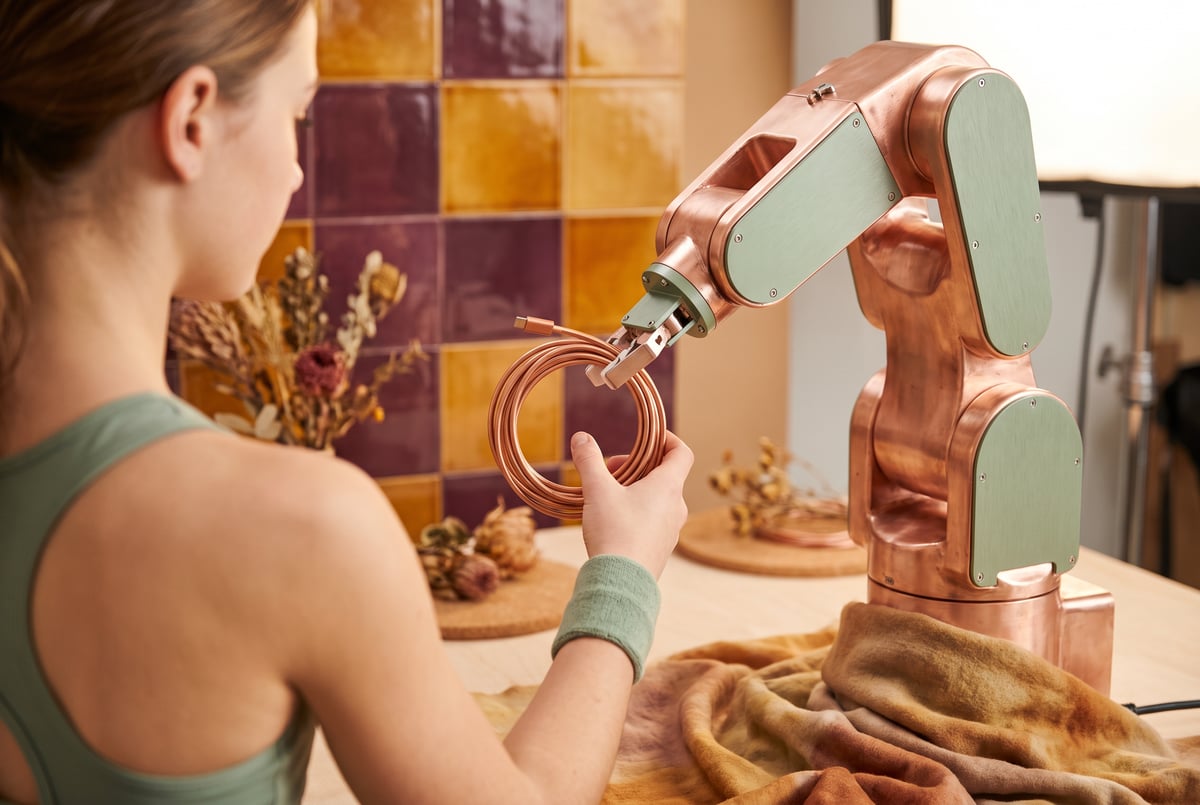
- Early demonstrations show a robotic arm handling unstructured tasks like cables and irregular object orientations, plus a partnership with Audi around dexterous manufacturing tasks like fitting window trim.
- Black Forest Labs frames Flux 3 as a step toward open weight access for a general-purpose model that can perceive, predict, and act across both digital and physical environments.
- Video generation is arriving before image generation in the rollout, which is notable given how mature text-to-image tools already are and how much unsolved demand still exists for high-quality video.
- Access is currently gated through a request form on Black Forest Labs’ site, with full capabilities promised “over the coming weeks and months.”
Built like a system. Not vibe-coded.
Remy manages the project — every layer architected, not stitched together at the last second.

How does Flux 3’s unified architecture actually work?
The core idea is a shared backbone trained jointly across modalities. Black Forest Labs isn’t training a video model, then a separate audio model, then a separate image model and gluing them together with routing logic. The model learns representations that transfer across image, video, audio, and action data at once. That’s a meaningfully different approach from most consumer AI video tools, which typically pair a diffusion-based video generator with a bolted-on audio or lip-sync layer.
The practical upshot: capabilities that build on the same underlying “understanding” of the world, whether that’s how light behaves in a video frame or how a robotic gripper should move to recover from a dropped object. Black Forest Labs describes the effort as a step toward “real-world visual intelligence,” models that perceive, predict, and act across both digital and physical environments, not just render convincing pixels.
The rollout itself is staged. Video generation with native audio is coming first. Action prediction is being tested with a small number of research and commercial partners, starting with Mimic Robotics. Image generation and editing come later, teased with a preview but no firm date. Open weight access to the full multimodal backbone is promised, though the timeline is vague, “over the coming weeks and months.”
Why is video generation launching before image generation?
This is one of the more counterintuitive choices in the release. Text-to-image generation is a mature category. Tools like Flux 2, Midjourney, and various diffusion models have made high-quality image synthesis close to a solved problem for a huge range of everyday use cases. Video is not there yet. It’s more computationally demanding, harder to keep temporally consistent, and the market has been reshaped repeatedly over the past year by releases like Sora 2 and SeaDance 2.0, both of which raised the bar for what “good enough” video generation looks like.
By leading with video and native audio, Black Forest Labs is targeting the part of the multimodal stack where the biggest open-source gap still exists. Most of the strongest video generators right now are closed, proprietary, and expensive to run at scale. An open-weight competitor that reaches similar quality would matter a lot to developers who want to fine-tune, self-host, or build commercial products without depending on a single vendor’s API and pricing.
What is Flux Mimic and how does it relate to robotics?
Flux Mimic is the product of a partnership between Black Forest Labs and Mimic Robotics, a company with expertise in robot learning and dexterous manipulation. Rather than treating robotics as a separate research track, Black Forest Labs adapted the Flux backbone into what’s being called a video action model: a model fine-tuned on robot behavior data that predicts physical actions instead of, or in addition to, generating pixels.
Remy is new. The platform isn't.
Remy is the latest expression of years of platform work. Not a hastily wrapped LLM.
This differs from a lot of existing robotics AI, which relies on what’s called a VLA, a vision-language-action model, trained more narrowly on task-specific data. The bet here is that pre-training on massive amounts of general video and image data gives a robotics model a better foundation than training from scratch on comparatively scarce robot demonstration data. In practice, that’s supposed to translate into robots that can generalize to situations they weren’t explicitly trained on: objects in unfamiliar positions, soft or flexible materials like cables, and recovery after something goes wrong mid-task.
Demonstrations shown alongside the announcement included a robotic arm handling unstructured manipulation tasks and a partnership angle with Audi, working on tasks like fitting window trim into a car body, a job that requires fine spatial adjustment and recovery from failed attempts. The claim from Black Forest Labs and its partners is that traditional automation struggles with this kind of variability precisely because it can’t be hard-coded, and a model trained on broad physical and visual data handles it more gracefully.
It’s worth being clear about scope here: this is early access, partner-limited robotics work, not a consumer product. Most people won’t be pointing Flux 3 at a robot arm anytime soon. The significance for now is architectural: proof that the same backbone generating video can also be steered into predicting physical actions.
Is Flux 3 actually a threat to Sora 2?
It’s early to call this definitively, since Flux 3 is still in limited access and hasn’t been benchmarked head-to-head by independent testers or the wider developer community. But the framing is legitimate. Sora 2 and similar closed video models set a high bar for realism, audio sync, and coherence. Flux 3’s video examples are reportedly approaching that tier of quality, according to early access material Black Forest Labs has shared, and the fact that it’s headed toward open weights is the differentiator that matters most to developers.
Black Forest Labs has a track record here. Flux 2, released in 2024, became a default recommendation for open-source image generation and is still cited by many language models as a top open alternative, even as newer proprietary tools have launched. The company appears to favor withholding releases until they’re broadly ready rather than shipping early and iterating in public, which is part of why Flux 3 is generating attention even before general availability.
If Flux 3 delivers open weights at anywhere near Sora 2 or SeaDance-level video quality, it would be a meaningful shift for anyone building products that need self-hosted or fine-tunable video generation rather than a locked API.
Frequently Asked Questions
What can Flux 3 generate?
Based on the early access rollout, Flux 3 is designed to generate images, video with native audio, and robot action predictions, all from one shared multimodal backbone rather than separate specialized models.
Is Flux 3 open source?
Black Forest Labs has stated it intends to provide open weight access to the multimodal backbone. As of the announcement, capabilities are being rolled out gradually through an early access program, and full open release details, including timing, weren’t finalized.
What is Mimic Robotics’ role in Flux 3?
Mimic Robotics is a commercial partner that brought robot learning and dexterous manipulation expertise to the project. Together with Black Forest Labs, they built Flux Mimic, a video action model fine-tuned on robot data using the Flux backbone to predict physical robot actions.
How is Flux 3 different from earlier video generation tools?
- ✕a coding agent
- ✕no-code
- ✕vibe coding
- ✕a faster Cursor
The one that tells the coding agents what to build.
Most video generation tools pair a video model with separate systems for audio or other modalities. Flux 3 trains image, video, audio, and action prediction jointly in one architecture, which Black Forest Labs argues produces better generalization across tasks.
When will Flux 3 be publicly available?
There’s no fixed public launch date. Black Forest Labs is granting early access through a request form on its website and says additional capabilities, including image generation and editing and full open weight access, will roll out over the following weeks and months.