China's Jurisdiction Claim Over Singapore AI Firms: What the Meta-Manus Block Means for Every Founder Who Relocated
China blocked a Singapore-incorporated company's acquisition by claiming jurisdiction over founders who originated in China.
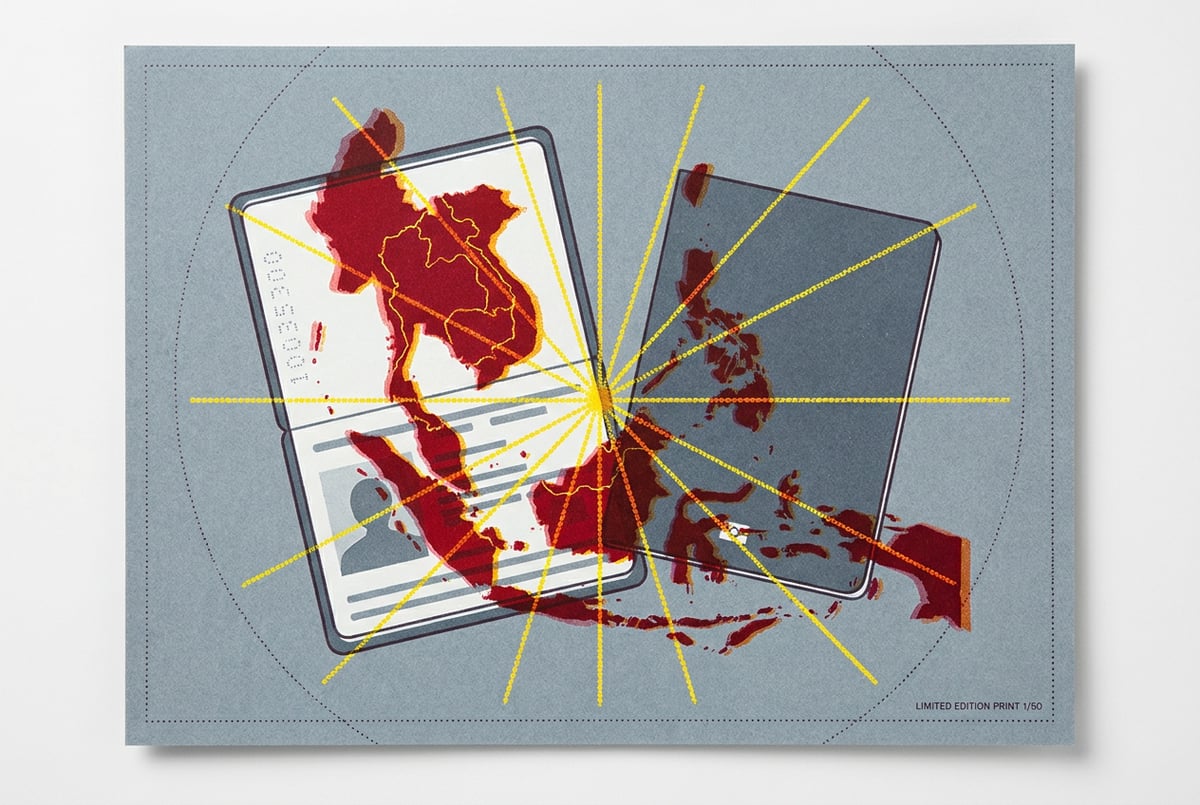
China Blocked a Singapore Company Because Its Founders Were Chinese
Manus was incorporated in Singapore. Its founders had relocated from China to Singapore in 2025. Its staff had already moved into Meta’s offices in Singapore. Investors had already received their proceeds. Capital had already been transferred. Manus executives had already joined Meta’s AI team. And China still blocked the deal.
That’s the part you need to sit with. China asserted jurisdiction over a Singapore-incorporated company on the basis that its founders originated in China — and it worked. Meta’s $2 billion acquisition of Manus is now in legal and operational limbo, with no clear path to unwinding a transaction that was, by most practical measures, already complete.
This isn’t primarily a story about Meta. It’s a story about what “relocating to Singapore” actually means when Beijing decides it doesn’t.
The Acquisition That Was Already Done
The timeline here matters. Manus founders built their AI agent company in China, then made the deliberate decision to relocate headquarters and key staff to Singapore in 2025. The move was almost certainly strategic — Singapore is a common landing pad for Chinese tech founders who want access to Western capital markets, Western acquirers, and a legal framework that isn’t subject to Beijing’s direct reach.
Remy doesn't write the code. It manages the agents who do.
Remy runs the project. The specialists do the work. You work with the PM, not the implementers.

Meta agreed to acquire Manus for approximately $2 billion. By the time China intervened, the deal wasn’t pending — it was substantially executed. Manus staffers had already moved into Meta’s Singapore offices. Investors had already received their proceeds. Capital had already been transferred between parties. Manus executives had already joined Meta’s rapidly expanding AI team.
China blocked it anyway.
The mechanism Beijing used is China’s data security and national security review framework, which gives regulators broad authority to review transactions involving companies with Chinese origins, Chinese data, or Chinese-developed technology — regardless of where those companies are currently incorporated. The Cyberspace Administration of China and the Ministry of Commerce have both expanded their review powers significantly since 2021, and the Manus case appears to be one of the most aggressive applications of that authority yet.
Why Singapore Wasn’t a Shield
The conventional wisdom among Chinese founders seeking Western exits has been: incorporate offshore early, establish real operational presence outside China, and you reduce your exposure to Beijing’s regulatory reach. Singapore, in particular, has attracted a wave of Chinese AI talent and capital precisely because it’s positioned as a neutral, legally stable jurisdiction with strong IP protections and no obvious political alignment with either Washington or Beijing.
Manus followed that playbook almost exactly. Singapore incorporation. Physical relocation. Staff on the ground. And it still wasn’t enough.
The reason comes down to how China defines the scope of its jurisdiction. Under the Data Security Law (2021) and the Cybersecurity Law, China claims authority over any data that was collected, processed, or generated within China — and over any technology that was substantially developed by Chinese nationals, even if those nationals have since relocated. The question isn’t where the company is registered today. The question is where the technology came from.
For an AI company, that distinction is brutal. The model weights, the training data, the architectural decisions, the research — all of that happened in China, by people who were in China at the time. The Singapore incorporation doesn’t retroactively move the intellectual property’s origin. Beijing’s position, apparently, is that it never left.
This is a meaningful shift from how most founders have been thinking about jurisdiction risk. The assumption was that physical relocation plus legal restructuring equals a clean break. The Manus case suggests that assumption was wrong, at least when Beijing decides it wants to assert otherwise. The same dynamic is playing out across the broader AI model landscape — as leaks and early benchmarks surface new capability tiers, the strategic value governments assign to frontier AI technology keeps rising, which only increases the incentive to assert control over its origins.
The Unwinding Problem Is Actually a Jurisdiction Problem
There’s a sister question circulating about how Meta even unwinds this deal — and the operational complexity is real. Employees are already integrated. Money has already moved. Executives are already inside Meta’s org chart. Reversing all of that is genuinely difficult.
But the deeper problem isn’t operational. It’s jurisdictional. China is asserting that it has the authority to compel this unwinding in the first place. That claim, if it holds, has implications that extend far beyond Manus.
Seven tools to build an app. Or just Remy.
Editor, preview, AI agents, deploy — all in one tab. Nothing to install.
Consider what it means for any Chinese-founded AI company that has relocated offshore and is now in acquisition discussions with a Western buyer. The acquirer’s legal team now has to model a scenario where the deal closes, integration happens, and then a foreign government demands reversal — with no clear legal mechanism for enforcement but enormous practical leverage through the founders’ families, remaining Chinese operations, or future market access.
That’s not a theoretical risk anymore. It happened.
The Manus situation also raises a question about what China’s actual goal is here. One interpretation is that this is specifically about Manus’s AI agent technology — that Beijing views it as strategically significant and doesn’t want it absorbed into a US tech giant. Another interpretation is that this is a signal: a demonstration that China can and will exercise this kind of authority, pour encourager les autres. If the goal is deterrence, the message has been received.
What’s Buried in the Precedent
The non-obvious detail in this story is that China didn’t need to win in a Western court to make this work. Beijing doesn’t have jurisdiction over Meta. It doesn’t have jurisdiction over Singapore courts. What it has is leverage over the founders themselves — their ability to return to China, their families, their remaining business interests on the mainland, and the implicit threat that non-compliance creates ongoing legal exposure for anyone connected to the deal.
That’s a different kind of enforcement mechanism than most Western lawyers are used to modeling. It doesn’t require a court order. It requires the founders to make a calculation about their own risk, and then act accordingly.
This is also why the “just incorporate in Singapore” strategy has always had a ceiling. Singapore law governs what happens in Singapore. It doesn’t govern what happens to a founder’s family in Shenzhen, or whether a founder can ever do business in China again, or whether Chinese regulators decide to investigate the company’s former Chinese subsidiary for unrelated compliance issues. The legal clean break and the practical clean break are two different things.
For AI founders specifically, there’s an additional layer. AI models trained on Chinese data, using Chinese compute, by researchers who were in China — that’s a data provenance trail that doesn’t disappear when you change your registered address. The more capable the model, the more likely Beijing is to view it as a strategic asset worth protecting. And the more likely a Western acquirer is to want it, which creates exactly the collision that happened with Manus.
The compliance and security implications here are worth taking seriously. If you’re building AI infrastructure that handles data across jurisdictions — or if you’re thinking about AI agents for research and analysis that might touch sensitive enterprise data — the question of where your models were trained and who trained them is no longer just a technical footnote. It’s a legal exposure question. The provenance of a model’s training run is starting to function like a chain of custody document, and acquirers are going to start treating it that way.
The Broader Pattern for AI Founders
Built like a system. Not vibe-coded.
Remy manages the project — every layer architected, not stitched together at the last second.
The Manus situation isn’t isolated. It fits into a pattern of both China and the United States tightening their grip on AI as a strategic asset class. The US has export controls on advanced chips going to China. China has data localization requirements and national security reviews going outbound. Both sides are building frameworks that treat AI technology as something closer to a weapons system than a software product.
For founders caught in the middle — people who built in China, want to exit to the West, and have genuinely relocated — the options are narrowing. The cleanest path is probably to have done the restructuring earlier, before the technology was developed, before the training runs happened, before there was anything for Beijing to claim. That window may now be closing.
There’s also a question about what this means for Western acquirers. Meta’s $2 billion is tied up in a deal it can’t complete and apparently can’t easily unwind. Any acquirer looking at a Chinese-founded AI company now has to price in the possibility that Beijing will intervene — not just during due diligence, but after closing. That changes the risk calculus significantly, and it probably means lower valuations for companies in this category, or more complex deal structures designed to hedge against exactly this scenario.
The irony is that this may accelerate the very thing China is trying to prevent. If Chinese-founded AI companies become harder to acquire because of Beijing’s intervention risk, some founders will respond by making the break earlier and more completely — burning bridges with China before they have anything worth acquiring. The founders who can afford to do that will. The ones who can’t will find themselves in an increasingly difficult position.
It’s also worth noting that the AI agent category specifically seems to be drawing the most scrutiny. Manus was an AI agent company. The capabilities that make agents valuable — autonomous task execution, access to external systems, persistent memory — are exactly the capabilities that national security reviewers on both sides are most focused on. Anyone building in this space should expect that dynamic to intensify. The source architecture of leading agent systems is already being studied closely by researchers and regulators alike, which gives some indication of how seriously these capabilities are being taken at an institutional level.
What Founders and Builders Should Watch
If you’re building AI infrastructure with any connection to China — through founders, training data, compute, or former operations — here are the specific things worth tracking.
The Manus unwinding. How this actually resolves will set a precedent. If Meta successfully completes the acquisition despite China’s objection, that’s one signal. If the deal gets reversed, that’s a much stronger signal about Beijing’s effective enforcement reach. Watch for any legal filings in Singapore courts, any statements from Meta’s legal team, or any announcements about Manus employees returning to independent status.
China’s data security review expansion. The Cyberspace Administration of China has been steadily expanding the categories of transactions that require security review. The current framework is broad enough to cover most significant AI acquisitions involving Chinese-origin technology. Whether Beijing chooses to enforce it consistently or selectively is a political question, not a legal one.
Remy is new. The platform isn't.
Remy is the latest expression of years of platform work. Not a hastily wrapped LLM.
Singapore’s response. Singapore has a strong interest in being seen as a jurisdiction where deals close and stay closed. If Beijing can effectively block Singapore-incorporated company acquisitions, that undermines Singapore’s value proposition as a neutral hub. Watch for any statements from Singapore’s Economic Development Board or Ministry of Trade and Industry about how they’re thinking about this.
US regulatory reciprocity. CFIUS already reviews inbound foreign acquisitions of US AI companies. The Manus case may accelerate calls for more aggressive outbound investment screening — not just of Chinese investment in US companies, but of US acquisitions of Chinese-founded companies that might bring data or IP exposure.
For teams building AI workflows that need to operate across these jurisdictional lines, the compliance layer is getting more complex fast. MindStudio handles the orchestration layer for enterprise AI — 200+ models, 1,000+ integrations, visual agent building — but the question of which models you’re allowed to use in which contexts, and what data they were trained on, is increasingly a legal question before it’s a technical one. Choosing your model stack is no longer just a capability decision; it’s a provenance decision.
The Spec That Doesn’t Move
There’s a useful analogy here for how AI builders think about their own work. When you build an application, the question of where the source of truth lives matters enormously. If your source of truth is a proprietary training run that happened in a specific jurisdiction, that jurisdiction has a claim on it — regardless of where you deploy the inference endpoint. Tools like Remy take a different approach to this problem in software: you write a spec in annotated markdown, and the full-stack application — TypeScript backend, database, auth, deployment — gets compiled from it. The spec is portable. The derived output is just output. The point is that ownership and portability are design decisions, not accidents.
For AI companies, the equivalent question is: where does your model’s provenance actually live, and who has a claim on it? Manus found out the hard way that “we moved to Singapore” doesn’t answer that question.
The Precedent Is Already Set
China blocked a Singapore-incorporated company’s acquisition by asserting jurisdiction over founders who originated in China. The deal was already substantially complete. The capital had moved. The employees were integrated. It didn’t matter.
That’s the precedent. Whether it holds, whether it gets challenged, whether Meta finds a way through — all of that is still unresolved. But the claim has been made and, so far, it’s working.
Every founder who relocated from China to Singapore, or Dubai, or London, and is now in acquisition discussions with a Western buyer should be having a very direct conversation with their legal team about what “clean break” actually means. The answer is more complicated than it was six months ago.
The technology doesn’t forget where it came from. Apparently, neither does Beijing.