What Is Recursive Self-Improvement in AI, and When Could It Arrive?
Recursive self-improvement means AI systems helping build better AI. Here's what it actually involves, and why some predict it by 2027.
What is recursive self-improvement in AI?
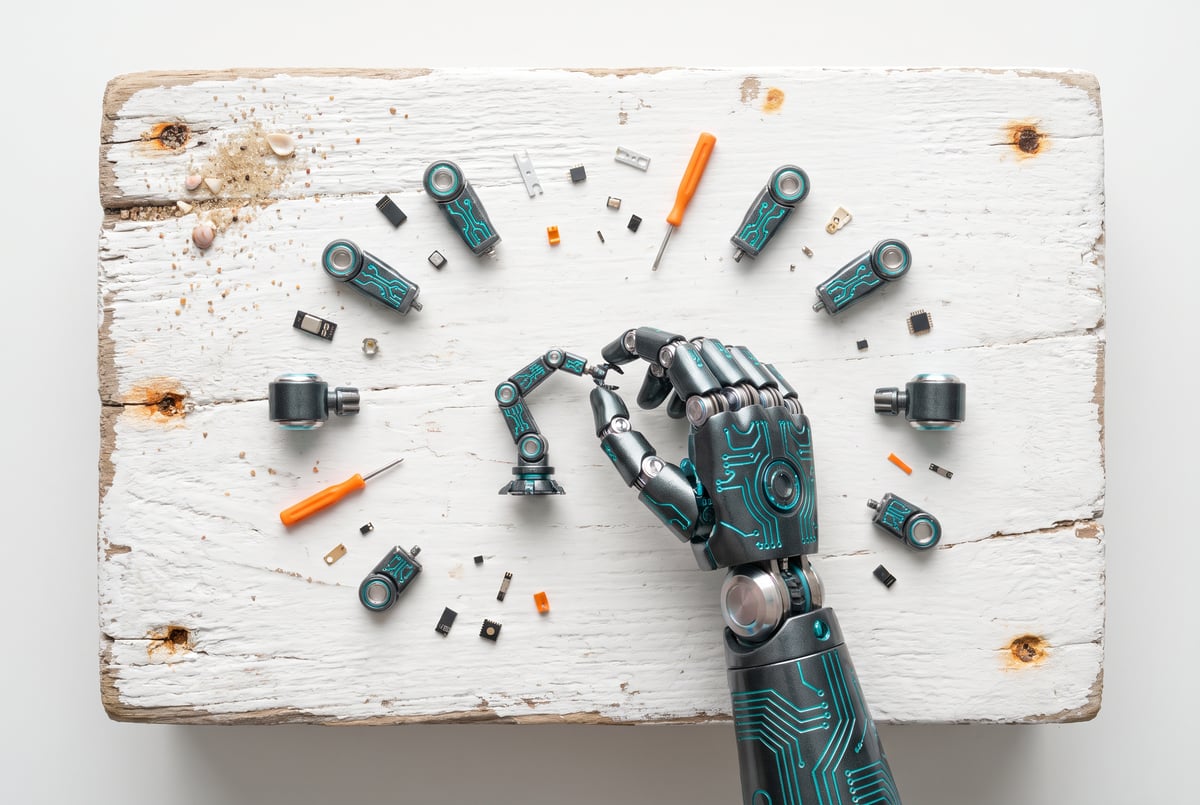
Recursive self-improvement (RSI) describes a loop where an AI system helps design, train, or optimize the next version of itself (or another AI), and that next version is capable enough to improve the process further. Instead of humans alone deciding every architecture tweak and training method, the AI becomes part of its own development pipeline. The idea has circulated in AI research for decades as a theoretical endpoint of automation, but it’s increasingly discussed as something already happening in limited forms inside major AI labs, rather than a distant hypothetical.
TL;DR
- Recursive self-improvement means AI systems contribute to building, training, or refining future AI systems, creating a feedback loop rather than a purely human-driven process.
- Google has said its researchers and its models now work together to speed up development, a hint that AI-assisted research is already part of how frontier labs operate.
- The release cadence of top models has compressed dramatically, with Google shipping Gemini 4 Argon and then the stronger Gemini 4 Carbon roughly a month apart, a pace that used to take a year or more between major jumps.
- AlphaFold is often cited as an early proof point that AI can produce scientific or engineering results (protein structure prediction) that previously required years of human-led research, hinting at how AI can accelerate the very fields that build better AI.
- Faster, cheaper model releases are a visible symptom of labs iterating quicker, even if the underlying cause (more compute, more competition, or actual self-improving tooling) isn’t always disclosed.
- Predictions about full RSI remain speculative, with some AI-focused analysts and commentators pointing to timelines around 2027 for labs like Anthropic to reach a stronger form of self-improving AI, though this is a forecast, not a confirmed roadmap.
- None of this means AI is fully building itself unsupervised yet, current signs point to AI accelerating specific research and engineering tasks, not replacing human oversight of model development.

Nothing gets lost.

Why does recursive self-improvement matter right now?
The concept matters because the pace of AI progress has visibly changed. For years, a major model upgrade took a long time to arrive. GPT-3 launched in 2020 and GPT-4 followed in 2023, a gap of close to three years. That cadence has collapsed. Google announced Gemini 4 Argon in late September, made it broadly available in mid-October, and then announced the stronger Gemini 4 Carbon just weeks later, a model that beat Argon on nearly every benchmark Google published. That is not one major leap every few years. That is a meaningful leap within a single month, from the same company.
Faster releases alone don’t prove recursive self-improvement is happening at scale. But Google has explicitly said its researchers and its AI models are now working hand-in-hand to make progress faster. That statement is notable because it suggests AI tools aren’t just a research topic at these labs, they’re becoming part of the internal workflow that produces the next model. When the tool you’re building starts helping you build the next version of itself, you’re in the territory RSI describes, even if it’s a partial or narrow version of the full concept.
How does AI already help build better AI?
Several concrete examples point to AI accelerating AI-adjacent research, short of a fully autonomous loop:
- Research acceleration in science. Google’s AlphaFold, a system that predicts protein structures, solved a problem that had challenged biologists for decades, and it did so using machine learning methods developed by the same research culture that builds large language models. It’s frequently cited as evidence that AI can compress years of human research into a fraction of the time, which matters because faster scientific and engineering research feeds back into faster AI development generally.
- Using models to evaluate and refine other models. Independent benchmarking groups, including Artificial Analysis and LMArena, now run large standardized test suites (covering intelligence, agentic task completion, document comprehension, and cybersecurity skills) that labs use to rapidly compare each new release against competitors. Gemini 4 Carbon, for instance, scored around 59 on Artificial Analysis’s Intelligence Index, edging out Claude Opus 5.5 at 58 and GPT-6 Astra at 57, while also showing a strong result on long-document comprehension (around 96% on one test, versus about 84% for the next closest model). Fast, automated evaluation like this lets labs iterate on new model versions without waiting on slow, manual review cycles.
- AI handling multi-step engineering and security tasks. Google specifically positioned Gemini 4 Carbon around coding, autonomous multi-step agent work, and cybersecurity, including a test called SecBench Pro (finding security flaws in real software, where Carbon scored around 88%) and CWE Bench (fixing those flaws). Models that can reliably find and patch software vulnerabilities, or act as coding agents, are performing exactly the kind of engineering labor that otherwise consumes human engineering time during AI development itself.

Auditable. Scalable.
None of this is the same as an AI autonomously redesigning its own training process end to end. But it shows the ingredients of RSI, AI assisting research, AI evaluating AI, AI doing engineering work, already present in how top labs operate.
Is recursive self-improvement already happening?
Not in the full, autonomous sense usually imagined in AI safety discussions, where a system repeatedly redesigns itself without meaningful human input. What’s happening now looks more like AI-assisted acceleration: human researchers using AI tools to move faster through steps that used to take longer, like running evaluations, writing code, or combing through documentation and vulnerabilities.
The visible evidence is indirect but hard to ignore. Model releases that used to be spaced years apart are now weeks apart. Google’s Gemini 4 Carbon arrived roughly a month after Argon and jumped straight to the top of independent rankings. Other labs show the same pattern: OpenAI rolled out GPT-6 broadly and followed with GPT-6.1 variants, Anthropic released Claude Sonnet 5.5 and Haiku 5.5, and multiple other labs (Moonshot, Meta, Mistral, DeepSeek) pushed updates in a similar window. That kind of compressed timeline is consistent with AI tools meaningfully speeding up internal research and engineering work, even without a lab explicitly confirming a closed self-improvement loop.
When could true recursive self-improvement arrive?
There’s no confirmed date, because no major lab has stated it has achieved full RSI. What exists are predictions from AI-focused analysts and commentators. One such forecast, attributed to the AI-focused outlet Val’s AI, points to around 2027 as a plausible window for Anthropic to reach a stronger, more autonomous form of recursive self-improvement. That kind of prediction should be read as an informed guess based on current trends, compute scaling, and public statements from labs, not as an announced roadmap or an internal commitment from Anthropic itself.
It’s worth treating timelines like this with caution for two reasons. First, AI progress forecasts have a mixed track record, both overestimating and underestimating how fast certain capabilities arrive. Second, labs have strong incentives to talk carefully about self-improvement, since it touches directly on AI safety concerns, and most public statements (like Google’s comment about researchers and models working together) are deliberately vague about exactly how much autonomy is involved.
What would full recursive self-improvement change?
If AI systems genuinely began improving themselves with little human bottleneck, the compressed release cycles seen today (weeks instead of years) could compress further, into days or less. That has upside: faster scientific discovery, cheaper and more capable tools, quicker fixes for software vulnerabilities. It also raises the central concern in AI safety research, that a system improving itself faster than humans can evaluate or correct it becomes harder to steer or audit. That’s precisely why predictions about RSI timelines, even speculative ones like a 2027 estimate, get attention. They’re less about a specific date and more about flagging that the current trajectory of faster, cheaper, more capable model releases could be an early signal of the loop starting to close.
Frequently Asked Questions
What’s the difference between AI automation and recursive self-improvement?
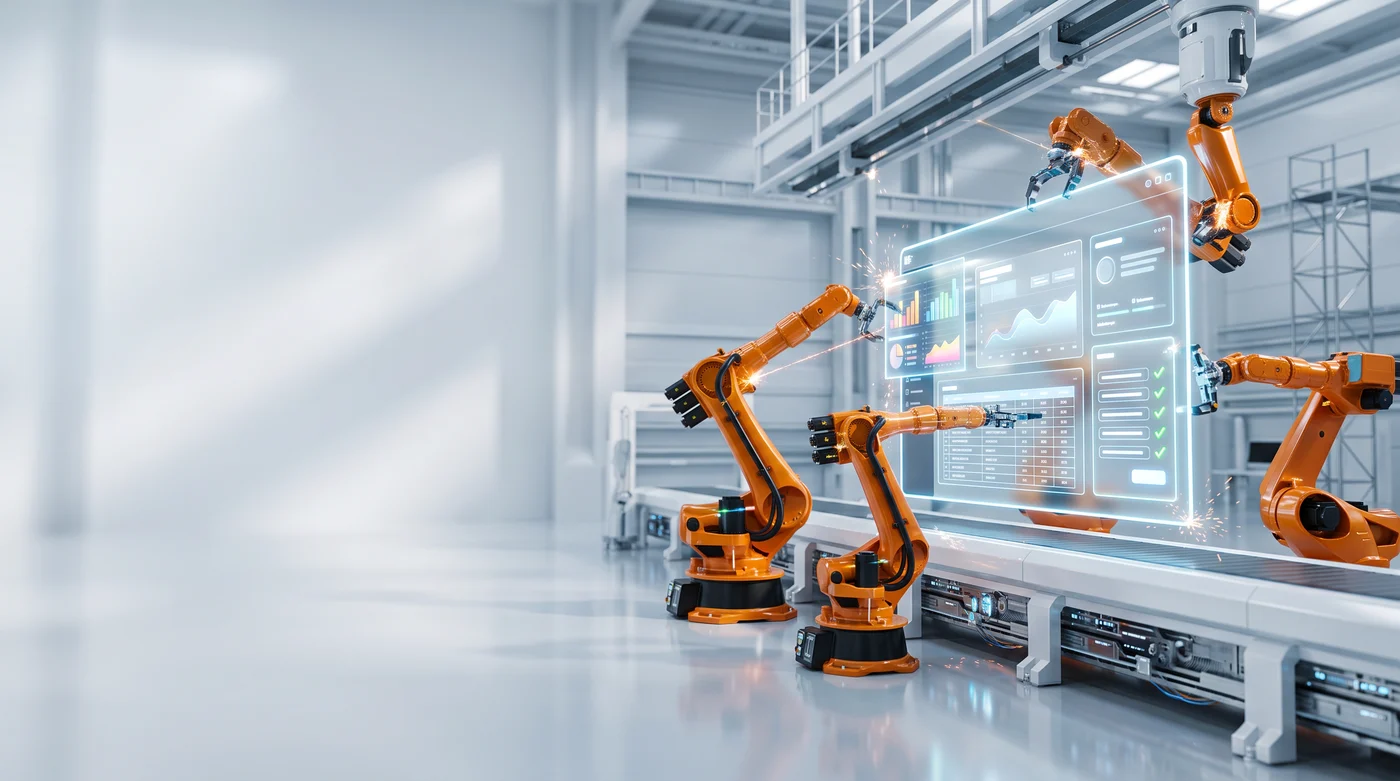
AI automation means AI tools handle specific tasks, like writing code or finding security bugs, that still fit into a human-run development process. Recursive self-improvement implies a closed loop where AI’s output directly improves the AI itself, with each cycle requiring less human input than the last.
Did Google say it has achieved recursive self-improvement?
No. Google said its researchers and its AI models now work hand-in-hand to speed up progress, which suggests AI-assisted development, not a confirmed autonomous self-improvement loop.
Why is AlphaFold relevant to recursive self-improvement?
AlphaFold showed that AI systems can produce major scientific results, in this case predicting protein structures, faster than traditional human-led research. It’s used as an example of how AI can accelerate the broader research ecosystem that also produces better AI models.
Is the 2027 recursive self-improvement timeline official?
No. It’s a prediction from an AI-focused analyst source (Val’s AI), not a confirmed date or roadmap from Anthropic or any other lab. Treat it as an informed forecast rather than a fact.
Does faster AI model releases prove recursive self-improvement is happening?
Not by itself. Faster releases could result from more compute, more competition, or better tooling, with or without AI playing a direct role in designing its successor. It’s a signal worth watching, not direct proof.