What a Riemann Hypothesis Proof Claim Means for AI Self-Improvement
A mathematician says Claude helped crack the Riemann hypothesis. Here's why that claim matters for AI accelerating its own research.
What happened, in brief
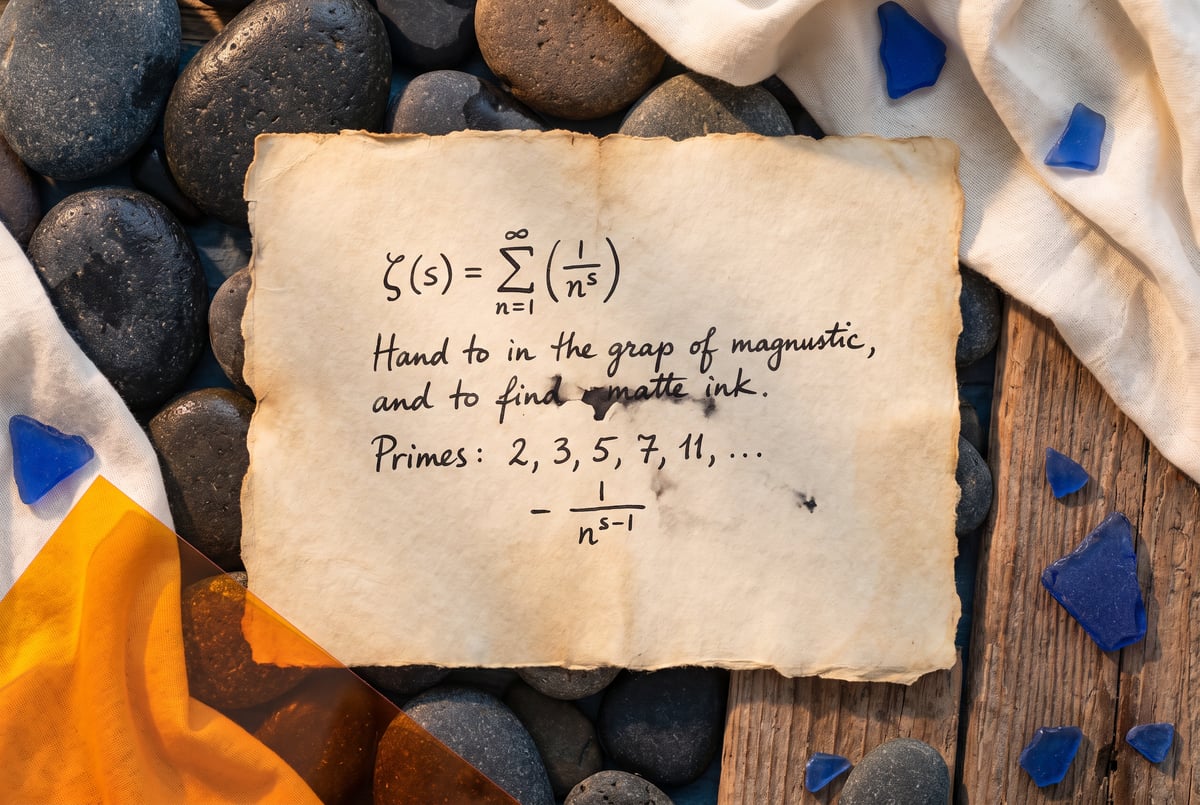
A mathematician at Anthropic named Levent Alpoge posted a note claiming he had, working with Claude, found a proof of the Riemann hypothesis, the most famous unsolved problem in mathematics, open since 1859. He says the method extends to the generalized Riemann hypothesis and potentially the extended version too. The proof hasn’t been formally peer-reviewed, but Alpoge released it as Lean code (a formal proof language that a computer checks line by line), and independent researchers, including a compilation effort from MIT’s Andrew Sutherland, have started verifying it in public. Whether or not every piece survives scrutiny, the claim itself has triggered a much bigger conversation: if an AI model can contribute at this level to unsolved math, what does that imply about AI helping to improve itself?
TL;DR
- A mathematician claims a proof of the Riemann hypothesis produced with Claude’s help, released as millions of lines of machine-checkable Lean code rather than a traditional paper, with public verification underway.
- Forecasters were caught flat footed: a prediction market community had estimated resolution around 2035, and Terence Tao’s own 2026 forecast for “AI-assisted research math” looks conservative in hindsight.
- The same mathematician used Claude months earlier to resolve the Jacobian conjecture, a problem open since 1939, suggesting a pattern rather than a one-off lucky result.
- Commentators argue this matters beyond math because math is a fully verifiable domain, meaning AI progress there is a leading indicator for AI doing real research work in other fields, including AI research itself.
- The core argument for faster recursive self-improvement is simple: if models can generate genuinely novel mathematical reasoning rather than just recombining known text, they can plausibly generate novel ideas for improving AI architectures and training methods too.
- Dario Amodei has previously argued that AI could compress years of scientific progress into a much shorter window once models can reliably do research-level work, and this episode is being read as early evidence for that thesis.
- Skeptics note the proof isn’t confirmed yet and that one dramatic result doesn’t prove a general capability, so the claim should be treated as a strong signal, not settled fact.
Built like a system. Not vibe-coded.
Remy manages the project — every layer architected, not stitched together at the last second.

Why does a math proof matter for AI self-improvement?
The connection isn’t about math for its own sake. It’s about what kind of cognitive work the AI did to get there. The Riemann hypothesis has resisted every human attempt for over 160 years. If a model contributed genuinely new reasoning steps rather than echoing patterns from its training data, that’s evidence the model can generate novel solutions to problems nobody has solved before.
That capability generalizes. AI research itself is a kind of unsolved math problem: finding better architectures, better training methods, better ways to use compute. If a model can produce a real insight in number theory that a trained mathematician didn’t already know, the same underlying ability could in principle apply to proposing a better transformer variant, a more efficient optimizer, or a smarter data curation strategy. That’s the entire premise behind recursive self-improvement: AI that gets good enough at research to meaningfully accelerate the next generation of AI.
This is why commentators keep connecting this episode to Dario Amodei’s public statements about AI compressing decades of scientific progress into a handful of years. The argument isn’t that one proof proves the thesis. It’s that math is one of the few domains where you can mechanically verify whether an AI actually did something new and correct, since a Lean proof either compiles or it doesn’t. That makes it a clean test case for a capability that’s much harder to measure in messier domains like AI research itself.
How did forecasters and experts get this wrong?
Badly, and that’s part of why the story spread. A prediction market community had the Riemann hypothesis being resolved around May 2035. Terence Tao, widely regarded as among the best living mathematicians, said in a 2024 appearance on the Lex Fridman podcast that he expected AI-assisted research-level math collaborations, meaning published work where AI contributes computations, verifications, or even some ideas, to start showing up by 2026. He was already unusually bullish compared to most of the field, and even he didn’t suggest the single biggest open problem in mathematics would be the one to fall.
Several informal bets illustrate the same miscalibration. One forecaster had wagered at 5 to 1 odds in August that no Millennium Prize problem would be solved within a year regardless of AI progress; he conceded within months. A handful of people did call it, including a prediction that an AI would prove the Riemann hypothesis before AI-driven world models could outperform a mainstream game engine, which looks prescient in hindsight.
The broader pattern commentators point to: large language models went from unreliable basic arithmetic in 2023, to struggling with high school competition math in 2024, to winning gold-medal-level performance at the International Math Olympiad in 2025, to contributing to Millennium Prize-level problems within the same year. Each jump happened faster than experts expected the previous one to be followed.
Is this actually new capability, or just brute-force compute?
Remy AI Engineer Certification
Companies want to build their own software.
Few people can build it right.
Become the one they trust.
- Access
- Audit trails
- Security
- Compliance
This is the most contested part of the story, and it matters for how much weight to put on the self-improvement argument. When OpenAI announced a separate Navier-Stokes result earlier in the year, it reportedly involved running thousands of AI agents in parallel for dozens of hours, a brute-force search approach where scale substitutes for insight. If that’s the model, it says something about compute and parallelism, not necessarily about an individual model’s reasoning quality.
Alpoge’s account of the Riemann hypothesis work reads differently: roughly six weeks of close collaboration between one mathematician and Claude, not a massive parallel search. If accurate, that’s a more significant signal, because it suggests the model contributed something closer to genuine mathematical judgment rather than winning through volume. One widely shared framing put it as a fork: either very hard problems turn out to be more tractable to brute-force search than anyone assumed, or models can now do something close to real research insight. Either answer points the same direction, toward AI capabilities that were assumed to be years away showing up now.
It’s worth being honest about the uncertainty here. The proof has not been formally accepted by the mathematical community at the time of writing. Lean verification confirms that a proof compiles without logical gaps, which is a strong signal, but full community consensus on a result of this magnitude historically takes years, as it did with Grigori Perelman’s proof of the Poincaré conjecture in the early 2000s.
Does this mean human mathematicians become obsolete?
Not based on what’s actually described here. Alpoge spent years, by his own account going back to his student days, preparing to attack this specific problem. He knew which techniques mattered and steered the collaboration into the right setup before Claude’s contributions became decisive near the end. That division of labor, human judgment about which problems and approaches matter, paired with AI execution and idea generation at the technical core, is the more plausible near-term picture than full automation.
The comparison several commentators reached for is chess. Computers have outclassed the best human players for decades, yet professional chess didn’t disappear, it changed. The likely shift in mathematics and, by extension, in AI research itself, is toward humans who are good at choosing problems, framing them correctly, and judging which results actually matter, while models handle more of the technical search and verification work.
Frequently Asked Questions
Has the Riemann hypothesis proof been officially verified?
Not fully. It was released as Lean code (a formal, machine-checked proof format) and independent researchers, including a compilation effort from MIT, have begun verifying it publicly. Full peer-review-level consensus typically takes much longer, sometimes years, for results of this scale.
What is recursive self-improvement in AI?
It refers to AI systems becoming capable enough at research tasks, like proposing architecture changes or discovering better training methods, that they meaningfully speed up the development of future AI systems, creating a feedback loop of accelerating progress.
Why do commentators connect a math proof to AI research acceleration?
Math is one of the few domains where correctness is mechanically verifiable (a proof compiles or it doesn’t). That makes it a cleaner test of whether AI can generate genuinely novel solutions, a capability that would also be needed for AI to meaningfully contribute to its own research and development.
What did Terence Tao predict about AI and math?
In a 2024 podcast appearance, Tao predicted that by 2026 there would be published, research-level math results involving real AI contribution, including computations and verifications. He was considered ahead of consensus at the time, though even his prediction didn’t anticipate AI contributing to the Riemann hypothesis specifically.
Is this the same as the AI solving the problem on its own?
No. The mathematician involved describes close collaboration over roughly six weeks, with him steering the problem setup and Claude contributing heavily on technical steps near the end. It’s described as a human-AI collaboration, not an autonomous AI discovery.