
LLMs & Models Articles
Browse 579 articles about LLMs & Models.

Confidence-Scheduled Verification: How DeepSpark Cuts Wasted GPU Compute in AI Agents
DeepSpark's confidence-scheduled verifier skips low-probability tokens under load, saving GPU resources and speeding up production AI agent inference.

What Is DeepSpark? DeepSeek's Speculative Decoding Method That Makes Every LLM Faster
DeepSpark is DeepSeek's open-source speculative decoding system delivering 50–400% faster inference without retraining. Here's how it works.

What Is GLM 5.2? The Open-Weight Model Beating GPT 5.5 on Design and Coding Benchmarks
GLM 5.2 from ZAI offers a 1M token context window, MIT license, and frontier-level coding performance at a fraction of the cost of closed models.

Speculative Decoding Explained: How Draft Models Make AI Agents Faster
Speculative decoding uses a small draft model to guess tokens and a large model to verify them. Learn how it cuts AI agent latency without losing quality.

What Is DeepSpark? How DeepSeek Made Every LLM 50–400% Faster Without Retraining
DeepSpark is DeepSeek's speculative decoding method that speeds up LLM inference 50–400% with no retraining. Learn how it works and why it matters.

Self-Scaffolding AI Models: How Ornith 1.0 Writes Its Own Agent Harness
Ornith 1.0 generates custom harnesses for each task instead of relying on human-written scaffolds. Learn how self-scaffolding works and why it matters.

GPT-5.6 Sol, Terra, and Luna: What the Three Model Tiers Mean for Builders
OpenAI previewed GPT-5.6 in three tiers: Sol for power, Terra for balance, and Luna for speed. Here's what each tier delivers and who should use which.
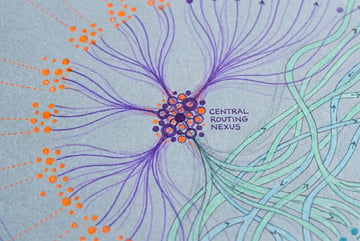
What Is Sakana Fugu? The Multi-Model Orchestrator Explained
Sakana Fugu is an AI orchestrator that routes prompts to the best model automatically. Learn how it works, its two tiers, and real benchmark results.

GLM 5.2 Architecture Deep Dive: Index Share, Sparse Attention, and Multi-Token Prediction
GLM 5.2 achieves 2.9x fewer compute operations at 1M token context using Index Share sparse attention. Here's the technical breakdown for AI builders.

What Is GLM 5.2? The Open-Weight Model With Frontier-Level Coding and 1M Token Context
GLM 5.2 is a 744B MoE open-weight model with a 1M token context window, sparse attention, and pricing 10x cheaper than Claude. Here's what sets it apart.

What Is Sakana Fugu Ultra? The Multi-Model Orchestrator That Beats Frontier AI
Sakana Fugu Ultra is an LLM pool that coordinates multiple models to outperform GPT and Claude on coding benchmarks. Here's how it works.

What Is Cursor's Composer Model? How a Coding Tool Became a Frontier AI Lab
Cursor trained Composer 2.5 on Qwen K2.5 with novel RL techniques, competing with GPT 5.5 and Opus. Learn how the SpaceX acquisition changes everything.

GLM 5.2 vs Claude Opus 4.8: Which Model Wins for UI Generation and Agentic Coding?
GLM 5.2 beats Claude Opus 4.8 on design taste and costs up to 10x less. Compare both models on 3D scenes, dashboards, landing pages, and mini games.

How to Run GLM 5.2 in Claude Code Using OpenRouter: A 5-Minute Setup Guide
You can run GLM 5.2 inside Claude Code's harness via OpenRouter in minutes. This guide covers setup, the anthropic_base_url trick, and web search integration.

What Is Index Share? How GLM 5.2 Achieves 2.9x Fewer Compute Operations at 1M Token Context
Index Share reuses sparse attention indexers across four layers, cutting compute by 2.9x at 1M token context. Learn how this makes GLM 5.2 affordable to serve.

What Is Cursor's Composer Model? How the AI Coding Tool Became a Frontier Lab
Cursor is training a 1.5T parameter model from scratch using SpaceX compute. Here's what it means for AI coding agents and the future of agentic development.

What Is Sakana Fugu? The Multi-Agent AI System That Beats Frontier Models
Sakana Fugu orchestrates Claude, GPT, and Gemini through one API to outperform single models on benchmarks. Here's how it works and when to use it.

How to Use GLM 5.2 as a Backend for Your AI Agents: OpenRouter Setup Guide
Run GLM 5.2 inside Claude Code or any agent harness via OpenRouter. Step-by-step setup to cut API costs without sacrificing coding quality.

How to Build a Multi-Model LLM Council for Better AI Decisions
Run multiple AI models in parallel, have them rank each other's answers, and synthesize a final response. Learn when LLM councils beat single-model outputs.

How to Use GLM 5.2 in Claude Code with OpenRouter: 5-Minute Setup Guide
Set up GLM 5.2 as the backend model for Claude Code using OpenRouter in under 5 minutes. Get frontier-level coding at a fraction of the API cost.