
Enterprise AI Articles
Browse 421 articles about Enterprise AI.

AI Model Export Controls Explained: What Government Review Means for Your AI Stack
The US government is reviewing frontier AI models before release. Here's what that means for builders who depend on Claude, GPT, and other models.

What Is Claude Tag? Anthropic's Slack-Native AI Agent for Enterprise Teams
Claude Tag lets teams bring Claude into Slack channels with scoped permissions and memory. Here's what it means for enterprise AI workflows.

The AI Context War: Why Siri, Claude Tag, and Codex Are All Solving the Same Problem
Apple, Anthropic, and OpenAI are all racing to connect AI to your real-world context. Here's why context access now matters more than model intelligence.

Claude Tag for Slack: How Anthropic's Native Agent Changes Enterprise Workflows
Claude Tag lets teams tag Claude in Slack like a teammate. Learn how it works, what it can do, and why Andrej Karpathy called it a new AI paradigm.

AI Model Regulation: What the GPT-5.6 Government Review Means for Your AI Stack
The US government is requiring staggered AI model releases. Learn what the GPT-5.6 preview rollout means for builders, startups, and enterprise AI teams.

Claude Tag for Slack: What It Is and How Enterprise Teams Use It
Claude Tag lets you @mention Claude in Slack like a teammate. Learn how it works, what it can do, and why Anthropic says 65% of their code uses it.

AI Model Regulation: What the GPT-5.6 Government Review Means for Builders
The US government now reviews frontier AI models before public release. Here's what the GPT-5.6 staggered rollout means for AI builders and businesses.

Claude Tag Explained: Anthropic's Slack-Native AI Agent and What It Means for Enterprise
Claude Tag embeds Claude directly into Slack with ambient context and org-wide tools. Learn what it means for enterprise AI adoption and vendor lock-in.
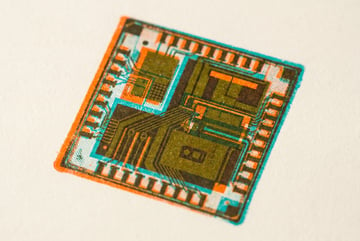
What Is OpenAI's Jalapeno Chip? The Custom AI Inference Processor Explained
OpenAI's Jalapeno is a custom ASIC built for LLM inference, designed in 9 months with AI assistance. Here's what it means for AI speed and cost.

AI Agent Ownership: Why Every Agent Needs a Single Responsible Owner
Unowned AI agents cause silent failures. Learn the four pillars of agent ownership—job, diet, boundaries, and review loop—to keep agents reliable.

How to Build an AI Agent Roster for Your Team: The Agent Ownership Card
Every agent your team uses needs a name, owner, job, sources, permissions, and known failure modes. Here's how to build and maintain an agent registry.

What Is the AI Augmentation Model? How IBM Used AI Without Laying Anyone Off
IBM's Ask HR and Ask IT handled 94% of routine queries without layoffs. Learn the augmentation model that outperforms AI replacement strategies.

What Is the AI Regulation Precedent? The Claude Fable 5 Government Shutdown Explained
The US government forced Anthropic to pull Claude Fable 5 globally—the first forced shutdown of a commercial AI model. Here's what happened and why it matters.

What Is the AI Replacement Rollback? Why Starbucks, Klarna, and McDonald's Are Rehiring Humans
95% of enterprise AI pilots fail to deliver ROI. Learn why companies are rolling back AI replacements and what the augmentation model looks like instead.
What Is the AI Token Cost Crisis? Why Uber Burned Its Entire AI Budget in 4 Months
Uber's engineers spent $500–$2,000/month each on AI tokens. Learn why token costs are exploding in agentic workflows and how to manage them.
Build vs Buy for AI Tools: A Framework for Business Owners Using Claude Code
When should you build a custom AI tool vs buy a SaaS? Use this two-criteria framework to avoid wasting time rebuilding what already exists.

AI Regulation and Model Shutdowns: What the Claude Fable 5 Ban Means for Enterprise AI Strategy
The US government forced Anthropic to shut down Claude Fable 5 globally. Here's what enterprise AI builders must do to protect their workflows from model bans.

What Is the Creator Trust Stack? A Framework for Ethical AI Content Creation
As voice cloning and AI video improve, creators need a five-layer trust framework covering disclosure, provenance, control, judgment, and accountability.

What Is Google DeepMind's AGI-to-ASI Paper? Four Pathways to Superintelligence Explained
Google DeepMind published a paper mapping four paths from AGI to ASI: scaling, algorithmic shifts, recursive self-improvement, and group agent formation.

Open-Weight AI Models Are Closing the Gap: What GLM 5.2 Means for Your Agent Stack
GLM 5.2 scores near Claude Opus 4.8 on coding benchmarks at 25% of the cost. Here's what the rise of competitive open-weight models means for AI builders.