
Automation Articles
Browse 949 articles about Automation.

How to Run Claude Code with Cheaper Models: OpenRouter, NVIDIA NIM, and Ollama
Use Claude Code's interface with DeepSeek, Gemma, and other affordable models via proxy. Get 80–90% of Opus quality at 2–5% of the cost.

DeepSeek V4 vs Claude Opus 4.7: Which Model Is Right for Your AI Workflows?
Compare DeepSeek V4 and Claude Opus 4.7 on benchmarks, pricing, context length, and agentic use cases to find the best model for your stack.

How to Use the Google Workspace MCP Server with Claude Code and Codex
Connect Gmail, Drive, Calendar, and Chat to your AI coding agents using the Google Workspace MCP server. Here's how to set it up and what you can automate.

Open-Weight AI Models Are Catching Up: What It Means for Enterprise Automation
Open-weight models like DeepSeek V4, Gemma 4, and Qwen are closing the gap with frontier models. Here's what that shift means for enterprise AI workflows.

What Is the PIV Loop? The Core Methodology for AI-Assisted Software Development
The PIV loop—Plan, Implement, Validate—is the repeatable process for handling individual coding tickets with AI agents. Here's how to apply it to any project.

What Is the Verifiability Principle? Why AI Excels at Code and Math but Struggles Elsewhere
AI automates what can be verified, not just what can be specified. Learn why verifiability drives AI capability and what it means for your automation strategy.

The 9 Components Every Production Agent Harness Needs (and What Breaks Without Each One)
From while-loops to lifecycle hooks: the exact nine components that separate a toy agent from a production harness, with failure modes for each.

Agent Harness vs Framework: What's the Difference and Which Do You Need?
Frameworks like LangChain require human assembly. Harnesses ship as working agents. Here's how to choose between them for your AI workflow.
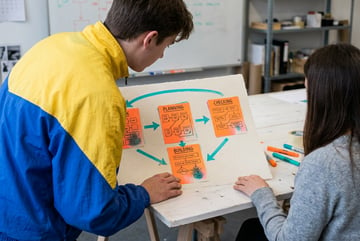
How to Build an Agentic Coding Workflow: The PIV Loop Explained
The PIV loop—Plan, Implement, Validate—is a structured approach to AI-assisted coding that keeps you in the driver's seat without micromanaging every line.

How to Use AI Agents to Run LLM Benchmarks: A Custom Evaluation Framework
Instead of relying on public benchmarks, you can build custom AI evaluation systems using agents. Here's how one developer built a gravity-well benchmark.

How to Use AI for Short-Form Video Creation: A 5-Skill Automation System
A skill system can take one long-form YouTube video and produce five captioned, reframed short-form clips automatically. Here's how the pipeline works.

Art List Studio Just Left Beta: 6 Video Models, Character Consistency, and 3 Workflow Tricks Worth Knowing
Art List Studio launched out of beta with 6 video models and character voice assignment. Here are the three workflow tricks that make it actually useful.

How to Build a Minimal Agent Harness in Python: Step-by-Step with Session Persistence
Build a working agent harness in under an hour using append-only JSON session logs and dynamic system prompt assembly from agents.md files.

ChatGPT Codex Automations + Gmail Plugin: How to Schedule AI Tasks That Run Without You
Codex can send Gmail summaries on a schedule with no manual input. Here's how to set up Automations and the Gmail plugin step by step.

ChatGPT Codex Hidden Features: 6 Capabilities Most Users Don't Know Exist
Concurrent tasks, Skills with slash commands, Automations, Gmail integration, project folders, and usage monitoring. Six Codex features worth knowing.

How to Use ChatGPT Codex for Non-Coding Work: Setup Guide for File Management, Email, and Content
Codex isn't just for developers. Disable coding mode, enable everyday work, and unlock Skills for file management, Gmail, and content creation.

How to Use Claude Code with Jira: Automating Sprint Planning and Ticket Creation
Claude Code can connect to Jira via MCP to create tickets, assign work, and update statuses automatically. Here's how to set up the full planning workflow.

Claude Code Skills vs Skill Systems: Why Isolated Skills Aren't Enough
Downloading marketplace skills and using them in isolation is the wrong approach. Learn why skill systems—not mega skills—are the right architecture.

Hermes Agent vs OpenClaw: Which Open-Source AI Agent Should You Use?
Hermes Agent and OpenClaw are both open-source AI agents with persistent memory and tool integrations. Here's how they compare for real automation work.

How to Build a Skill System in Claude Code: Chaining Skills for End-to-End Automation
Single skills do one task. Skill systems chain multiple skills into full workflows that run on autopilot. Here's how to design and wire them together.