What Is Matryoshka Representation Learning in Gemini Embedding 2?
Gemini Embedding 2 supports flexible embedding sizes from 3,072 down to 768 dimensions. Learn how Matryoshka learning works and when to use smaller embeddings.
Why Embedding Dimensions Matter More Than You Think
Vector embeddings are at the core of modern AI search, retrieval-augmented generation (RAG), and semantic similarity systems. But most developers treat them as a black box: generate them, store them, and hope for good results.
The problem is that embedding models typically produce fixed-size vectors. If you want to reduce storage costs or speed up search, your only real option has been to switch to a lower-quality model — a painful migration that often costs you accuracy.
Matryoshka Representation Learning changes that. And Gemini Embedding 2’s support for it gives developers a practical way to tune embedding size without switching models or reprocessing their entire corpus.
This article explains what MRL is, how it works in Gemini Embedding 2, and when it actually makes sense to use smaller embeddings.
What Embeddings Are and Why Dimension Size Matters
An embedding is a dense vector — a long list of floating-point numbers — that encodes the semantic meaning of a piece of text. Two texts with similar meanings will have vectors that are mathematically close to each other. That mathematical closeness is what makes semantic search possible: you’re matching meaning, not just words.
The number of dimensions in an embedding determines how much information it can encode. A 3,072-dimensional vector has 3,072 individual numbers that together represent the meaning of your input text.
The storage and speed cost of high-dimensional embeddings
More dimensions generally means higher quality. But it also means:
- More storage. A single float32 value takes 4 bytes. One 3,072-dimensional embedding takes about 12KB. If you’re embedding 10 million documents, that’s 120GB just for the embeddings — before indexes, metadata, or replicas.
- Slower similarity search. Computing cosine similarity or dot products across millions of 3,072-dimensional vectors takes more CPU and memory than doing the same with 768-dimensional vectors.
- Higher infrastructure bills. Vector databases typically price by storage capacity and query volume. Larger vectors mean higher costs on both dimensions.
Built like a system. Not vibe-coded.
Remy manages the project — every layer architected, not stitched together at the last second.

The standard trade-off has always been: use a smaller model (lower quality) or accept the costs of a large one. MRL offers a third path.
What Is Matryoshka Representation Learning?
MRL is a training technique, not a separate model architecture. It was first introduced in a 2022 NeurIPS paper by Kusupati et al. at the University of Washington and has since been adopted by several major embedding model providers.
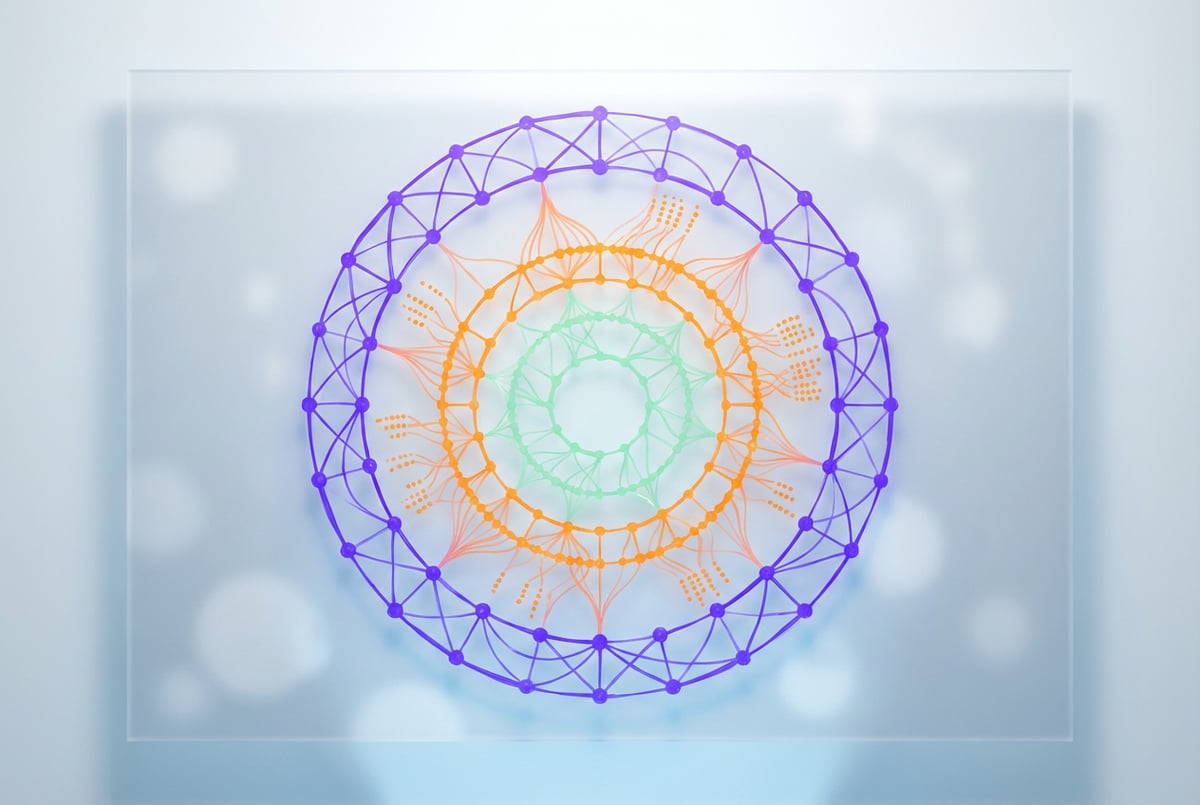
The name comes from matryoshka dolls — the Russian wooden nesting dolls where each doll contains a smaller but complete version of itself inside. MRL embeddings work on the same principle.
The full 3,072-dimensional vector contains, within its first 768 dimensions, a fully coherent and usable embedding. Within those 768, the first 256 dimensions are also meaningful. Each prefix of the vector is a useful representation in its own right.
Why traditional embeddings break when you truncate them
Standard embedding models are not designed to be meaningful when truncated. If you take a conventional 3,072-dimensional vector and drop the last 2,304 values, what remains is essentially noise. The information in a standard embedding is distributed across all dimensions with no particular ordering or prioritization.
It’s similar to having a word written on a piece of paper and cutting away the last three-quarters. You don’t get a shorter version of the word — you just get a fragment that doesn’t mean anything on its own.
How MRL training solves this
MRL trains the model with a joint loss function that applies at multiple scales simultaneously. During training, the model isn’t just optimized for the quality of its full 3,072-dimensional output. It’s also penalized for poor performance at the first 2,048, 1,536, 1,024, and 768 dimensions.
This forces the model to encode the most important semantic information into the earliest dimensions first. The model learns to treat each dimension as a constrained resource: the first few hundred must capture the most discriminative semantic signals, with later dimensions adding progressively finer nuance.
The result is that the early dimensions of an MRL embedding carry the bulk of the semantic meaning, while later dimensions add refinement. Truncate at any supported size, and you’re left with a coherent, useful vector — not noise.
Gemini Embedding 2 and MRL: What You Actually Get
Gemini Embedding 2 is Google’s current state-of-the-art text embedding model. It supports MRL natively, offering output dimensions ranging from the full 3,072 down to 768.
When you call the Gemini embedding API, you pass an output_dimensionality parameter to specify how many dimensions you want returned. The model generates the full internal representation and returns the requested prefix, already normalized and ready for vector similarity operations.
Operating points across the dimension range
Gemini Embedding 2’s MRL support lets you work at several practical dimension sizes:
- 3,072 dimensions — Full resolution. Highest quality. Best for precision-critical tasks.
- 2,048 dimensions — A meaningful size reduction with minimal quality loss on most benchmarks. A good default for applications that need to balance quality and cost.
- 1,536 dimensions — Roughly equivalent in size to OpenAI’s older ada-002 embeddings, useful as a mental benchmark for teams familiar with that system.
- 1,024 dimensions — Significant storage savings. Quality holds up well on general retrieval tasks.
- 768 dimensions — Maximum compression within the supported MRL range. Still surprisingly capable for first-stage retrieval and approximate similarity tasks.
Other agents ship a demo. Remy ships an app.
Real backend. Real database. Real auth. Real plumbing. Remy has it all.
Going from 3,072 to 768 dimensions is a 4× reduction in storage and a meaningful speedup in query time — often with under 10% degradation in recall on standard retrieval benchmarks.
The information-prioritization effect in practice
The reason MRL embeddings don’t fall apart at smaller sizes is the training objective. Because the model is explicitly penalized for poor performance at each checkpoint, it learns to front-load semantic signal. The most broadly useful features — topic, sentiment, domain, primary intent — appear in the early dimensions. More nuanced distinctions, like subtle phrasing differences or domain-specific terminology, are handled by later dimensions.
Think of it like a JPEG image: the compression algorithm prioritizes the most visually important information first. You can compress the image significantly and still clearly recognize the subject. The detail suffers at extreme compression, but the core content survives.
Quality vs. Efficiency: Understanding the Real Trade-off
Choosing an embedding dimension is fundamentally a question of how much accuracy you’re willing to trade for speed and cost savings. And the answer isn’t universal — it depends on what you’re building.
What benchmark data tells you
On MTEB (the Massive Text Embedding Benchmark, a standard suite of retrieval and similarity tasks), MRL-trained models like Gemini Embedding 2 tend to show:
- Minimal quality loss from 3,072 to 2,048 dimensions — typically less than 1% on recall@10 across common retrieval benchmarks
- Modest degradation at 1,024 dimensions — usually 2–5% on precision-heavy tasks
- More noticeable but often acceptable quality at 768 dimensions, especially for general-purpose retrieval
But benchmarks are averages over many tasks and domains. Your actual quality loss will depend on your corpus, query types, and quality thresholds.
Domain complexity shifts the equation
Highly specialized corpora — legal case law, medical literature, multi-language technical documentation — tend to require more representational capacity. These domains have dense, precise terminology where small differences in phrasing carry significant semantic weight. Full or near-full dimensions are often worth the cost here.
General-purpose applications — FAQ search, customer support knowledge bases, e-commerce product catalogs — often see minimal quality degradation at 768–1,024 dimensions. For these use cases, the savings in storage and compute frequently outweigh the small accuracy cost.
The practical recommendation: don’t guess. Run a small evaluation on a representative sample of your actual queries and corpus at multiple dimension sizes before committing to an infrastructure decision.
When to Use Smaller vs. Larger Embeddings
Here’s a practical breakdown of when each range makes sense.
Smaller embeddings (768–1,024 dimensions) work well when:
- You’re building a first-stage retrieval system. In a multi-stage pipeline, first-stage retrieval doesn’t need perfect precision — it just needs to return a useful candidate set. A reranker handles precision later. Smaller embeddings are ideal here.
- Your corpus is very large. Millions of documents at 3,072 dimensions per embedding adds up to real money. 768 dimensions gives you 4× more capacity at the same storage budget.
- Latency matters. Lower-dimensional similarity computation is faster. In real-time applications — autocomplete, live search suggestions — every millisecond counts.
- You’re prototyping. Smaller embeddings are faster and cheaper to generate and store while you’re iterating. Start small, measure quality, and expand only if needed.
Larger embeddings (2,048–3,072 dimensions) are worth it when:
- Precision is non-negotiable. Legal research, clinical decision support, compliance monitoring — applications where a missed result has real consequences.
- Your documents are semantically dense. When a small phrasing difference carries significant meaning, you want full representational capacity.
- You’re doing final-stage reranking. Reranking typically operates on a small candidate set (50–100 documents), so the per-query compute cost is manageable. Use full-dimensional embeddings here for maximum accuracy.
- You’re working across multiple languages. Cross-lingual retrieval tends to benefit from higher-dimensional representations, especially for low-resource language pairs.
Practical Architecture Patterns for MRL
Multi-stage RAG pipelines
Retrieval-augmented generation systems are one of the most natural fits for MRL’s flexibility. A typical high-quality RAG pipeline has two stages:
- Candidate retrieval — Search your full corpus quickly to surface 50–100 candidate documents.
- Reranking and context selection — Score the candidates more carefully and pass the top 5–10 to the LLM for generation.
With Gemini Embedding 2 and MRL, you can use 768-dimensional embeddings for stage one (fast, cheap, scales well) and either full-size embeddings or a dedicated cross-encoder reranker for stage two (precise, operating on a tiny candidate set). You get scalability without sacrificing the final answer quality.
Tiered storage architectures
Large-scale embedding systems often benefit from tiered storage:
- Hot tier (in-memory or GPU): small embeddings for immediate first-pass search
- Warm tier (SSD-backed vector index): medium embeddings for rescoring shortlisted candidates
- Cold tier (disk or archive): full-dimensional embeddings for batch processing or audit purposes
MRL makes it practical to serve all three tiers from the same underlying model, just with different truncation settings. You’re not maintaining three different embedding spaces — just three different prefixes of the same one.
A/B testing embedding quality at scale
Because MRL embeddings at different sizes come from the same model, you can run controlled comparisons between dimension sizes without worrying about confounding variables from model differences. This makes empirical quality evaluation much cleaner: hold everything else constant, vary only the output dimension, and measure the difference in retrieval quality on your specific task.
Using Gemini Embeddings in AI Agents with MindStudio
Building embedding-powered applications — semantic search, document Q&A, RAG systems — used to involve substantial infrastructure work. You needed to manage API authentication, vector database configuration, chunking and overlap strategies, orchestration logic, and retrieval evaluation. Each piece had its own setup overhead.
MindStudio removes most of that friction. It’s a no-code platform with access to over 200 AI models — including Gemini models — that lets you build embedding-powered AI agents without managing infrastructure from scratch.
If you’re experimenting with Gemini Embedding 2 and its MRL dimension settings, MindStudio gives you a practical place to:
- Build retrieval workflows visually — connect Gemini embeddings to document sources, configure dimension settings, and evaluate results without writing boilerplate
- Chain retrieval with generation — combine a fast first-stage retrieval step using smaller embeddings with a Gemini LLM for response generation, all in one workflow
- Deploy without DevOps overhead — your embedding pipelines run as production-ready AI agents without managing servers or infrastructure
This is particularly useful when you’re trying to validate whether 768-dimensional embeddings perform well enough for your specific application before investing in a full infrastructure build. You can prototype the pipeline in MindStudio, test it with real queries, evaluate quality, and then decide on the right dimension size — all before writing a line of production code.
If you’re building AI agents that need retrieval capabilities, MindStudio is free to start and takes about an hour to go from idea to working prototype.
Frequently Asked Questions
What is Matryoshka Representation Learning?
Matryoshka Representation Learning is a training technique for embedding models that makes any prefix of the full embedding vector useful on its own. It works by applying a joint loss function at multiple dimension checkpoints during training — forcing the model to encode the most important semantic information in the earliest dimensions. The result: you can truncate the embedding to a smaller size and still get a semantically meaningful vector without switching models.
What dimensions does Gemini Embedding 2 support?
Gemini Embedding 2 produces embeddings with a maximum of 3,072 dimensions and supports truncation down to 768 dimensions via the output_dimensionality parameter in the API. You can request any dimension within this range, with common operating points at 768, 1,024, 1,536, 2,048, and 3,072.
How much quality do you lose with smaller embeddings?
On standard retrieval benchmarks, moving from 3,072 to 768 dimensions typically results in under 10% degradation on recall-based metrics for general retrieval tasks. The actual loss depends on your domain’s complexity and your query patterns. Specialized, semantically dense corpora tend to benefit more from larger dimensions, while general retrieval tasks often show minimal quality loss at 768–1,024 dimensions. Always benchmark on your actual data before committing.
Can you mix embedding sizes in the same vector database index?
No. All vectors in a given index must share the same number of dimensions. If you want to use different dimension sizes at different pipeline stages — for example, small embeddings for first-stage retrieval and full-size for reranking — you’ll need separate indexes. Many production architectures do exactly this, with a lightweight index for candidate generation and a full-resolution representation (or cross-encoder) for final scoring.
Is Matryoshka Representation Learning unique to Gemini?
No. MRL is an open technique, first published in a 2022 NeurIPS paper by researchers at the University of Washington. Multiple embedding model providers have implemented it, including OpenAI (in their text-embedding-3 model series, which also supports flexible output dimensions), Nomic, and Cohere. Gemini Embedding 2 is Google’s implementation, with its own training data, architecture, and dimension range.
When should I avoid using smaller embeddings?
Avoid smaller embeddings when retrieval precision directly affects important outcomes — legal, medical, and compliance applications are the clearest examples. Also think carefully about smaller sizes when your documents are long and dense, when you’re working with rare technical terminology, or when you’ve empirically measured a quality gap that matters for your application. The decision should be driven by actual evaluation on your data, not general assumptions about “good enough.”
Key Takeaways
- MRL is a training technique that forces embedding models to encode the most important semantic information in the earliest dimensions — making any prefix of the full vector independently useful.
- Gemini Embedding 2 supports MRL natively, letting you set output dimensions from 3,072 down to 768 using a single API parameter.
- Going from 3,072 to 768 dimensions delivers a 4× storage reduction and meaningful speed gains, often with under 10% quality degradation on general retrieval tasks.
- The right dimension depends on your application. First-stage retrieval, large corpora, and latency-sensitive use cases are strong candidates for smaller embeddings. High-stakes, precision-critical retrieval benefits from full-size.
- Multi-stage RAG pipelines are a natural fit for MRL — use small embeddings for fast candidate retrieval and full-size representations for final reranking.
- Evaluate on your own data. Benchmark numbers are averages. Your specific domain, queries, and quality thresholds should drive the decision.
Remy doesn't write the code. It manages the agents who do.
Remy runs the project. The specialists do the work. You work with the PM, not the implementers.
If you’re building AI applications that rely on semantic search or retrieval and want to experiment with Gemini embeddings without managing infrastructure, MindStudio is a practical place to start — free to try, and fast to prototype.