Imagen 3 Subject Consistency: How to Build Multi-Character Scenes for E-Commerce
Imagen 3 can maintain up to 14 consistent characters across scenes. Learn how to use this for product photography, storytelling, and social content at scale.
The Real Cost of Keeping Characters Consistent
Product photography at scale has always been expensive. A single studio day with two models, a photographer, and a stylist can cost $3,000–$8,000 before retouching. If you’re running a brand that needs seasonal lifestyle shots, regional campaign variations, or multi-character storytelling content across dozens of SKUs, the math gets painful fast.
The answer most teams reach for is generic stock photography — which is why half the internet looks the same. The better answer, increasingly, is Imagen 3’s subject consistency capability.
Imagen 3, Google’s current flagship text-to-image model, can maintain consistent characters across multiple generated scenes. According to Google’s documentation, this extends to up to 14 distinct subjects held in a single session — meaning you can build a cast of characters, define their appearance once, and then generate that cast in any setting, situation, or context you need. For e-commerce brands, product marketers, and social content teams, this is a meaningful shift in how visual content gets made.
This article covers what Imagen 3 subject consistency actually does, how to set it up for multi-character scenes, and how to use it practically for product photography and campaign content at scale.
What Imagen 3 Subject Consistency Actually Does
The Core Capability
Subject consistency in Imagen 3 is the ability to generate images featuring the same recognizable person or character across multiple outputs without those characters drifting in appearance between generations.
Everyone else built a construction worker.
We built the contractor.
One file at a time.
UI, API, database, deploy.

Traditional text-to-image generation has a well-known problem: describe “a woman with short red hair and a green jacket standing in a kitchen,” generate that image five times, and you’ll get five different people. Prompt engineering can narrow the variance, but it never fully solves it. Subject consistency addresses this by anchoring generation to reference data — either a reference image you supply or a persistent subject description held in session — so the model produces that same subject reliably.
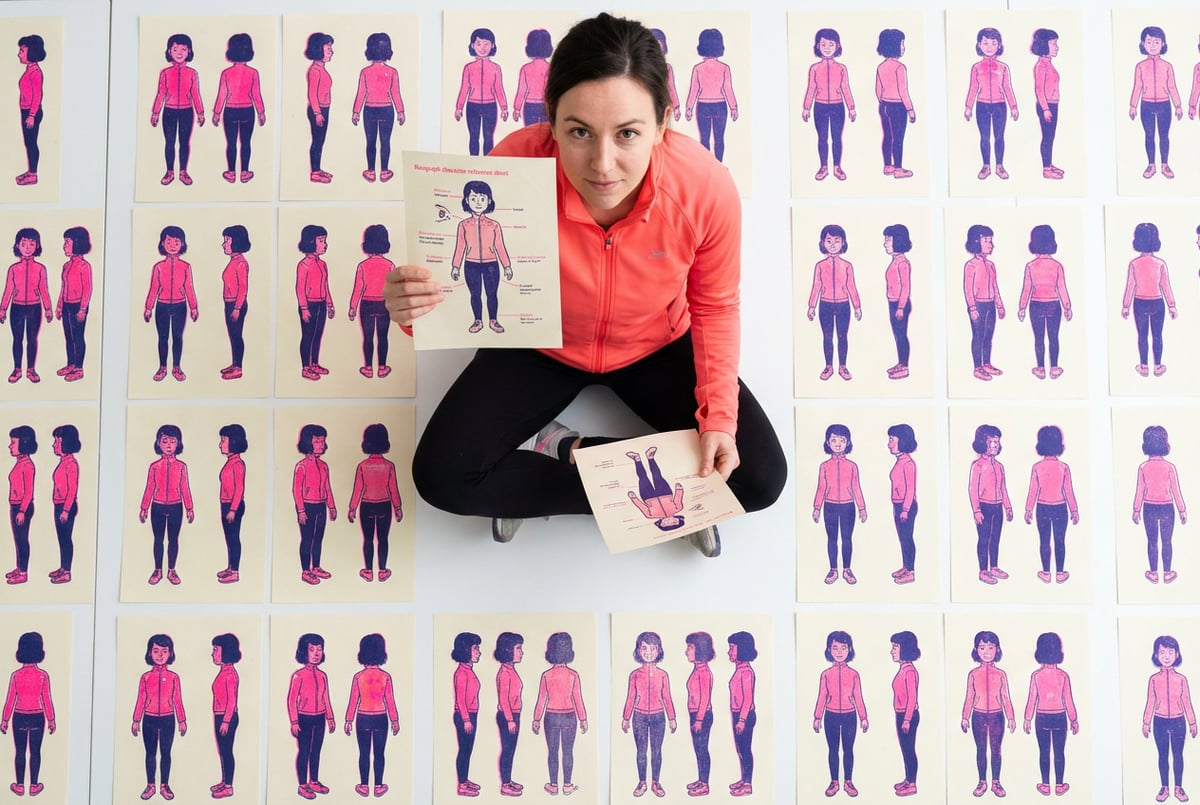
In practical terms, this means you can define Character A as your brand’s lead lifestyle model, Character B as a secondary customer persona, and Character C as a child for family-focused product scenarios. Once defined, you can generate all three together in a kitchen scene, a living room scene, an outdoor setting, and a holiday context, and the characters will remain visually consistent across all outputs.
How the Reference System Works
Imagen 3 accepts reference images as input when used via Vertex AI or through tools built on top of it. You supply one or more images of a subject, and the model uses those to anchor the generation. The more distinct and well-lit the reference image, the more reliably the model reproduces the subject.
For subjects defined purely through text (rather than reference photos), the model uses the session’s subject memory to maintain a stable visual interpretation. This is less precise than reference-image-based generation but still significantly more consistent than cold prompting.
The 14-subject ceiling means you can work with up to 14 distinct characters in a single generation session. In practice, most e-commerce workflows need fewer than five — but having headroom matters when you’re building scenes with products that require multiple people interacting with them.
What “Consistency” Means in Practice
It’s worth being specific about what consistency does and doesn’t mean here.
Subject consistency maintains:
- Facial structure and recognizable features
- General body proportions
- Hair color and style (if defined)
- Distinguishing characteristics like skin tone, age range, and build
It does not guarantee:
- Pixel-perfect identity replication across every image
- Exact wardrobe continuity unless you specify it in each prompt
- Identical lighting response across different scene settings
Think of it less like cloning a photo and more like directing the same actor in different scenes. The person is recognizably the same; the context changes around them.
Setting Up Your First Multi-Character Scene
Prerequisites Before You Start
Before you generate anything, there are a few things worth getting in place.
Reference images: For each character you plan to use consistently, gather 2–3 clear reference photos. Front-facing, good lighting, neutral background. These don’t need to be professional photos — a well-lit smartphone photo works — but blurry, backlit, or heavily stylized images will produce weaker consistency.
Character briefs: Write a short text description of each character. This acts as both a backup anchor and a way to specify details the reference image might not communicate clearly (e.g., “usually wears casual business clothing, confident posture, mid-30s professional”).
Scene descriptions: Know what scenes you actually need before you start generating. It sounds obvious, but working backward from “I need 8 lifestyle images for this product launch” will produce much better results than exploring open-endedly. Define the settings, the actions, the products being featured, and the emotional tone.
Remy doesn't build the plumbing. It inherits it.
Other agents wire up auth, databases, models, and integrations from scratch every time you ask them to build something.
Remy ships with all of it from MindStudio — so every cycle goes into the app you actually want.
Access: Imagen 3 subject consistency is available through Google’s Vertex AI platform under the image generation API, and through a growing number of third-party tools that access it via API. You’ll need an account and appropriate API access configured.
Building Your Character Definitions
The most important work happens before your first prompt. Define each character explicitly.
For a simple three-character scene, your definitions might look like this:
Character 1 (Lead):
- Reference: [upload 2–3 photos]
- Description: Woman, late 20s, South Asian, shoulder-length dark hair, warm skin tone, typically casual-professional clothing
Character 2 (Secondary):
- Reference: [upload 2–3 photos]
- Description: Man, early 40s, East Asian, short dark hair with slight grey at temples, athletic build, casual clothing
Character 3 (Child):
- Reference: [upload 2–3 photos if available, or text-only]
- Description: Girl, approximately 8 years old, mixed-race, curly brown hair, energetic expression
Once these are defined in your session, you can call on them by label (“Character 1,” “the woman,” or whatever naming convention you establish) throughout your prompting workflow.
Writing Your First Multi-Character Prompt
With characters defined, prompts for multi-character scenes follow a consistent structure:
[Setting/context] + [Character references] + [Action/interaction] + [Product placement] + [Style/mood]
An example for a home goods brand:
“Character 1 and Character 2 sit at a wooden dining table in a modern, light-filled kitchen. Character 1 pours coffee from a ceramic pour-over carafe (the product) while Character 2 reads on a tablet. Morning light from a window to the left. Warm, relaxed lifestyle photography style.”
Notice what’s happening here:
- The setting is specific (wooden dining table, modern kitchen, morning light direction)
- Characters are referenced by their established labels
- The product is mentioned with a brief descriptor
- The action is clear and natural — not staged-looking
- The style cue is brief but direct
Avoid over-describing the characters in the scene prompt. You defined them in setup; the prompt should focus on what they’re doing and where, not re-describe their appearance.
Iterating Across Scenes
Once your first scene generates well, creating additional scenes is mostly about swapping the setting and action while keeping the character references stable.
For a 10-image lifestyle series, you might cycle through:
- Kitchen morning scene (coffee product)
- Living room evening scene (throw blanket product)
- Outdoor patio scene (outdoor dining product)
- Home office scene (desk accessories product)
- Entryway scene (storage product)
The characters stay the same. The product moves. The setting changes. This is where the efficiency gain becomes real.
E-Commerce Use Cases That Actually Work
Lifestyle Product Photography
This is the most direct application. Instead of booking a studio, you define your brand’s personas once and generate lifestyle photography on demand.
For a home goods brand, this might mean a recurring cast of two to three characters who appear across all your product categories — bedding, kitchenware, storage, decor. Customers see the same faces repeatedly, which builds a subtle sense of brand identity even if they never consciously register that it’s the same people.
For apparel, subject consistency is especially valuable for generating the same model wearing different SKUs without the model’s appearance varying. Define the model, specify clothing descriptions per image, and maintain height, build, and facial features consistently across a product line.
Multi-Product Campaign Sequences
Campaigns that tell a sequential story — “the morning routine,” “the weekend at home,” “the holiday family gathering” — require visual continuity that would typically require dedicated shoot days.
With subject consistency, you can generate the full arc of a campaign before committing any creative decisions. Scene 1: characters wake up and make coffee. Scene 2: characters work from home at a tidy desk. Scene 3: characters eat dinner together. Scene 4: characters settle in for movie night. The same cast, the same visual world, built image by image without needing everyone in the same room at the same time.
This also makes it practical to create campaign variants for different audiences. Generate the core campaign with Cast A (young professionals, urban setting), then regenerate with Cast B (family with children, suburban home) using the same scene structure and product placement. Same campaign logic, two distinct audience targets.
Social Content at Volume
Social teams need content constantly. A typical brand might post 5–7 times per week across platforms, with each post needing at least one original image. That’s 260–365 images per year, and that’s before you factor in stories, reels thumbnails, and ad creative.
Subject consistency makes it practical to maintain a cast of brand characters who appear regularly across social content. Followers develop familiarity with the faces they see in your feed, which increases engagement over time even when those faces are AI-generated.
The key for social is keeping the character library small (2–4 characters maximum for most brands) and developing distinct personalities for each. One character might always appear in active, outdoors-adjacent content. Another might anchor cozy, at-home content. The specialization makes them feel intentional rather than random.
A/B Testing Creative at Scale
One of the most underused applications: generating the same scene with different character demographics to test which performs better with different audience segments.
A product image showing Character A (woman, 30s) using your product and Character B (man, 50s) using your product in the same setting can be tested against each other as paid social ads with minimal additional effort. If you were booking studio time, running this kind of test would be cost-prohibitive. With generated content, it’s just a second prompt.
This is particularly valuable for brands that sell across wide demographic ranges — home goods, health products, financial services with lifestyle content — where audience segment response to different character representations can differ meaningfully.
Email and Direct Marketing Assets
Email campaigns need fresh imagery for every send, but most teams end up recycling the same stock photos across dozens of emails. Subject consistency makes it practical to generate bespoke imagery for each email in a series.
A 12-email welcome series, for example, could feature the same character or characters across all 12 emails, reinforcing brand identity and making the series feel like a coherent conversation rather than a collection of disconnected sends. The images can reflect seasonal contexts, feature different products, and adapt to the content of each email — while the characters remain the same.
Prompting Strategies That Maintain Consistency
Describing Actions Without Overriding Appearance
Remy is new. The platform isn't.
Remy is the latest expression of years of platform work. Not a hastily wrapped LLM.
A common mistake is writing scene prompts that accidentally override character appearance. If you’ve defined Character 1 as having dark hair and then your scene prompt says “a woman with light hair sits at a table,” you’ll get a conflict.
The fix is to keep scene prompts character-neutral on appearance. Describe what characters are doing, not what they look like. “Character 1 sits at a table reading” is better than “a woman with dark hair sits at a table reading.”
If you need to reference the character in the prompt without using a label, use neutral descriptors: “the woman on the left,” “the man in the foreground,” “the child in the center.” These directional and positional references don’t conflict with appearance definitions.
Anchoring Scene Context Without Over-Specifying
Good scene prompts are specific about environment and atmosphere, not exhaustive about every detail.
Too sparse: “Character 1 and Character 2 in a kitchen.”
This gives the model almost no information about the scene quality, lighting, mood, or style. You’ll get technically consistent characters but wildly variable everything else.
Too detailed: “Character 1 stands exactly 2 feet to the left of Character 2 in a 12x14 foot kitchen with white subway tile backsplash, brushed nickel hardware, a 36-inch range, pendant lighting at exactly 6 feet, morning sunlight from a window measuring 36 by 48 inches…”
This is overconstrained and the model won’t follow all of it anyway.
Calibrated: “Character 1 and Character 2 in a bright, modern white kitchen. Late morning light. Character 1 is at the counter slicing vegetables; Character 2 leans against the counter beside them, holding a glass of water. Relaxed, natural lifestyle photography.”
This gives the model enough to work with while leaving room for natural-looking composition.
Maintaining Clothing Continuity Within a Scene Series
If you’re building a sequential series where characters wear the same outfits (think: a single day in the life), you need to specify clothing in each prompt.
Keep a clothing reference list for each character and include it in the prompt when continuity matters:
- “Character 1 wears the same light blue linen shirt and dark jeans as in previous scenes”
- “Character 2 in the same grey henley and khakis”
For non-sequential content (separate lifestyle images that don’t need to share a timeline), you don’t need clothing continuity and can let the model vary outfits naturally.
Style Cues That Apply Across a Session
Adding a consistent style cue to every prompt in a session creates visual coherence across all generated images — not just character consistency, but environmental and tonal consistency.
Pick a style descriptor and use it on every prompt:
- “Shot on film, warm tones, natural light, shallow depth of field”
- “Clean product photography, soft diffused light, minimal backgrounds”
- “Bright and airy lifestyle photography, editorial quality”
- “Moody, high-contrast, editorial advertising style”
Consistent style cues mean your series will look like it came from the same shoot even though each image was generated separately.
Handling Multiple Characters in the Same Frame
When generating scenes with three or more characters, spatial placement becomes important. Without explicit guidance, the model may crowd characters, overlap them awkwardly, or position them in ways that obscure your product.
Use directional and depth instructions:
- “Character 1 in the foreground left, Character 2 in the background right, slight blur on Character 2”
- “Characters 1 and 2 face each other across the table, Character 3 sits at the head of the table between them”
- “Character 1 is closest to camera; Characters 2 and 3 are visible behind them, slightly out of focus”
- ✕a coding agent
- ✕no-code
- ✕vibe coding
- ✕a faster Cursor
The one that tells the coding agents what to build.
This kind of spatial specification dramatically improves the usability of multi-character outputs for actual marketing use.
Building a Content Library at Scale
The Campaign Blueprint Approach
Rather than generating images one at a time, the most efficient approach is to design your full content library structure before you start generating anything.
A campaign blueprint looks like this:
| Scene ID | Characters | Setting | Product | Action | Style Notes |
|---|---|---|---|---|---|
| S01 | Char 1 + 2 | Kitchen, morning | Coffee maker | Brewing coffee | Warm, editorial |
| S02 | Char 1 alone | Living room, evening | Throw blanket | Reading, wrapped in blanket | Cozy, soft light |
| S03 | Char 1 + 2 + 3 | Outdoor patio | Dining set | Eating lunch together | Bright, natural |
| S04 | Char 2 alone | Home office | Desk lamp | Working at desk | Clean, minimal |
| S05 | Char 3 | Children’s bedroom | Storage bins | Playing with toys | Bright, playful |
This blueprint approach means you know exactly what you need before you start, can batch similar scenes together for efficiency, and end up with a coherent library rather than a random collection of individually-good-but-disconnected images.
Batching by Setting
Group all generations that take place in the same setting together. If you need five kitchen scenes across different products and characters, generate them in one session. This way, the model’s interpretation of your “kitchen” environment stays consistent, and you get visual coherence across scenes even beyond character consistency.
Switching between settings mid-session doesn’t break character consistency, but it can introduce visual discontinuities in background elements that look jarring if images appear side by side in a catalog or carousel.
Quality Control Checkpoints
At scale, generated images need a QA layer. Not every output will be usable. Character hands, background text, and fine detail on products are still areas where AI image generation can produce errors.
Build a quick QC checklist into your workflow:
- Character consistency check: Do the faces match the references? Are there any obvious drifts (wrong hair color, different age appearance, changed body type)?
- Product accuracy check: Is the product depicted correctly? Does it match its actual dimensions, color, and form factor?
- Technical quality check: Are there artifacts, blurry patches, uncanny anatomy issues?
- Brand alignment check: Does the image match the brand’s visual identity and tone?
Flag any that fail, regenerate with adjusted prompts, and only move images that pass all four checks into your asset library.
Metadata and Organization
At scale, organization becomes as important as generation quality. An asset library of 200 generated lifestyle images is only useful if you can find what you need when you need it.
Tag every image at the point of output:
- Scene ID (maps back to your blueprint)
- Characters featured (Char1, Char2, etc.)
- Setting (kitchen, living room, outdoor)
- Product featured (SKU or product name)
- Platform intended (social, email, web, paid)
- Season/campaign context
Tools like Airtable, Notion, or a basic Google Sheet with image attachments work fine for this. The point is to never be hunting through a folder of untitled files looking for “the one with the throw blanket.”
Common Mistakes and How to Fix Them
Mistake 1: Inconsistent Reference Quality Across Characters
Other agents start typing. Remy starts asking.
Scoping, trade-offs, edge cases — the real work. Before a line of code.
If Character 1’s reference images are crisp, well-lit, and front-facing while Character 2’s reference is a small, blurry casual photo, consistency quality will be uneven. Character 1 will reproduce reliably; Character 2 will drift.
Fix: Standardize reference quality before you build any scenes. Spend 10 minutes getting clean reference images for every character before starting. If you’re using fictional characters rather than real people, generate a set of high-quality reference images in one pass and use those as your anchors.
Mistake 2: Letting Prompts Drift in Style
A common pattern in multi-session work is that early prompts in a project are carefully crafted and later prompts get more casual as familiarity with the workflow builds. This creates visual inconsistency across your asset library.
Fix: Keep your style template visible throughout the project. Copy-paste the style section of your prompt rather than rewriting it each time. Rewriting introduces variation; copying keeps it locked.
Mistake 3: Over-Populating Scenes
Having all 14 possible characters in a single scene is technically possible but practically problematic. Dense multi-figure scenes are harder to compose well, harder to use in product marketing contexts, and more likely to produce errors.
Fix: Use the minimum number of characters each scene actually needs. Most product lifestyle images work best with one to three people. Reserve larger groups for specific contexts where group energy genuinely serves the product (family products, event items, entertainment scenarios).
Mistake 4: Neglecting Product Detail in Prompts
Generated lifestyle images can position a product correctly in scene but depict it inaccurately — wrong color, wrong proportion, different texture or finish than the real product.
Fix: Include precise product descriptors in every prompt that features it. “The cobalt blue ceramic mug, approximately 4 inches tall with a matte finish and a round white logo” is better than “a blue mug.” For products with critical visual features (logo placement, distinctive shapes, specific colorways), consider whether to provide a product reference image alongside character references.
Mistake 5: Skipping the QC Step at Scale
Under production pressure, QC is often the first thing to get cut. The result is a library containing uncanny hands, artifacts, or character drift that makes it into published content.
Fix: Build QC into the workflow as a fixed step, not an optional one. Even a quick 15-second review per image, systematically applied, catches most problems. At high volume, a brief QC pass is far less costly than pulling and replacing a published asset.
Mistake 6: Not Considering Legal and Disclosure Requirements
AI-generated imagery featuring human characters is subject to emerging disclosure requirements in some jurisdictions and on some platforms. Regulations vary and are still developing rapidly.
Fix: Stay current with the disclosure requirements for each platform you publish on. Some require explicit disclosure that images are AI-generated. Maintaining internal documentation about which assets are AI-generated protects you if questions arise later.
Scaling to a Full Production System
From Workflow to System
The difference between a workflow and a system is repeatability. A workflow is something you run through manually each time. A system is something that runs reliably with minimal manual intervention.
For high-volume e-commerce content, the goal is to build toward a system:
- Input: New product brief or campaign brief enters the system (manually, via form submission, or via API)
- Briefing: System parses the brief and maps required scenes to the campaign blueprint template
- Generation: Imagen 3 scenes are generated according to spec, with character references pulled from the character library
- QC: Human review flag step, or automated QC pass using a secondary AI call
- Processing: Upscale, background removal, or other finishing steps applied to approved images
- Output: Final assets delivered to the appropriate storage location with metadata tags
- Catalog: Assets logged in your content database with all relevant tags
Plans first. Then code.
Remy writes the spec, manages the build, and ships the app.
Building this system requires connecting several tools, which is where automation platforms become valuable. The logic is straightforward; the coordination across steps is where manual approaches break down at volume.
Content Governance at Scale
When multiple people are generating content with a shared character library, consistency can degrade without governance.
Establish:
- A character library document that holds all current reference images, character descriptions, and usage guidelines
- A style guide with approved style cues and banned terms or visual styles
- A versioning protocol when character definitions are updated — older content generated with previous references shouldn’t be mixed indiscriminately with new content
- A review gate for content going into the public asset library, even if QC at the generation stage has already passed
These aren’t bureaucratic overhead — they’re what keep a growing library usable as the team and the output volume grows.
Updating Characters Over Time
Brand personas aren’t always permanent. A brand might update its visual identity, refresh its model roster, or need to adapt characters for regional markets.
When you update a character definition, decide whether to:
- Retire the old definition entirely and only use the new version going forward
- Maintain both and tag assets by character version
- Regenerate key assets using the new definition to keep the most important content current
In practice, most brands update character definitions rarely. But having a protocol for when it does happen prevents the library from becoming inconsistent over time.
Frequently Asked Questions
What is Imagen 3 subject consistency?
Imagen 3 subject consistency is a capability within Google’s Imagen 3 image generation model that allows the same person, character, or subject to appear consistently across multiple generated images. Instead of regenerating a new visual interpretation of a character with every prompt, the model anchors to a reference — either a provided reference image or a session-level subject definition — and produces images where that character looks the same scene after scene. This is distinct from standard text-to-image generation, where characters vary in appearance between outputs even when the same descriptive text is used.
How many characters can Imagen 3 maintain at once?
Imagen 3 can maintain up to 14 consistent subjects within a generation session. In practice, most use cases require far fewer — typically two to five characters is sufficient for product photography and lifestyle content workflows. The 14-subject limit provides meaningful headroom for complex scenarios such as family group content, team or community scenes, or brand environments with multiple recurring personas.
Is AI-generated product photography good enough for professional use?
For lifestyle and editorial-style product photography, yes — current models including Imagen 3 produce images of sufficient quality for web, social, email, and many digital advertising applications. The caveats are product accuracy (detailed product features can be misrepresented and need QC review), complex hand/object interaction scenarios, and print applications that require very high resolution. Most brands use AI-generated imagery for content velocity and A/B testing at volume while reserving traditional photography for hero assets, packaging, and print.
Does Imagen 3 require technical knowledge to use?
Built like a system. Not vibe-coded.
Remy manages the project — every layer architected, not stitched together at the last second.
Direct API use of Imagen 3 through Google’s Vertex AI platform requires some technical setup, including API configuration and understanding the request structure. However, several no-code and low-code tools surface Imagen 3’s capabilities without requiring API knowledge, including Google’s own ImageFX interface and third-party platforms like MindStudio’s AI Media Workbench. The more complex task of chaining subject consistency generation into full production workflows benefits from automation tooling, but initial experimentation with the model is accessible to non-technical users.
How is subject consistency different from LoRA training?
LoRA (Low-Rank Adaptation) is a fine-tuning technique where a model is trained on specific reference images to learn a subject’s appearance in depth. This typically produces higher consistency and can capture more specific details — particularly useful for specific real-person likeness generation. Subject consistency in Imagen 3 doesn’t require fine-tuning; it uses reference images at inference time, which is faster and simpler but generally produces slightly less granular consistency than a dedicated LoRA. For brand personas that aren’t based on specific real people, Imagen 3’s built-in subject consistency is usually sufficient. For high-precision likeness requirements, LoRA fine-tuning may still be the better approach.
What are the legal considerations for AI-generated human characters in marketing?
This is an actively developing area. Key considerations include:
- Disclosure requirements: Some platforms (particularly social media) and some jurisdictions now require or are moving toward requiring disclosure when images are AI-generated
- Real person use: Generating imagery of real, identifiable people without consent raises significant legal and ethical issues — subject consistency workflows should use fictional characters or secured real-person rights
- Regional variation: Rules vary by country and are still being established — consult legal counsel for high-stakes campaigns
- Platform policies: Ad platforms including Meta and Google Ads have their own policies on AI-generated content that may affect ad approval
For most brand lifestyle content using fictional characters, the legal risk is low but disclosure best practices are still worth following.
Can subject consistency work without reference images?
Yes — Imagen 3 can maintain subject consistency using text-only character definitions, holding a stable visual interpretation in session memory. This is less precise than reference-image-based consistency because the model’s interpretation of a text description has more variance than anchoring to a specific visual. For most production applications where character identity matters, providing at least one clear reference image per character produces notably better results.
How does this compare to midjourney or other models for e-commerce use?
Imagen 3 and Midjourney have different strengths. Midjourney has historically produced aesthetically impressive images with a distinctive visual quality, but subject consistency across sessions has been weaker. Imagen 3’s subject consistency system is more explicitly built for use cases where the same character needs to appear reliably across many outputs — which is the central requirement for e-commerce content libraries. For one-off creative image generation, Midjourney remains competitive; for building structured content libraries with recurring characters, Imagen 3’s approach is more purpose-built. Other models including Stable Diffusion with LoRA fine-tuning, DALL-E 3, and FLUX also serve e-commerce use cases with varying tradeoffs in quality, consistency, and workflow integration.
Key Takeaways
- Imagen 3’s subject consistency capability lets you maintain up to 14 recognizable characters across multiple generated scenes, enabling product photography and lifestyle content at scale without repeated studio costs.
- The foundation of good multi-character generation is strong setup: clean reference images, explicit character definitions, and a campaign blueprint before you start generating.
- Prompting for consistency means keeping character appearance out of scene prompts (you’ve already defined it) and focusing on actions, settings, and spatial placement.
- The most practical e-commerce applications are lifestyle product photography, sequential campaign storytelling, high-volume social content, and A/B demographic testing — all areas where consistency matters and traditional photography is expensive.
- At scale, the generation step is only part of the workflow — batching, QC, metadata tagging, and organization determine whether a content library is actually usable.
- Automation platforms can turn a manual image generation process into a repeatable production system — connecting campaign briefs, generation, processing, and asset delivery into a single pipeline.
Seven tools to build an app. Or just Remy.
Editor, preview, AI agents, deploy — all in one tab. Nothing to install.
If you’re running content production at any volume, building a structured workflow around Imagen 3’s subject consistency is worth the setup time. The per-image cost drops, the visual consistency improves, and your team spends less time on production logistics.
For teams that want to turn this into a fully automated pipeline — from brief to organized asset library — MindStudio’s AI Media Workbench is worth a look. It connects Imagen 3 and the rest of your media production stack into workflows that run without constant manual intervention. You can start free at mindstudio.ai.