Atlassian Rovo Doubled Customer ARR Growth by Replacing RAG with a 20-Year-Old Knowledge Graph
Rovo customers grow ARR 2x faster than non-Rovo customers — and it skips RAG entirely, using Jira/Confluence's existing knowledge graph instead.
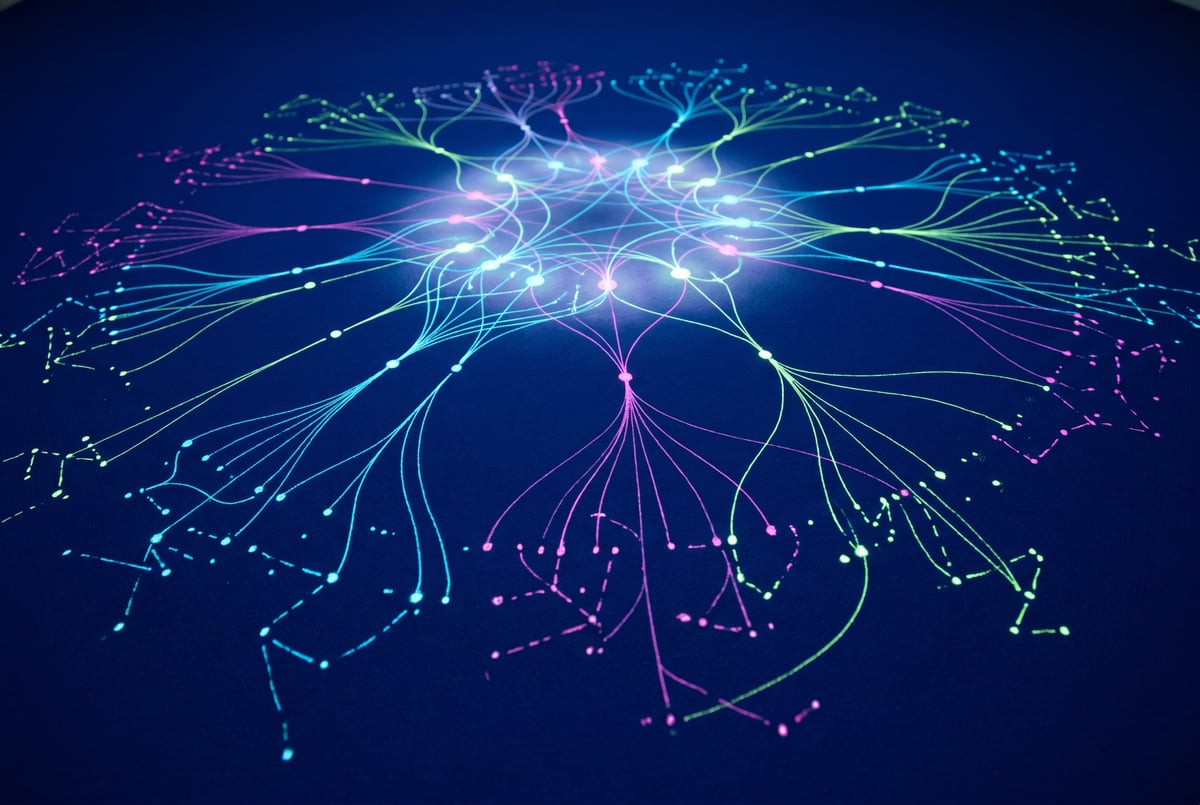
Atlassian’s Stock Jumped 30% on Earnings Day — The Reason Was a 20-Year-Old Data Structure
Atlassian reported 32% year-over-year revenue growth last quarter, up from 23% the prior quarter. The stock moved almost 30% on earnings day. Analysts scrambled to explain the acceleration. The answer, buried in the earnings call, was Rovo — Atlassian’s AI search tool — and a specific architectural choice that most people glossed over.
Customers using Rovo are growing their ARR at twice the pace of customers who aren’t. That’s the number. But the more interesting question is why, and the answer tells you something important about where enterprise AI is actually heading.
CEO Mike Cannon-Brookes said it plainly: Rovo gives cheaper answers because it uses far fewer tokens to get there. The mechanism is that instead of running token-hungry RAG over unstructured documents, Rovo queries the existing knowledge graph in Jira and Confluence. Atlassian’s customers have spent 20 years encoding structured relationships between work, teams, people, code, and knowledge into those products. Rovo treats that graph as first-class context. The result is that when an agent needs to understand what’s happening in a project, it does a graph lookup instead of a vector dump.
This is not a minor optimization. It’s a fundamentally different approach to enterprise AI retrieval.
Why RAG Became the Default (and Why That’s a Problem)
Remy doesn't build the plumbing. It inherits it.
Other agents wire up auth, databases, models, and integrations from scratch every time you ask them to build something.
Remy ships with all of it from MindStudio — so every cycle goes into the app you actually want.

RAG — retrieval-augmented generation — became the standard enterprise AI pattern for a sensible reason. You have documents. You chunk them, embed them, store them in a vector database, and at query time you retrieve the most semantically similar chunks and stuff them into the context window. It works. It’s general. It requires no special knowledge of your data’s structure.
The problem is that it’s expensive and lossy in ways that compound badly at enterprise scale.
When you do a vector search over chunked documents, you’re throwing away most of the relational structure that makes enterprise data actually useful. A Jira ticket isn’t just text — it has an assignee, a sprint, a parent epic, linked PRs, a comment thread with decisions, a status history. A Confluence page has authors, last-modified timestamps, links to related specs, and a position in a space hierarchy that tells you whether it’s a draft or canonical documentation. RAG flattens all of that into floating-point vectors and hopes the embedding captures enough signal.
It often doesn’t. And when it doesn’t, you compensate by retrieving more chunks, which means more tokens, which means higher latency and higher cost. The failure mode of RAG is that you throw more tokens at the problem until it works well enough.
At the scale Atlassian operates — tens of thousands of enterprise customers, each with years of accumulated Jira and Confluence data — “well enough” via RAG is ruinously expensive. The token cost isn’t a rounding error. It’s the difference between a product that’s economically viable and one that isn’t.
What a Knowledge Graph Actually Gives You
The Jira/Confluence knowledge graph isn’t some new AI-era construct. It’s the data model that Atlassian has been building for two decades. Every time someone links a ticket to an epic, assigns work to a person, transitions a status, or creates a Confluence page in a specific space, they’re adding edges to a graph. The graph encodes intent, ownership, hierarchy, and temporal sequence in a way that raw document text simply cannot.
When Rovo needs context to answer a question — “what’s blocking the Q3 launch?” or “who owns the authentication service?” — it can traverse that graph directly. The answer comes back in a handful of graph hops, not from scanning thousands of document chunks. The token cost is dramatically lower. The answer is also more accurate, because the relationships are explicit rather than inferred from semantic similarity.
Analyst commentary after the earnings call made this point sharply: Atlassian isn’t reducing tokens by being clever with prompts. They’re reducing tokens because their clients have spent 20 years capturing structured relationships. When Rovo or any agent needs context, it does a graph lookup instead of a vector dump.
This is the correct mental model. The “AI” part of Rovo is downstream of the data architecture. The data architecture is the moat.
The Token Economy Makes This Matter More Than It Used To
Six months ago, token efficiency was a nice-to-have. Today it’s a constraint.
Remy doesn't write the code. It manages the agents who do.
Remy runs the project. The specialists do the work. You work with the PM, not the implementers.
Morgan Stanley raised its CapEx forecast for the five major hyperscalers to $805 billion for 2026, and $1.1 trillion for 2027. The reported and projected backlog from those same companies sits around $1.3 trillion against roughly $400 billion in Q1 CapEx spend — the gap is widening, not closing. Larry Fink at Milken said it directly: “There is not an AI bubble. There is the opposite. We’re short power. We’re short compute. We’re short chips.”
Palantir CTO Shyam Sankar put the same idea differently: “Tokens are the new coal. Palantir is the train.” The framing is that in a world of constrained token supply, the companies that can accomplish more per token have a structural advantage. Palantir reported 85% year-over-year revenue growth in Q1 — their fastest pace since their 2020 IPO — with net income up 4x to $870 million. Their government revenue growth accelerated from 66% to 84%. The “token efficiency as competitive advantage” thesis is not theoretical.
Atlassian’s Rovo result fits the same pattern. In a token-scarce environment, an enterprise AI tool that achieves the same answer quality at a fraction of the token cost isn’t just cheaper to run — it’s faster to respond, more scalable per customer, and easier to price in a way that customers will actually pay.
Understanding this dynamic is also why Claude Code token management has become such a practical concern for developers. The constraint isn’t intelligence — it’s throughput. Every architectural choice that reduces token consumption without reducing answer quality compounds in value as demand continues to outpace supply.
The Deeper Lesson: Structured Data Beats Brute Force
There’s a pattern here worth naming explicitly.
The naive approach to enterprise AI is to take all your data, embed it, and let the model figure out what’s relevant. This works at small scale and fails expensively at large scale. The more sophisticated approach is to ask: what structure already exists in this data, and how can I expose that structure to the model directly instead of asking the model to reconstruct it from raw text?
Atlassian’s answer is the knowledge graph. But the principle generalizes. If your data has explicit relationships — foreign keys in a database, links in a wiki, edges in a dependency graph — those relationships are almost always more reliable signal than anything you can recover from embeddings. The embedding is a lossy compression of structure that already exists. Why compress it?
This is also why Andrej Karpathy’s LLM wiki approach — turning raw documents into a structured markdown knowledge base that Claude can query — outperforms naive RAG on small knowledge bases. The structure is the point. When you organize information into a format where relationships are explicit and navigable, you’re doing the retrieval work upfront instead of asking the model to do it at inference time. The comparison between LLM wiki and RAG approaches shows up to 95% less token use on small knowledge bases — the same principle Atlassian is applying at enterprise scale.
The Rovo result is a large-scale empirical confirmation of this principle. Customers using it are growing ARR at twice the pace of those who aren’t. That’s not a benchmark on a synthetic task — that’s a business outcome measured across thousands of real enterprise customers.
What This Means If You’re Building Enterprise AI
The Atlassian result has a few concrete implications.
One coffee. One working app.
You bring the idea. Remy manages the project.
Audit your data before you choose your retrieval architecture. If your enterprise data lives in a system that already has explicit relational structure — a project management tool, a CRM, a code repository, a database with foreign keys — the right first question is whether you can query that structure directly rather than embedding it. RAG is the right answer when your data is genuinely unstructured. It’s the wrong answer when you’re flattening a graph into vectors because it’s the default pattern.
Token cost is a product decision, not just an infrastructure cost. The Rovo story is partly about margins, but it’s more about what token efficiency enables. When your AI feature costs 10x less to run per query, you can offer it to more customers, run it more frequently, and price it in a way that drives adoption rather than limiting it. The 2x ARR growth differential Atlassian reported isn’t coincidental — cheaper answers enable more usage, which drives more value, which drives more expansion revenue.
Platform-native AI has a structural advantage over bolt-on AI. Cannon-Brookes made this point explicitly: the advantage of a platform-native AI tool is that it can tap into data structures that third-party tools can’t access. A generic AI assistant bolted onto Jira via API has to work with whatever data it can retrieve through that API. Rovo has direct access to the full knowledge graph because it’s built into the platform. If you’re building AI features into an existing product, the question of what proprietary data structures you can expose to the model is often more important than which model you choose.
For teams building agents that need to reason over structured enterprise data, MindStudio handles the orchestration layer — 200+ models, 1,000+ integrations, and a visual builder for chaining agents and workflows — but the retrieval architecture underneath still determines whether the agent’s answers are fast and cheap or slow and expensive. The model is downstream of the data. If you want to go further and compile a full application from a structured spec, Remy is MindStudio’s spec-driven full-stack app compiler: you write a markdown spec with annotations and it compiles into a complete TypeScript app with backend, database, auth, and deployment — a workflow that pairs naturally with the kind of structured, relationship-explicit data design that makes retrieval efficient in the first place.
The “SaaS is dead” narrative missed something important. The Atlassian earnings were partly significant because they pushed back on the idea that AI agents would replace SaaS products. The opposite seems to be happening: SaaS products with deep data moats are becoming more valuable because they have the structured context that AI agents need. Atlassian’s 20 years of Jira and Confluence data isn’t a legacy liability — it’s the training set for a retrieval system that no competitor can replicate quickly.
One Opinion
The RAG-everything default is going to look, in retrospect, like the “store everything in a single table” phase of database design. It works until it doesn’t, and the failure mode is expensive.
Seven tools to build an app. Or just Remy.
Editor, preview, AI agents, deploy — all in one tab. Nothing to install.
The more interesting question for the next few years is which enterprise software companies have the data structures to do what Atlassian did — and which ones don’t. Salesforce has 20 years of CRM relationship data. ServiceNow has IT workflow graphs. GitHub has code dependency graphs and PR review histories. These are all knowledge graphs in the relevant sense. The companies that figure out how to expose those graphs to AI agents directly, rather than embedding them and hoping for the best, are going to have a meaningful advantage.
The companies that don’t have that structural data — or that have it locked in formats that are hard to traverse — are going to keep paying the RAG tax. And as token costs remain constrained relative to demand, that tax is going to get more expensive, not less.
If you’re thinking about building AI features into a product with rich relational data, the Rovo architecture is worth studying carefully. The 2x ARR growth differential is the kind of number that tends to end architectural debates. And if you’re thinking about how to build retrieval systems that don’t burn tokens unnecessarily, the token management principles that apply to Claude Code sessions — plan with a more capable model, execute with a faster one, be explicit about what context you actually need — apply equally well to production retrieval pipelines.
The graph was always there. Rovo just learned to use it.