What Is the AI Job Automation Paradox? Why More Automation Means More Work
Automating 90% of a job doesn't reduce work by 90%. Learn why AI creates more output demand and what the Jevons Paradox means for knowledge workers.
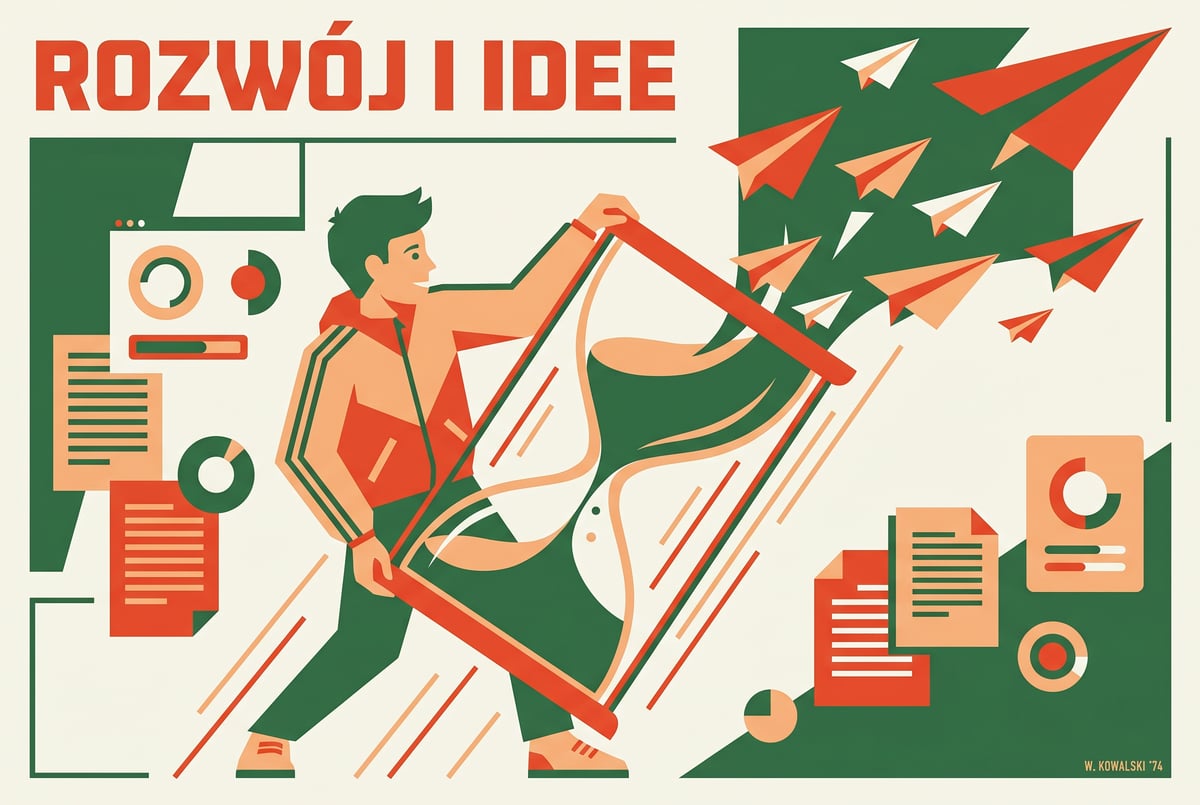
The Efficiency Trap: Why Automation Often Creates More Work
Here’s the paradox at the center of modern AI adoption: the more you automate, the more work you seem to have.
Teams implement AI tools expecting to reclaim hours. Instead, they find themselves buried in more output, more requests, and more responsibility. The AI job automation paradox isn’t a bug — it’s a well-documented economic pattern playing out at unprecedented speed across knowledge work.
Understanding why this happens is the difference between using AI strategically and wondering why nothing feels less busy.
The 19th-Century Observation That Explains Your Workload
In 1865, an English economist named William Stanley Jevons noticed something strange about coal consumption. As steam engines became more efficient — meaning they extracted more energy from less coal — you’d expect total coal use to fall. It didn’t. It exploded.
More efficient engines made coal-powered production cheaper per unit. That lower cost expanded what coal could economically do. More industries adopted it. Existing industries scaled up. Total coal consumption rose sharply even as efficiency improved.
Jevons called this the rebound effect. Today it’s known as the Jevons Paradox: efficiency improvements in resource use tend to increase total consumption of that resource, not decrease it.
Why This Isn’t Intuitive
The intuitive model is linear: if a task takes 10 hours and AI cuts that by 90%, you now spend 1 hour on it. Done. Time saved.
- ✕a coding agent
- ✕no-code
- ✕vibe coding
- ✕a faster Cursor
The one that tells the coding agents what to build.

What actually happens is more complex. Lower cost per output unit shifts the entire demand curve. When something becomes cheaper, faster, or easier to produce, people want more of it — not the same amount for less effort.
That’s not irrational. It’s how markets, organizations, and human ambition work.
How the Jevons Paradox Maps to AI Automation
The same dynamic appears wherever AI automates knowledge work. The pattern is consistent across industries:
- AI reduces the cost (time, money, effort) of producing a unit of output
- Lower cost makes that output more accessible or viable
- Demand for the output increases — often dramatically
- Total work expands to meet that demand
The Content Marketing Example
Before AI writing tools, a marketing team might publish two blog posts per week. It took real effort — research, drafting, editing, publishing. That constraint managed output volume naturally.
With AI, the marginal cost of a draft drops to near zero. The constraint disappears. Stakeholders notice. Now the ask is ten posts a week, plus LinkedIn variants, email sequences, and landing page copy for every campaign. The total volume of work to review, edit, brief, and manage that content grows substantially.
The tool made each piece faster. It didn’t reduce the total demand for content.
The Developer Productivity Example
Studies on AI coding assistants like GitHub Copilot show developers ship code faster — sometimes measurably so. But faster shipping doesn’t produce idle time. It shifts expectations. Teams take on more features per sprint. Technical debt gets addressed. Side projects become viable. Product managers ask for more.
The efficiency gets absorbed into expanded scope, not reduced hours.
The Customer Support Example
When companies deploy AI chatbots to handle tier-1 support tickets, they often report handling more total support volume, not the same volume with fewer humans. Cheaper, faster support makes it viable to offer support coverage that previously wasn’t cost-effective — more channels, longer hours, more markets.
The automation enabled expansion. The humans still have plenty to do.
Why Automating 90% of a Job Doesn’t Cut Work by 90%
This is where the AI job automation paradox gets specific and uncomfortable.
Even if an AI can handle 90% of the tasks in a given role, the human’s workload rarely shrinks by 90%. Several forces explain why.
The Last 10% Doesn’t Scale the Same Way
The 10% of tasks that require judgment, accountability, taste, relationships, or contextual nuance tends to be the highest-stakes 10%. It often can’t be skipped or batched. And when AI is producing 10x more output, that last 10% of human review becomes 10x more frequent.
If you’re reviewing 5 AI-generated reports instead of writing 1 manually, you’ve added work — even if each review is faster than writing from scratch.
The Quality Assurance Layer
When AI handles a task, a human still needs to verify the output. That verification layer is often underestimated. Checking AI-generated work requires understanding the domain well enough to spot errors, which means the skill requirement doesn’t disappear — it shifts from production to evaluation.
At scale, that evaluation work compounds.
Automation Creates New Coordination Work


More output means more coordination. More automation means more workflows to maintain, more integrations to manage, more edge cases to handle. Organizations that automate heavily often find that someone needs to own the automation layer — keeping prompts updated, debugging failures, adjusting for model changes, training new team members.
That’s a real job. It didn’t exist before.
Scope Expands to Fill Freed Capacity
This is perhaps the most consistent pattern: when individuals or teams demonstrate new capacity, organizations fill it. A marketer who ships content faster gets more content projects. A developer who builds features quicker gets a longer backlog. An analyst who produces reports in hours gets more frequent reporting requests.
Freed capacity rarely stays freed.
What This Means for Knowledge Workers
The AI job automation paradox has real implications for how professionals think about their roles.
Your Job Description May Shift More Than Your Hours
The nature of knowledge work is changing more dramatically than the volume of it. Tasks that were high-effort production become low-effort coordination. The cognitive weight shifts from “doing the thing” to “directing, reviewing, and managing the AI doing the thing.”
For some, that’s genuinely more interesting work. For others, it introduces new stress: the pressure to move faster, produce more, and maintain quality across higher volumes.
Specialization Becomes More Valuable, Not Less
When AI can handle generalist production tasks, what becomes scarce is judgment that AI doesn’t have — deep domain expertise, institutional knowledge, relationships, strategic context, ethical accountability.
Workers who build those capabilities are more valuable in an automated environment, not less. The paradox isn’t that automation makes humans obsolete; it’s that it makes undifferentiated production skills less valuable while increasing demand for higher-order ones.
The Workers Who Struggle Are Those in the Middle
The clearest risk isn’t to highly skilled specialists or to manual labor. It’s to mid-tier knowledge work that was previously high-effort but didn’t require exceptional judgment — basic writing, routine analysis, template-driven design, process documentation.
AI can cover a lot of that ground. And if the Jevons dynamic plays out, it means those roles may absorb AI output management responsibilities rather than disappearing — but the people in them need to adapt.
Industries Where This Is Already Visible
The AI job automation paradox isn’t theoretical. It’s showing up in hiring data, workload surveys, and productivity research across sectors.
Legal: AI contract review tools have sped up document analysis significantly. Law firms aren’t downsizing review teams — they’re taking on higher document volumes and expanding into client segments that were previously cost-prohibitive to serve.
Journalism: AI-assisted tools help reporters draft faster and summarize sources. Many newsrooms have responded by increasing publication frequency and expanding coverage areas, not reducing headcount.
Software development: AI coding tools raise developer throughput. Engineering organizations respond by increasing sprint ambitions and shipping product faster — not by reducing team size.
Finance: Automated report generation has sped up financial analysis. The result in many firms is more frequent reporting cycles and more granular analysis, not fewer analysts.
Can You Actually Reduce Workload With AI?
Yes — but it requires intentional constraint.
The Jevons Paradox isn’t a law of nature that applies universally to every individual. It’s a systemic pattern that plays out when freed capacity is exposed to demand. You can interrupt that pattern.
Other agents start typing. Remy starts asking.
Scoping, trade-offs, edge cases — the real work. Before a line of code.
Protect the Freed Time Explicitly
If you automate a task that took three hours, you have to actively protect those three hours from being refilled. That means saying no to new requests, setting clear output limits, or using the time for rest or deep work — not treating it as new capacity for more production.
Organizations need to do the same. Automation ROI should be measured in output quality and worker sustainability, not just volume increase.
Automate the Right 90%
Not all automation is equal. The highest-leverage automation targets the tasks that were high-effort but low-judgment — mechanical, repetitive steps that didn’t require you specifically.
Automating the creative, strategic, or relationship-intensive parts of your work doesn’t save time; it just adds risk and a review layer. Focus automation on the things that were costing you hours without generating proportional value.
Use AI to Reduce Scope, Not Just Speed
The most underrated use of AI is not “do this faster” but “should we do this at all?” AI can quickly assess whether a project is likely to deliver value, draft a memo explaining why a task isn’t worth pursuing, or model the ROI of different approaches before you commit.
That’s using AI to reduce workload rather than expand output — which is a fundamentally different use pattern.
How MindStudio Helps You Automate Without Creating More Work
The AI job automation paradox often worsens when automation is fragmented — a different AI tool for every task, manual handoffs between them, and no way to maintain workflows without technical help.
MindStudio is built to address the coordination layer that makes automation sustainable. Instead of stitching together point solutions, you can build end-to-end AI agents that handle multi-step workflows autonomously — running on a schedule, triggered by emails or webhooks, or acting as background agents that handle repetitive processes without human intervention.
That matters because the Jevons rebound often gets amplified by poorly designed automation. When a workflow requires a human handoff at every step, you don’t eliminate work — you just redistribute it across more touchpoints. Fully autonomous agents that run a complete process from trigger to output reduce the coordination overhead that inflates workload.
For example: instead of using AI to generate a report draft (which still requires you to populate it, format it, and send it), you could build an agent in MindStudio that pulls data from your existing tools, generates the report, formats it, and delivers it to the right people automatically. The human’s job becomes setting the standard and reviewing exceptions — not managing each step.
MindStudio connects to 1,000+ business tools out of the box, runs on 200+ AI models, and doesn’t require code to build — the average workflow takes under an hour to set up. You can try it free at mindstudio.ai.
If you’re looking at specific use cases, MindStudio’s library of pre-built AI agent templates is a practical starting point. And if you’re thinking about automation for your team specifically, this overview of AI workflow automation covers what to automate first.
FAQ
What is the AI job automation paradox?
The AI job automation paradox refers to the pattern where automating tasks with AI doesn’t reduce total workload — it often increases it. When AI lowers the cost of producing output, demand for that output typically rises, absorbing the freed capacity and sometimes exceeding it. It’s the workplace application of the Jevons Paradox, which describes how efficiency improvements tend to increase total resource consumption rather than decrease it.
Does AI actually reduce jobs?
The evidence so far is mixed. AI is changing job composition — shifting which tasks humans do — more than it’s eliminating roles outright. Some job categories are contracting; others are growing. The roles most at risk are those centered on high-volume, low-judgment production tasks. Roles requiring contextual judgment, deep expertise, and relationship management appear more durable. Most economists expect significant job transformation rather than mass unemployment, though the pace and distribution of change will affect workers unevenly.
Why doesn’t automating 90% of a job save 90% of the time?
Several reasons: the remaining 10% (judgment, review, accountability) is disproportionately high-stakes and can’t be skipped. Automating production increases total output volume, which means the 10% review work happens more often. New coordination tasks appear around the automation itself. And organizations typically expand scope to absorb freed capacity rather than reduce workload.
What is the Jevons Paradox in simple terms?
When something becomes cheaper or more efficient to use, people use more of it — not less. Jevons observed this with 19th-century coal: more efficient engines increased coal demand because efficiency made coal economically viable in more contexts. Applied to AI: when AI makes content production, analysis, or code cheaper, organizations demand more content, analysis, and code — not the same amount with less effort.
Which jobs are most affected by AI automation?
Jobs most affected tend to be in knowledge work categories where output is text, data, or code — content creation, basic analysis, routine customer service, template-driven design, software development support, and legal document review. Workers in these areas are experiencing task composition shifts more rapidly than others. That said, automation is also increasing demand in adjacent roles: prompt engineers, AI workflow managers, content editors and strategists, and AI output QA specialists.
How can workers benefit from AI automation without being overwhelmed by it?
The key is protecting freed time explicitly rather than letting it be refilled by expanded output expectations. Workers who benefit most from AI automation tend to use it to eliminate low-judgment tasks, focus their human effort on high-value decision-making, and set clear boundaries on total output volume. Organizations that benefit most invest in full workflow automation — end-to-end processes rather than point solutions — to reduce coordination overhead rather than just accelerate individual steps.
Key Takeaways
- The Jevons Paradox predicts AI will increase total work, not reduce it — lower cost per output unit expands demand for that output.
- Automating 90% of a task doesn’t cut your work by 90% — the last 10% happens more often, review layers add up, and scope expands to fill freed capacity.
- Job transformation is more accurate than job elimination — roles shift toward judgment, coordination, and AI management rather than disappearing.
- The workers most at risk are in mid-tier production roles where AI can handle volume without requiring specialized expertise.
- You can interrupt the paradox intentionally — by protecting freed time, automating the right tasks, and using AI to reduce scope rather than only increase speed.
- Full workflow automation reduces coordination overhead better than point solutions — tools like MindStudio that handle multi-step processes end-to-end are more likely to produce real workload reduction.

Curious what this looks like in practice? Start building your first AI agent on MindStudio for free and see how much of your current workflow can genuinely run on autopilot — without just creating more coordination work on the other side.