
Who Gets Credit When AI Writes the Proof?
OpenAI's math breakthroughs are reigniting a fight over who deserves credit for AI-generated proofs: the model, the researchers, or no one yet.
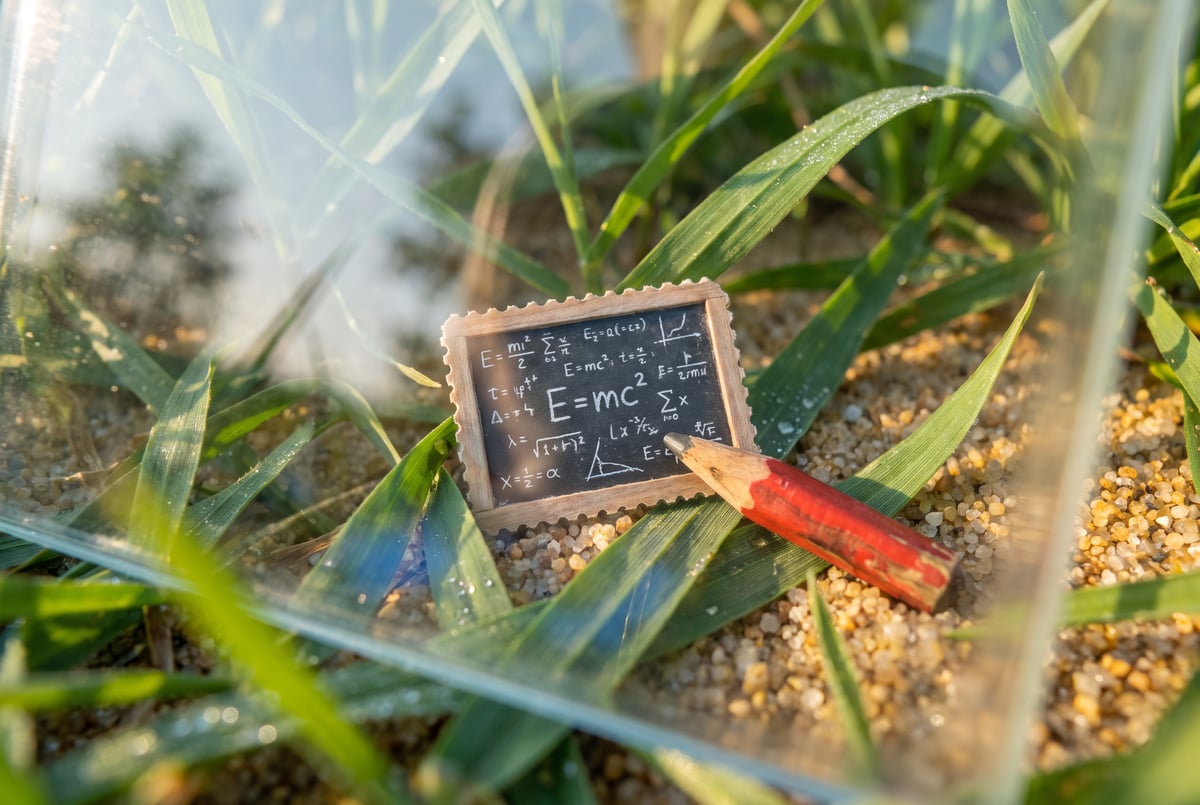
Who actually solved the problem, the AI or the person who prompted it?
When an unreleased OpenAI model reportedly produced solutions or major progress on ten longstanding open math problems, some untouched for decades, the natural question wasn’t just “how did it do that.” It was “whose name goes on the paper.” Right now there’s no settled answer. The model generates the proof, a researcher decides what to ask it and how to verify the output, and the mathematical community has no established norm for splitting credit between those two contributions. That gap is now a live argument among mathematicians, AI labs, and the researchers who build math benchmarks.
TL;DR
- OpenAI reported that a new, unreleased model made progress on ten open math problems, some unresolved for as long as 48 years, at a total inference cost described as around $2,000.
- One of the highlighted results concerns high-dimensional sphere packing, a problem with direct relevance to how tightly digital signals (like those used in 5G) can be encoded without interference.
- Another result involves nonsofic groups, a question in group theory about whether certain infinite mathematical structures can always be approximated by finite ones. The model reportedly produced a counterexample showing they cannot.
- Researchers close to the work, including Elliot Glazer, a set theorist who helped build the Frontier Math benchmark, framed the results as evidence of a new tier of machine mathematical ability above existing human coursework categories.
- The pattern across these results looks less like brute-force search and more like cross-domain synthesis, connecting ideas from separate subfields that few if any individual humans hold in their heads at once.
- The debate over authorship and credit is now separate from the debate over capability: even people who accept the results as correct disagree on how to cite or credit them.
- No Millennium Prize problems were solved, and OpenAI’s own team acknowledged the model failed on some major problems it attempted, suggesting narrow but real superhuman performance rather than general mathematical genius.
Built like a system. Not vibe-coded.
Remy manages the project — every layer architected, not stitched together at the last second.

What did the model actually produce?
According to the OpenAI announcement, the model (referred to informally as a successor class above its current top models, with the internal name “Astra” floated but not confirmed as final) generated proofs or substantial progress on ten open problems. These weren’t toy exercises. They were problems where the broader mathematical community, including supercomputing efforts, had made no meaningful progress for years or decades.
Two examples stand out for being explainable outside specialist circles.
The first is high-dimensional sphere packing: figuring out the densest way to arrange spheres in a given space, extended to dimensions far beyond the three we live in. The three-dimensional version is intuitive (stack oranges the way a grocer does). The high-dimensional version underpins error-correcting codes used in digital communication, including wireless standards. The tighter you can pack “signal points” without them overlapping and causing misreads, the more data you can push through a channel without corruption. Progress on the best-known bound for certain dimensions had reportedly stalled for 48 years. The model’s result pushed that bound further, without proving it’s optimal, similar to establishing a new “at least this high” marker on a mountain nobody has summited.
The second is the discovery of a nonsofic group, a concept from group theory. Sofic groups are structures that, despite potentially being infinite, can always be approximated arbitrarily well by finite structures. Every group mathematicians had tested seemed to have this property. The model reportedly produced a counterexample: a group that cannot be approximated this way, settling a standing open question by showing the answer is no.
Is this brute-force computation or something else?
The distinction matters for how the authorship debate plays out. If a model simply searches an enormous space of possibilities faster than any computer before it, that’s an engineering feat, not a conceptual one, and it’s easier to credit the infrastructure and the humans who built it. But the pattern described in these results looks different: the model appears to be combining insights from separate subfields of math that rarely get connected by the same person, because no single mathematician has deep enough expertise in all of them simultaneously.
This mirrors a dynamic seen in AI-driven scientific work elsewhere, such as drug discovery efforts where progress often comes not from a single genius but from connecting a biologist’s domain knowledge with a machine learning researcher’s technical toolkit, two skill sets rarely found at expert level in the same person. Mathematicians who reviewed an earlier OpenAI math result reportedly noted that if you’d gathered the right specialists from different subfields in a room, they might have found the same connection. The model didn’t invent alien mathematics. It recombined known ideas across boundaries humans don’t often cross.
Why does this complicate the question of credit?
Traditional mathematical authorship assumes a person (or a small team) originates an idea, works through the logic, and stands behind the proof’s correctness, often building a reputation and career on that chain of responsibility. AI-generated proofs break that chain in at least three places.
First, the “idea” may not trace to a single human insight at all, but to a statistical process recombining patterns learned from a training corpus that includes decades of published mathematics. Second, verification becomes a bottleneck: someone still has to check the proof is actually correct, and that person’s role, catching errors versus generating the core insight, is a different kind of contribution than what “author” has traditionally meant. Third, cost changes the incentive structure entirely. If a proof that would have taken a human career to produce can be attempted for a few thousand dollars in inference costs, the scarcity that made mathematical discovery prestigious starts to erode.
OpenAI’s own framing reportedly acknowledged this tension directly, addressing “responsibility to the mathematical community” as a distinct section of their announcement, rather than treating it as a footnote.
Is this actually superhuman mathematical ability?
In a narrow sense, yes, based on what’s described. No individual human mathematician has published ten results of this caliber, on problems this old, within a single research effort. But the caveats matter. The model reportedly failed when pointed at some major unsolved problems, including Millennium Prize-level questions, and the successful results came after applying only modest computational effort ($2,000 total, according to the OpenAI team) rather than a maximal effort. Researchers close to the announcement suggested that pushing test-time compute (the amount of reasoning effort a model spends per problem) significantly further could plausibly increase the hit rate, though that remains speculative.
The honest characterization is “narrowly superhuman”: better than any human at generating solutions to certain classes of long-standing problems, under specific conditions, without generalizing to open-ended mathematical creativity across the board.
What happens to the math profession if this scales?
If proof generation becomes something you can meaningfully buy with a fixed token budget, the role of a research mathematician shifts. Less time may go toward originating novel proof strategies from scratch, and more toward framing the right open questions, verifying machine-generated candidate proofs, and judging which results are actually meaningful contributions versus technically true but uninteresting curiosities. That’s a real shift in labor, not a replacement of the field. Mathematics has survived previous tool shifts, including computer-assisted proofs that some mathematicians initially distrusted because no human could manually check every step. The current debate extends that same discomfort to a tool that also originates the argument, not just checks it.
Frequently Asked Questions
What is high-dimensional sphere packing and why does it matter?
It’s the problem of arranging spheres as densely as possible in a space with many dimensions, without letting them overlap. It matters for real-world signal encoding, because tightly and safely packed “points” in a coding scheme allow more data to be transmitted with less risk of corruption, relevant to wireless communication standards like those used in 5G.
What is a nonsofic group?
Other agents start typing. Remy starts asking.
Scoping, trade-offs, edge cases — the real work. Before a line of code.
It’s a mathematical group (a structure from abstract algebra) that cannot be approximated by any finite structure, even though many similar infinite structures can be. Before this result, mathematicians had tested many groups and always found them approximable, making an explicit nonsofic example a significant open question.
Did the AI solve a Millennium Prize problem?
No. According to OpenAI’s own account, the model was tried on other major unsolved problems, including harder ones, without success, and no Millennium Prize problem was among the ten results announced.
Who is Elliot Glazer and why does his reaction matter?
Elliot Glazer is a set theorist who helped lead development of Frontier Math, a benchmark specifically designed to test advanced mathematical reasoning in AI models. His reaction carries weight because he’s positioned to judge whether a result represents genuine mathematical progress or an inflated claim.
Does this mean mathematicians will be replaced?
Not based on current evidence. The results shown are narrow: strong performance on specific hard problems at modest cost, with failures on other major open questions. The more immediate effect is a shift in what mathematicians spend time doing, including verification and problem framing, rather than outright replacement.